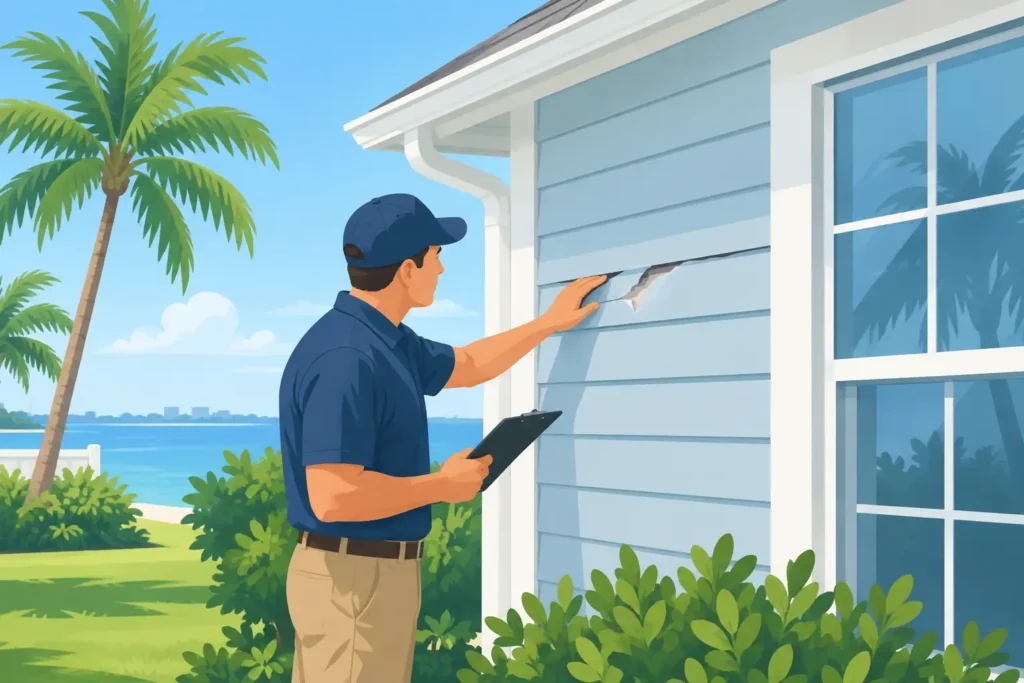
A loose panel after a storm may look like a small exterior problem. In Florida, it can become an opening for wind-driven rain, humidity, insects, and hidden wall damage. Prompt siding repair protects more than curb appeal. It helps keep moisture out of the structure, preserves insulation performance, and prevents a manageable repair from becoming a larger restoration project.
Florida siding works hard. Intense sun, heavy rain, salt air in coastal areas, high humidity, and hurricane-season winds all put exterior materials under constant stress. Knowing what damage requires immediate attention can help homeowners and property managers make a confident decision before the next storm tests the building.
Signs Your Property Needs Siding Repair
Siding does not always fail in one dramatic event. Often, the early warnings are subtle: a seam that has opened, a section that no longer sits flat, or paint that begins to blister without an obvious cause. These changes can signal that water is getting behind the siding or that the material has lost its ability to protect the wall assembly.
Watch for these four common warning signs:
- Cracks, holes, chipped edges, or missing pieces after wind, debris impact, or accidental damage
- Loose, warped, buckled, or separated panels that create gaps along seams and corners
- Soft spots, staining, peeling paint, or mildew near exterior walls, windows, and doors
- Higher cooling costs, drafts, or signs that pests are entering around damaged sections
A visual check from the ground is useful, but it does not reveal everything. Moisture can travel behind siding and show up several feet away from the original entry point. That is why a professional inspection should look at trim, flashing, caulk lines, window openings, roof-to-wall transitions, and nearby gutters in addition to the visibly damaged section.
Florida Weather Makes Small Gaps More Serious
A minor crack in a dry climate may remain mostly cosmetic for a long time. Florida conditions are different. Afternoon downpours can force water into small openings, while high humidity slows drying behind the wall. Repeated wetting can affect sheathing, insulation, framing, and interior finishes.
Wind is another concern. Once a panel is loose, gusts can lift it further or pull fasteners free. During a tropical storm or hurricane, that weakened section may allow more water intrusion and create flying debris risks. If siding has separated after severe weather, temporary protection and a timely assessment are usually smarter than waiting to see whether it worsens.
Repair or Replacement: Which Is the Right Call?
The right approach depends on the extent of the damage, the age of the siding, the availability of matching materials, and the condition of the wall underneath. A focused repair is often the best value when damage is limited to one area and the surrounding siding is still sound.
For example, replacing several cracked vinyl panels, repairing damaged trim, or resealing a vulnerable penetration can restore protection without disturbing the rest of the exterior. This is especially practical when the existing color and profile are still available and there are no signs of widespread moisture problems.
Replacement may make more sense when damage appears in multiple areas, panels are brittle from prolonged UV exposure, or water has reached the underlying wall components. It can also be the better long-term decision when the current siding is near the end of its service life, has recurring maintenance issues, or no longer matches available products.
For commercial buildings, the decision may also depend on how repairs affect tenants, customers, and daily operations. A planned replacement can sometimes minimize disruption better than repeated service calls. The goal is not to sell more work than necessary. It is to address the actual cause of the problem and restore dependable protection.
Matching Materials Matters
A repair should look intentional, not patched together. Matching the style, thickness, texture, and color of existing siding is important for appearance and performance. Older siding can fade in the Florida sun, so even an exact product match may look slightly different when installed beside weathered panels.
A qualified contractor can help determine whether a replacement section can be blended effectively, whether adjacent pieces should be replaced for a cleaner result, or whether a broader update is the more practical choice. Material selection should also account for the property’s exposure. A coastal home faces different challenges than an inland property, and buildings with limited shade may need materials that handle UV exposure particularly well.
What Professional Siding Repair Should Include
Good siding repair starts with diagnosis, not just replacing what is visible. The damaged panel may be the symptom, while failed flashing, a roof leak, overflowing gutters, or improperly sealed windows may be the source of moisture.
The repair process should begin with an inspection of the affected area and nearby exterior systems. Once the cause is identified, damaged materials are removed carefully so the contractor can inspect the surface behind them. If moisture has affected sheathing or insulation, those materials should be addressed before new siding is installed. Covering damaged substrate can trap problems where they continue to grow.
Proper installation also matters. Panels need correct fastening, expansion space, overlap, and flashing details. Vinyl siding, fiber cement, wood, and engineered products each have specific installation requirements. Fastening a panel too tightly, skipping a flashing detail, or relying on caulk where water-management components are needed can shorten the life of the repair.
The final step is a complete check of the surrounding transitions. Siding interfaces with roofing, gutters, windows, doors, soffits, and trim. These areas work together to direct water away from the building. If one component fails, it can undermine the rest.
Do Not Ignore Storm Damage
After a major storm, take photos of visible damage before moving debris or making permanent changes. Look for lifted panels, broken corners, punctures, displaced trim, water stains indoors, and debris impact marks. If water is actively entering the property, protect the area if it is safe to do so and request emergency service promptly.
Avoid climbing ladders or pulling loose siding back into place during wet or windy conditions. What looks like a simple fix may involve unstable materials, hidden electrical concerns, or damage higher on the exterior. A professional can secure the area, identify related roof or gutter damage, and recommend the next steps with a clear scope of work.
For insurance-related storm damage, documentation helps. Keep photos, dates, repair invoices, and notes about when you first noticed the issue. An inspection can provide the information needed to understand the condition of the exterior and make an informed claim decision.
Protect the Rest of Your Exterior Investment
Siding lasts longer when the rest of the exterior is maintained. Keep gutters clear so water does not overflow onto wall surfaces. Trim branches that rub against panels or drop debris against the home. Check caulk and trim around windows and doors, especially after storm season. If you notice a roof leak or damaged flashing, address it quickly before moisture reaches the walls below.
This connected approach is particularly valuable in Florida, where roof, gutter, window, and siding issues often overlap. Florida’s Roofing & Construction Group helps property owners evaluate the full exterior system, so a siding concern is not treated as an isolated patch when another issue is driving the damage.
A free estimate can clarify whether your property needs a targeted repair, temporary storm protection, or a larger exterior plan. Acting while the damage is contained gives you more options, better control over costs, and stronger protection before the next stretch of Florida weather arrives.