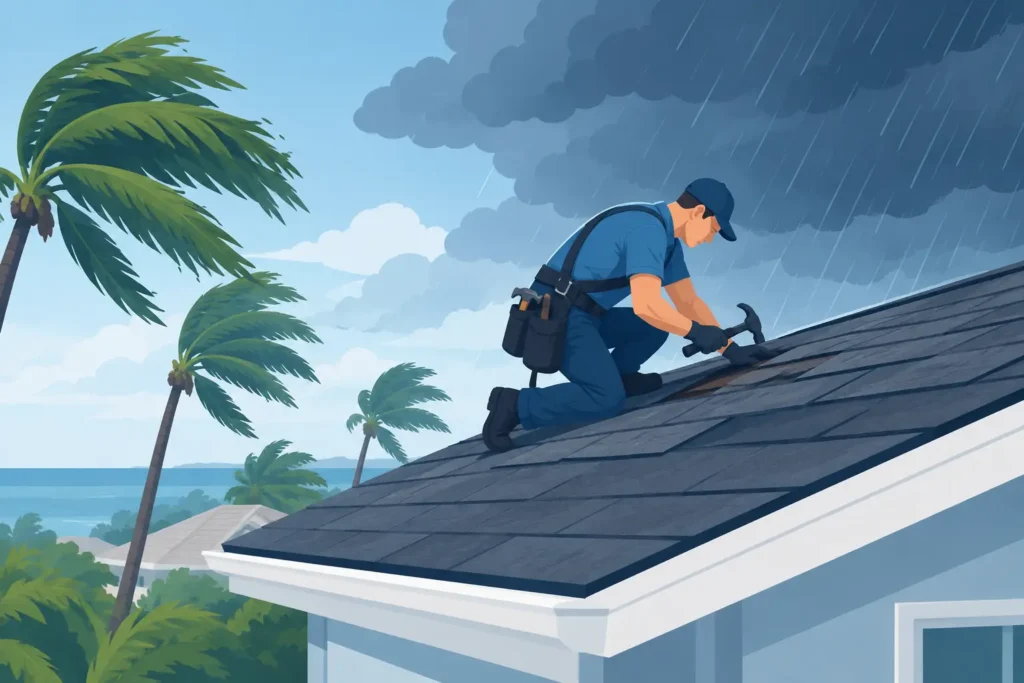
A roof leak rarely starts with a ceiling stain. In Florida, wind-driven rain can work beneath lifted shingles, around flashing, and through aging sealant long before water becomes visible inside. Timely roof repair protects more than the roof itself. It helps protect framing, insulation, electrical systems, inventory, and the comfort of everyone under the building.
For homeowners, the goal is to stop a small problem before it becomes an expensive replacement decision. For commercial property owners and facility managers, the priority is often containing damage quickly while keeping tenants, employees, and operations moving. The right response depends on the roof type, the source of the issue, and how much moisture has already entered the system.
When Roof Repair Should Not Wait
Florida roofs handle intense UV exposure, high humidity, salt air in coastal areas, heavy afternoon rain, and hurricane-force winds. Those conditions can shorten the life of materials and expose weak points that looked harmless a few months earlier.
A missing shingle after a storm deserves attention, but so do subtler warning signs. Look for curled, cracked, loose, or darkened shingles; granules collecting in gutters or near downspouts; rusted flashing; soft spots on a roof deck; and visible gaps around vents, chimneys, skylights, or roof-to-wall transitions. On tile, metal, and flat roofs, damage may look different, but the principle is the same: any opening in the water-shedding system can allow moisture to travel.
Inside the property, water stains, bubbling paint, damp insulation, musty odors, and peeling drywall are reasons to schedule an inspection. Do not assume the stain marks the exact leak location. Water often enters at one point and travels along decking, rafters, or insulation before it appears indoors.
After a named storm or a period of severe wind, an inspection is a smart protective step even if there is no active leak. Damage can be hidden under shingles, around penetrations, or at the edges of a roof where wind uplift is most common.
What a Professional Roof Repair Inspection Finds
A dependable roof repair starts with diagnosis, not a guess and a tube of caulk. A qualified roofing professional evaluates the visible surface, but also checks the areas where roofs most often fail: valleys, flashing, pipe boots, vents, ridge caps, transitions, drainage points, and previous repair locations.
For a shingle roof, the concern may be wind-lifted tabs, broken seals, exposed fasteners, or deteriorated underlayment. A tile roof may have cracked or displaced tiles, damaged flashing, or broken components beneath the tile itself. Metal roofing can develop loose fasteners, failed sealant, corrosion, or separation at seams. Flat and low-slope commercial systems require close attention to drains, scuppers, seams, ponding water, membrane punctures, and edge details.
The inspection should also consider what caused the problem. Repairing a few shingles without addressing poor attic ventilation, clogged gutters, failing flashing, or drainage issues can leave the property exposed to another leak. This is where working with an exterior-services contractor can be valuable. Roofing, gutters, insulation, siding, and solar penetrations affect one another, and the roof should be evaluated as part of the complete protective system.
Common Roof Repair Options in Florida
The best repair is the smallest solution that restores dependable protection. That does not always mean the least expensive option today. A low-cost patch that fails during the next storm can cost far more than a proper repair completed with compatible materials and sound workmanship.
Shingle and Tile Repairs
Localized shingle repairs can address wind damage, missing shingles, damaged ridge caps, and worn flashing. Matching color and style may be possible, although older roofs can fade from sun exposure and weathering. The repaired area may not blend perfectly with the existing roof, but performance matters more than a cosmetic match when water is getting in.
Tile repairs often involve replacing cracked or displaced tiles and correcting the underlayment or flashing beneath them. Simply setting a new tile in place may hide the symptom without fixing the point where water entered. Because tiles can break under foot traffic, careful handling and the right repair method matter.
Metal Roof Repairs
Metal roofs are durable, but they are not maintenance-free. Fasteners can loosen as panels expand and contract, sealant can age, and storm debris can dent panels or compromise seams. Repairs may include replacing fasteners with properly seated components, resealing penetrations, correcting flashing, or replacing damaged panels.
Flat Roof Repairs
Commercial and residential flat roofs need a different approach from steep-slope roofs. Water should drain efficiently, not remain on the surface after a storm. A small puncture, open seam, or failed termination can allow water beneath the membrane, where it may spread before becoming visible.
Depending on the system, a repair may involve patching a damaged membrane, reinforcing seams, correcting flashing, improving drainage, or replacing saturated insulation and affected sections of roofing. If repeated leaks occur across a large area, a larger restoration or replacement may be more responsible than continuing to patch isolated failures.
Repair or Replacement: How to Make the Call
A roof does not need to be replaced every time it leaks. If damage is confined to a small area and the rest of the roof is in good condition, repair is often the practical choice. It is faster, less disruptive, and usually more affordable than a full replacement.
Replacement becomes worth serious consideration when the roof is near the end of its service life, damage is widespread, leaks keep returning, or the deck and underlayment show extensive deterioration. The same applies when a roof has multiple layers, recurring ponding-water issues, or materials that can no longer be reliably matched or repaired.
For commercial properties, the decision should also account for operational risk. A temporary repair may keep a facility dry during an urgent situation, while a planned replacement can be scheduled around business needs. For homeowners, replacement may create an opportunity to improve ventilation, add gutters, upgrade insulation, or prepare the roof for a future solar installation.
The clearest path is an upfront assessment that explains what can be repaired now, what may need attention later, and what each option costs. A professional estimate should not pressure you into a replacement if a repair will genuinely solve the problem. It should also not minimize widespread damage just to offer the lowest initial price.
What to Do After Storm Damage
Safety comes first. Stay off a damaged roof, especially after high winds or heavy rain. Broken tiles, loose shingles, wet decking, downed power lines, and hidden structural damage create real hazards.
From the ground, document visible damage with photos and note any interior leaks or water stains. If water is entering the property, move valuables away from the area and use containers to catch drips where it is safe to do so. Avoid puncturing a bulging ceiling unless you understand the risks around electrical wiring and ceiling collapse.
Call for emergency service when the roof is actively leaking, a tree limb has struck the building, material has blown away, or an opening is exposing the interior. Temporary protection can limit further damage while a permanent repair is planned. Keep records of inspections, photos, estimates, invoices, and insurance communications.
Protect the Repair With Ongoing Maintenance
A repaired roof lasts longer when the surrounding system is maintained. Keep gutters and downspouts clear so water moves away from the roof and foundation. Trim branches that scrape roofing materials or could fall during a storm. Check attic spaces for damp insulation, daylight at penetrations, or signs of poor ventilation.
Most Florida properties benefit from a professional roof inspection at least once a year and after major storms. Older roofs, low-slope roofs, and buildings surrounded by mature trees may need more frequent attention. Regular inspections give you time to make informed choices instead of reacting to an active leak during the next downpour.
Florida’s Roofing & Construction Group helps homeowners and commercial property owners identify roof damage, understand their options, and move forward with clear pricing and dependable workmanship. A free estimate can turn uncertainty into a practical plan before a small roof issue has the chance to spread.