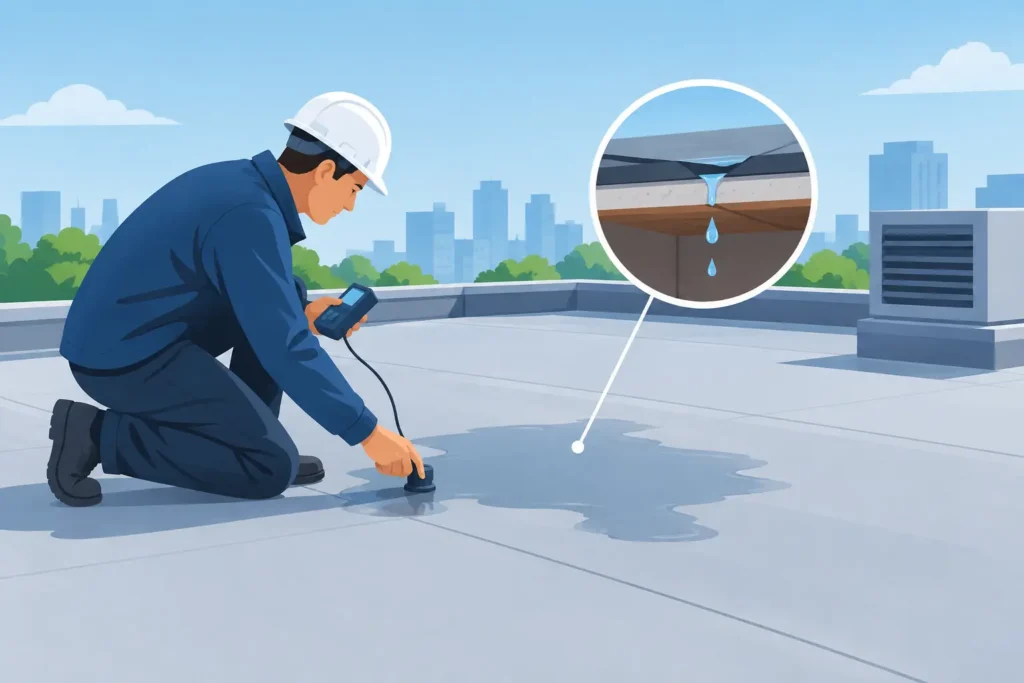
A stain on a ceiling tile rarely marks the true source of a roof leak. On a low-slope roof, water can travel beneath the membrane, through insulation, or along a deck seam before it appears indoors. That is why flat roof leak detection needs to do more than identify where water showed up. It needs to find where water got in – and how far the moisture has spread.
For Florida homes, retail centers, offices, warehouses, and multifamily properties, early detection can be the difference between a targeted repair and a major roof restoration. Heavy rain, wind-driven storms, intense sun, standing water, and constant humidity all put flat-roof systems under pressure. A quick response protects the building, its contents, and the people inside it.
Why Flat Roof Leaks Are Hard to Trace
Flat roofs are not truly flat. They are designed with a slight slope that directs water toward drains, scuppers, gutters, or edge details. When drainage slows or a membrane opening develops, water may move in unexpected directions before finding a path into the building.
The visible leak may be several feet away from the actual breach. A puncture near a rooftop unit, a split seam around a drain, or a failed flashing detail at a wall can allow moisture to migrate under the roofing assembly. By the time a ceiling stain appears, insulation may already be wet and roof decking may be at risk.
This is especially common after a Florida storm. Wind can lift flashing, drive rain beneath a membrane edge, or loosen sealant around penetrations without leaving obvious damage from the ground. Sun exposure can also dry the roof surface quickly, hiding evidence that water entered during the last rain event.
Warning Signs That Call for an Inspection
A roof does not need to be actively dripping to have a leak. Property owners should treat recurring or unexplained moisture as a reason to schedule a professional inspection, particularly after severe weather.
Inside the building, watch for ceiling discoloration, bubbling paint, damp drywall, a musty odor, mold growth, warped trim, or wet insulation. In commercial spaces, stained ceiling tiles, electrical issues, wet inventory, and unexplained humidity changes deserve immediate attention.
On the roof, warning signs can include ponding water that remains more than 48 hours after rainfall, open seams, cracked sealant, blistered membrane areas, loose flashing, clogged drains, damaged pipe boots, or deteriorated coating. Granules or debris around drains may also point to surface wear or poor drainage.
Do not assume every interior moisture problem starts at the roof. Condensation from HVAC equipment, leaking plumbing, damaged windows, and wall penetrations can create similar symptoms. The goal of a proper inspection is to identify the source before paying for the wrong repair.
How Professional Flat Roof Leak Detection Works
A dependable inspection starts with the whole roof system, not just the area beneath a stain. A roofing professional reviews the roof surface, perimeter edges, penetrations, drainage points, flashings, and transitions where the flat roof meets walls or other roof sections. They also inspect interior areas when access allows.
Visual inspection and moisture mapping
A close visual inspection can reveal many leak sources, including punctures, membrane shrinkage, seam failure, split flashing, and damage around rooftop equipment. The inspector documents defects and maps areas that require repair, monitoring, or additional testing.
Moisture meters can help identify damp materials below the visible surface. Used correctly, these tools provide valuable clues about whether moisture is isolated or has spread into insulation, decking, or interior finishes. Readings must be interpreted carefully because different roof materials and building conditions can affect results.
Infrared scanning
Infrared technology can help locate areas that retain heat differently because of trapped moisture. It is often useful on larger commercial roofs where a leak is not obvious. However, an infrared scan is not a stand-alone answer. Weather conditions, roof construction, recent rainfall, and the time of day all affect the readings.
A qualified roofing team uses infrared findings alongside visual inspection and targeted verification. This prevents a temperature difference from being mistaken for a leak when it may be caused by insulation variation, shading, or rooftop equipment.
Electronic leak detection and targeted testing
Electronic leak detection can be highly effective for certain membrane roof systems. The process uses low-voltage or high-voltage methods to locate breaches in the waterproofing membrane. It can be especially valuable after installation, before a roof is covered with pavers or solar equipment, or when leaks are difficult to isolate.
Not every roof is a candidate. Roof assembly, membrane type, moisture conditions, and the presence of conductive layers all matter. Flood testing may also be considered in limited situations, but it must be planned carefully. Holding water on a roof can worsen an existing problem or create unnecessary stress if the roof and drainage system are not suited for it.
The Most Common Leak Sources on Florida Flat Roofs
On low-slope roofs, seams and details often fail before the main field membrane does. Roof penetrations are a frequent trouble spot because pipes, vents, drains, skylights, and HVAC curbs interrupt the roof surface. Sealant that looks acceptable from a distance may be cracked, separated, or no longer bonded to the material beneath it.
Drainage is another major factor. Water that ponds repeatedly accelerates wear, allows debris to collect, and exposes weak seams to prolonged moisture. A clogged drain may seem minor, but during a hard Florida downpour, it can turn a manageable drainage issue into an interior leak.
Perimeter flashing also deserves close attention after high winds. When metal edge details or wall flashings loosen, wind-driven rain can enter behind the membrane. Repairs need to address the full detail, not simply apply more surface sealant where water is visible.
What to Do When You Notice a Leak
If water is entering the building, protect people and property first. Move furniture, equipment, electronics, and inventory away from the affected area. Place containers under active drips when safe, and photograph the damage for insurance documentation.
Avoid climbing onto a wet roof or attempting a temporary repair during a storm. Flat roofs can be slippery, and hidden weak spots may not support weight. Do not puncture a ceiling bulge unless a qualified professional instructs you to do so. Water near lights, outlets, or electrical equipment requires immediate caution and may require shutting off power to the affected area.
Once conditions are safe, arrange a professional roof inspection as soon as possible. For commercial facilities, notify maintenance staff and document the date, weather conditions, affected rooms, and any operational impact. That information helps narrow the investigation and supports a faster repair plan.
Repair, Restoration, or Replacement: It Depends on the Findings
A detected leak does not automatically mean the roof needs replacement. If the membrane is generally sound and moisture is limited, a properly detailed repair may restore protection and extend the roof’s service life. The repair should match the roof system and address the cause, whether that is a failed seam, puncture, flashing issue, or drainage problem.
When moisture is widespread, insulation is saturated, seams are failing in multiple areas, or the roof is near the end of its expected life, restoration or replacement may offer better value. Repeated patching can become more expensive than a planned solution, especially for businesses dealing with downtime, tenant complaints, or inventory risk.
Florida’s Roofing & Construction Group can help property owners understand those options with a clear inspection, upfront recommendations, and a free estimate. The right decision should be based on roof condition, moisture extent, drainage, budget, and the level of long-term protection the building needs.
Prevent Leaks Before the Next Storm
Routine maintenance is one of the most practical ways to reduce leak risk. Keep drains and scuppers clear, remove debris from the roof surface, check visible flashing after major storms, and schedule regular professional inspections. Commercial property managers may benefit from a documented maintenance plan that tracks repairs, roof condition, and drainage performance over time.
If your flat roof has a recurring stain, persistent ponding water, or damage after a storm, do not wait for a larger failure to make the problem obvious. A timely inspection can turn an uncertain leak into a clear plan for protecting your property.