A new roof can only perform as well as the surface beneath it. This roof decking guide explains the structural layer that holds your roofing system together, why Florida weather puts it under pressure, and when replacement is the right call. For homeowners and commercial property owners, understanding decking helps prevent a hidden issue from becoming an expensive interior leak.
What Roof Decking Does
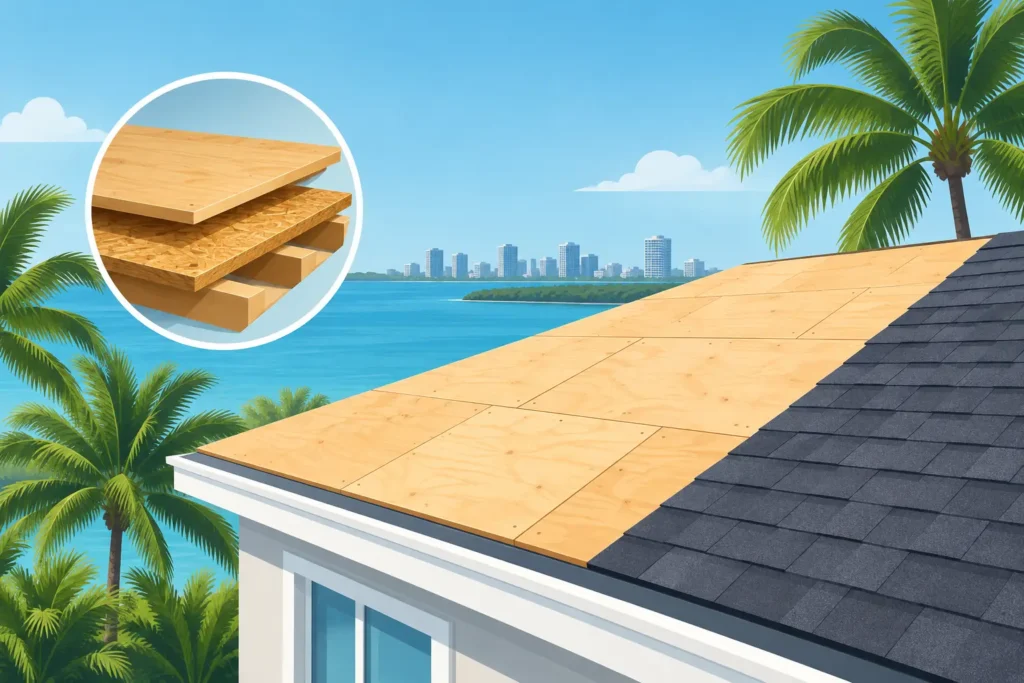
Roof decking, also called roof sheathing, is the layer of wood panels or boards attached directly to your roof framing. Underlayment, shingles, metal panels, tile, or a flat-roof membrane are installed on top of it. From the street, you cannot see the decking, but it gives every visible roofing material a secure, even surface to rest on.
Its job is bigger than simply holding nails. Proper decking helps distribute wind pressure, supports the weight of the roofing system, and creates the stable base needed for water-resistant underlayment and roof coverings to do their jobs. If the decking is soft, warped, thin, or deteriorated, even premium roofing materials can fail early.
In Florida, that foundation matters. Heavy rain, hurricane-force wind, year-round humidity, intense heat, and wind-driven debris all test a roof system. Water that gets beneath shingles or flashing can sit against the decking and begin damaging it long before a ceiling stain appears indoors.
Common Roof Decking Materials
Most modern residential roofs use plywood or oriented strand board, commonly called OSB. Both can perform well when correctly installed, adequately ventilated, and kept dry. The right option often depends on the roof design, local code requirements, the existing structure, and the roofing material being installed.
Plywood
Plywood is made from thin layers of wood veneer bonded together. It is widely used because it is strong, stable, and generally handles occasional moisture exposure better than some alternatives. It is a familiar choice for many reroofing projects, especially when damaged sections need to be replaced to match the existing deck.
OSB
OSB is manufactured from compressed wood strands and resin. It is cost-effective, consistent in size, and commonly used on newer construction. It can provide dependable performance, but prolonged water exposure can cause swelling around edges or fastener locations. Once panels lose their shape or structural integrity, replacement is usually the safer option.
Plank Decking and Specialty Substrates
Older Florida homes may have spaced wood planks rather than sheet goods. Tile roofs, metal roofs, and certain low-slope systems may also require specific deck preparation or cover boards. A contractor should evaluate the spacing, condition, thickness, and fastening of the existing material before recommending a new roof system. Not every deck can accept every roof covering without modifications.
Signs Your Roof Decking May Be Damaged
Decking damage is often hidden below the roof covering, which is why a professional inspection is valuable after a leak or major storm. Still, there are warning signs property owners can notice.
A sagging or uneven roofline is one of the clearest red flags. If part of the roof dips between rafters or trusses, moisture damage or structural movement may be affecting the deck. Soft spots that feel spongy when walked on by a trained roofing professional also deserve immediate attention.
Inside the property, watch for new ceiling stains, peeling paint, damp insulation, musty odors, or water entering around light fixtures. These symptoms do not automatically mean the decking is rotten. The source could be flashing, underlayment, a roof penetration, or a damaged roof covering. But they do mean water has found a path where it does not belong.
From outside, missing shingles, lifted metal panels, cracked tiles, exposed underlayment, or storm debris can create opportunities for water intrusion. On flat commercial roofs, ponding water, blistered membrane areas, open seams, and wet insulation can signal that the roof assembly needs closer investigation.
Why Florida Roofs Need Extra Attention
Florida roofs do not get much recovery time. Afternoon storms can drive rain under vulnerable edges, tropical systems can lift roofing materials, and humid air can slow drying after a leak. The longer moisture remains trapped in a roof assembly, the greater the risk of deck deterioration, mold growth, and damage to insulation or interior finishes.
Wind resistance is another reason decking condition cannot be ignored. Roofing nails and fasteners must be anchored into sound material. If the deck is weak, compromised, or improperly fastened to the framing, the entire system may be more vulnerable during high-wind events. This is particularly relevant when a roof replacement is intended to improve storm protection and meet current building requirements.
Heat also plays a role. High attic temperatures can accelerate wear on roofing materials and expose weaknesses in ventilation. Ventilation alone will not repair wet or decayed decking, but a properly designed roofing system can help manage heat and moisture moving forward.
When Decking Should Be Repaired or Replaced
Not every roof replacement requires complete deck replacement. In many cases, the decking is structurally sound and only isolated damaged panels need to be removed and replaced. That can be the most practical approach when the damage is limited and the rest of the deck meets installation requirements.
Replacement is typically necessary when decking has rot, significant swelling, delamination, large cracks, severe water staining with loss of strength, or poor fastener holding power. A panel that looks discolored but remains dry and structurally sound may not need replacement. A qualified inspection determines the difference.
Complete replacement may be considered when widespread moisture damage is found, when an older plank deck needs upgrades for a new roofing system, or when the deck does not meet applicable code or manufacturer requirements. This can add cost to a reroofing project, but covering failed decking creates a larger risk: leaks may return, fasteners may loosen, and a new roof may not qualify for its intended warranty protection.
What to Expect During a Decking Inspection
A proper decking evaluation is easiest when the old roof covering has been removed. That is when a roofing crew can see the actual condition of the substrate rather than making assumptions from the exterior. The crew should inspect for soft areas, moisture damage, panel gaps, inadequate fastening, damaged edges, and areas around chimneys, vents, skylights, valleys, and roof-to-wall transitions.
For commercial and low-slope roofs, the assessment may also include moisture testing and inspection of insulation, cover boards, drains, scuppers, and flashing details. Water can travel within a roof assembly, so the visible leak location is not always where the deck damage began.
Ask for clear communication if replacement decking is recommended. You should understand where the damage is located, why replacement is needed, and how the repair affects the overall scope and price. Transparent documentation and upfront pricing make it easier to make a confident decision when unexpected conditions are uncovered.
Protecting Your Decking Before Problems Spread
The best protection is keeping water out in the first place. Schedule roof inspections after major storms, especially if you see missing materials or debris impacts. Address minor leaks promptly instead of waiting for a larger repair. A small flashing issue or damaged shingle can allow repeated water intrusion into the decking during every rainfall.
Keep gutters and roof drainage paths clear so water moves away from the roof as designed. Trim branches that can scrape roofing materials or fall during high winds. For commercial properties, routine maintenance should include checking drains and low areas where standing water can stress the roof system.
If you are planning a roof replacement, do not treat the decking as an afterthought. Ask how the contractor will inspect it, what materials will be used for any needed repairs, and whether the new system is designed for Florida’s weather conditions. The visible roof may be the finished product, but the deck is the base that helps it stay secure.
When a roof has been through a storm, has an active leak, or is nearing replacement age, a timely professional inspection protects more than the roof covering. Florida’s Roofing & Construction Group can help property owners identify decking concerns, explain practical repair options, and move forward with protection built for the conditions Florida properties face.