
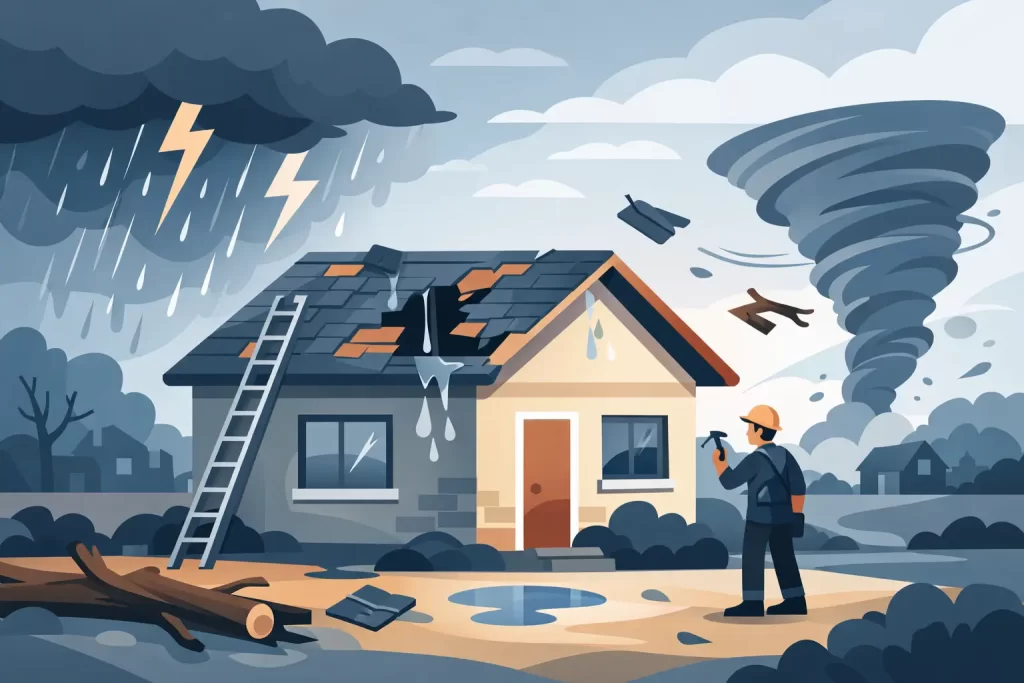
A Florida storm can turn a sound roof into an urgent problem in a matter of minutes. Wind-driven rain finds lifted shingles, falling limbs puncture decking, and water can spread through insulation, ceilings, walls, and electrical systems before the weather clears. Emergency roof repair after storm damage is about stopping that exposure quickly, protecting the people inside, and documenting the condition before small leaks become major restoration work.
The right next step depends on the damage, the weather still moving through the area, and whether water is entering the building. What should not change is the priority: stay safe, limit further damage where possible, and have a qualified roofing professional assess the roof as soon as conditions allow.
Start With Safety, Not a Roof Inspection
Do not climb onto a roof after a storm. Wet shingles, loose metal, hidden holes, downed power lines, and unstable tree limbs create real hazards, even for experienced property owners. A roof that appears intact from the ground may have weakened decking or damaged edges that cannot support weight safely.
Instead, walk the property from a safe distance. Look for missing shingles, exposed underlayment, bent flashing, displaced gutters, torn flat-roof membrane, debris impact, or branches resting on the structure. Inside, check for dripping water, damp insulation, stained ceilings, bubbling paint, wet walls, or a musty smell. Move furniture, electronics, inventory, and other valuables away from active leaks if you can do so without entering an unsafe area.
If water is near electrical outlets, fixtures, or panels, avoid touching the area. Turn off power to the affected portion of the building only if it is safe to do so, then contact an electrician or emergency services as needed. For commercial properties, keep employees and customers out of affected areas until the leak and any ceiling damage have been evaluated.
What Counts as an Emergency Roof Repair After Storms?
Not every storm-related roof issue requires an immediate temporary repair, but any condition that leaves the interior exposed should be treated as urgent. Active leaks, missing sections of shingles, punctures from debris, lifted membrane on a flat roof, and flashing pulled away from a chimney, vent, wall, or skylight all require prompt attention.
A tree limb through the roof is an obvious emergency. So is a leak that appears small but is spreading across a ceiling or wall. Water does not always travel straight down. It can move along roof framing, insulation, ductwork, and electrical pathways, causing damage several feet away from the original opening.
On a commercial flat roof, ponding water is another concern. Standing water may expose weak seams, clogged drains, damaged scuppers, or areas where the membrane has separated. A facility manager should not assume the issue will disappear once the water recedes. The roof needs an inspection to identify where water entered and whether saturated materials are trapped below the surface.
Document the Damage Before Repairs Begin
Photos and notes help establish what happened, support an insurance claim, and give your roofing contractor a clearer starting point. Take pictures and short videos from the ground and from inside the property. Capture damaged roof areas visible from a safe position, fallen debris, water stains, dripping ceilings, damaged belongings, and any exterior components affected by wind.
Write down the date and approximate time of the storm, when you first noticed the damage, and the steps you took to protect the property. Keep receipts for emergency mitigation, such as temporary tarping, debris removal, water extraction, or hotel stays if the home cannot be safely occupied.
Avoid throwing away damaged materials too quickly. An adjuster may need to see them. At the same time, do not delay reasonable steps to prevent additional water damage while waiting for an insurance decision. Most policies expect property owners to mitigate further loss when it is safe to do so.
Temporary Protection Can Prevent a Bigger Loss
A professional emergency response often begins with temporary protection. Depending on roof type and damage, this may involve a properly secured tarp, sealing an exposed opening, removing dangerous loose material, clearing drains, or covering a damaged roof penetration. These are not cosmetic fixes. They buy time by keeping rain out until a complete repair or replacement plan is ready.
Temporary work needs to be done correctly. A tarp loosely spread over shingles can collect water, tear free in the next wind event, or cause more damage at the edges. On low-slope and flat roofing systems, the wrong material or attachment method can compromise the membrane. Professional crews assess the roof structure, use appropriate materials, and document the mitigation work for your records.
Florida’s Roofing & Construction Group provides 24/7 emergency response for storm-damaged roofs, helping homeowners and businesses protect the property first while determining what permanent work is necessary.
What a Professional Roof Assessment Should Cover
Once the weather is safe, a thorough inspection should look beyond the most visible damage. Storm force can loosen fasteners, crack seals, lift shingles without removing them, and damage flashing around areas that are already vulnerable to leaks.
For shingle roofs, the inspection should include ridge caps, valleys, vents, pipe boots, flashing, gutters, and signs of wind creasing or granule loss. For metal roofing, the contractor should check panels, seams, fasteners, trim, and penetrations. Flat-roof assessments should focus on membrane seams, drains, edge metal, flashing, blisters, punctures, and saturated insulation below the roof surface.
The contractor should also inspect the attic or interior where practical. Moisture beneath the roof can reveal issues that exterior photos miss. This matters because a roof repair that addresses only the visible opening may not solve the source of the leak.
A clear estimate should explain the scope of work, materials, timeline, and whether the repair is expected to restore the roof’s service life. If damage is widespread or the roof was already nearing the end of its life, replacement may be the better financial decision. A repair costs less upfront, but repeated repairs on an aging roof can become more expensive than a properly planned replacement.
Repair or Replace? The Answer Depends on the Roof
A localized puncture or a handful of wind-damaged shingles can often be repaired successfully when the surrounding roof is in good condition. Matching materials, access, and the age of the roof all affect the result. New shingles may not match faded existing shingles exactly, but a focused repair can still restore weather protection.
Replacement becomes more likely when damage affects multiple slopes, the roof deck has widespread water intrusion, the roofing system has reached the end of its expected service life, or matching materials are no longer available. For commercial properties, a roof that has suffered repeated leaks or widespread membrane failure may need a larger restoration or replacement strategy to avoid disruptive emergency calls after every major storm.
The best recommendation is the one based on the actual roof condition, not a one-size-fits-all sales pitch. Ask for photos, a written explanation of the findings, and a straightforward discussion of the repair-versus-replacement trade-off.
Avoid Common Post-Storm Mistakes
Storm damage creates pressure, and that is when poor decisions are easiest to make. Be cautious of anyone who arrives uninvited and demands immediate payment, offers to waive an insurance deductible, or cannot provide clear company information and a written scope of work. A legitimate contractor should be able to explain the problem, show evidence of damage, and provide upfront pricing.
Do not wait weeks to address a leak simply because it slows down after the rain ends. Florida humidity can turn trapped moisture into mold growth, damaged drywall, rotten decking, and insulation problems. A quick inspection can protect both the building and the budget.
Finally, do not treat gutters as separate from the roof problem. Storm debris can clog gutters and downspouts, causing water to back up at the roof edge or pool near the foundation. Clearing and repairing the drainage system is often part of restoring full exterior protection.
Plan for the Next Storm While Repairs Are Underway
After emergency work is complete, ask what can reduce risk during the next severe weather event. That may include replacing failing flashing, improving attic ventilation, reinforcing vulnerable roof edges, repairing gutters, upgrading worn materials, or scheduling regular inspections before hurricane season.
For a home or business, a storm-damaged roof is not just a construction issue. It is a threat to comfort, operations, belongings, and property value. Acting quickly with a qualified local roofing team gives you the best chance to keep a hard storm from becoming a long repair cycle. When the skies clear, protect the building before the next rain tests it again.