
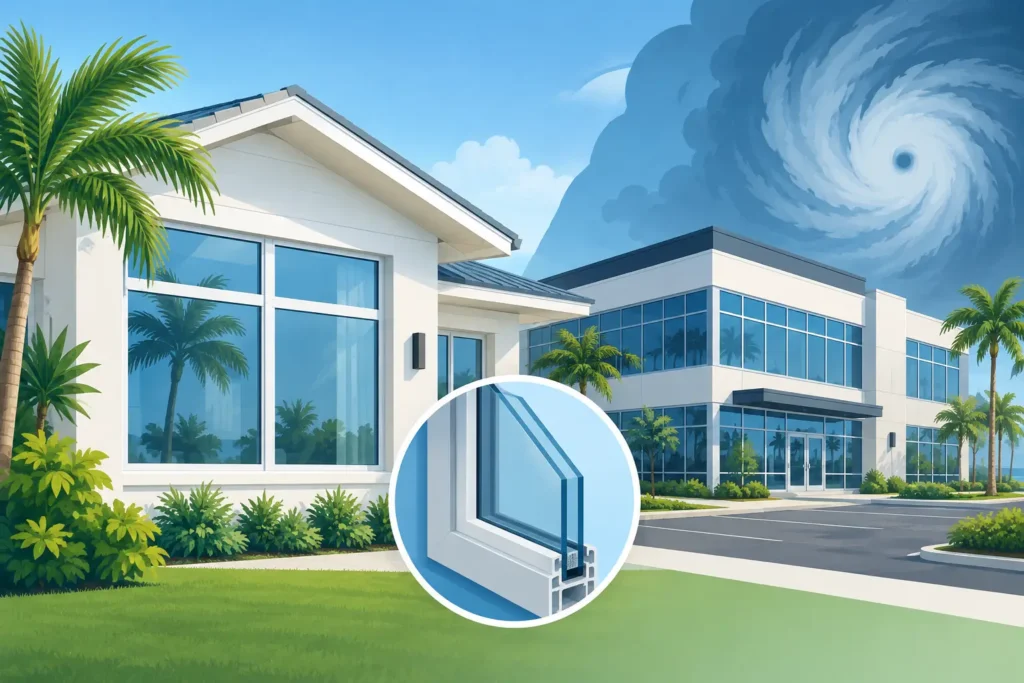
A Florida storm can turn ordinary outdoor items into dangerous projectiles in minutes. When wind-driven debris strikes standard glass, a broken window can allow pressure, rain, and debris into the building – creating a much larger problem than a damaged pane. Impact windows are built to help protect the openings that storms target first, giving homeowners and commercial property owners a stronger line of defense.
For properties along the Panhandle, Tampa Bay, Southwest Florida, and other hurricane-prone areas, window replacement is not just a cosmetic upgrade. The right system can support storm preparedness, everyday security, noise control, energy performance, and property value. The details matter, though. Choosing impact-rated products is only part of the decision. Proper design, product approval, and installation all determine how well the windows perform when conditions turn severe.
What Makes Impact Windows Different?
Impact windows use laminated glass designed to remain held together after an object strikes it. Instead of separating into sharp pieces and leaving a wide-open hole, the glass is bonded with a durable interlayer. The outer glass may crack under a significant impact, but the laminated layer is intended to help keep the opening protected.
This construction is paired with reinforced frames, heavy-duty hardware, and anchoring methods engineered for high-wind conditions. Quality impact window systems are tested for both impact resistance and pressure cycling. That second part is critical in Florida because hurricane-force winds do not simply hit a building once. They push and pull against windows repeatedly as the storm moves through.
A window is only as effective as the full system around it. Glass, frame, locks, sealants, fasteners, flashing, and the surrounding wall opening all need to work together. That is why a lower-priced product with rushed installation can become an expensive compromise.
Why Florida Properties Benefit From Impact Windows
Storm protection is the most obvious reason to consider impact-rated windows, but it is not the only benefit. Florida property owners often notice day-to-day improvements long before the next named storm arrives.
Protection from windborne debris
Flying branches, patio furniture, roof materials, and loose construction debris can damage conventional windows during a storm. Impact windows are designed to resist specified impact and pressure conditions, helping reduce the risk of a breach in the building envelope. A protected opening can help keep rain out and reduce the chance of sudden pressure changes inside the structure.
For commercial properties, this can mean less exposure to interior water damage, damaged inventory, and operational downtime. For homeowners, it means greater confidence when a storm warning is issued and a more secure home after the weather passes.
Better security every day
Laminated glass is harder to penetrate than standard window glass. While no window can make a property completely invulnerable, impact-rated construction can create an additional barrier against forced entry. The glass may crack if struck, but it is designed to stay in place rather than breaking apart immediately.
This added resistance is valuable for ground-level residential windows, storefronts, offices, rental properties, and buildings that may sit vacant after hours. It is security that works quietly every day, not just during hurricane season.
Less outdoor noise
Traffic, lawn equipment, construction, and neighborhood activity can make it difficult to relax or work. The laminated glass and tighter construction of many impact window systems can help reduce sound transfer. Results vary by product, glass package, wall construction, and the type of noise outside, but many owners notice a more comfortable interior environment.
Noise reduction is especially useful for homes near major roads and commercial properties where concentration, guest experience, or private conversations matter.
Improved indoor comfort and efficiency
Older single-pane windows, worn seals, and poorly fitted frames can let heat and humidity work their way indoors. Modern impact windows may help reduce air leakage and solar heat gain when matched with the right glazing options. That can make rooms feel more consistent and reduce strain on the HVAC system.
Efficiency depends on more than the window itself. Orientation, shade, insulation, roof condition, and air sealing all affect energy use. Still, windows are one of the most important places to address when a property feels hot near the glass, drafts are noticeable, or cooling costs keep climbing.
Choosing the Right Impact Windows for Your Property
There is no single best window for every Florida building. A coastal home, a downtown office, a rental property, and a retail location may have different code requirements, performance goals, visual preferences, and budgets. The right choice starts with a clear assessment of the structure and how the space is used.
First, confirm that the product is appropriate for your location and opening. Florida building code requirements can vary by wind zone, exposure, building height, and local jurisdiction. A qualified contractor should help identify the required design pressures and make sure the selected windows carry the necessary approvals for the project.
Next, consider the frame material. Vinyl, aluminum, and composite options each have strengths. Vinyl can offer good thermal performance and low maintenance. Aluminum can provide clean sightlines and strong structural characteristics, particularly for larger openings. The best option depends on the window size, architectural style, coastal exposure, and desired appearance.
Glass selection matters just as much. Tints, low-emissivity coatings, and insulated glass configurations can affect heat gain, visible light, glare, and energy performance. A room with intense afternoon sun may benefit from a different glass package than a shaded north-facing bedroom. The goal is not the darkest glass possible. It is a smart balance of comfort, clarity, and protection.
Finally, do not overlook operation and design. Fixed picture windows, casement windows, sliders, single-hung windows, and French doors all serve different purposes. Think about ventilation, cleaning access, furniture placement, emergency egress requirements, and how the building looks from the street. A good plan protects the property without making daily use more difficult.
Installation Is Where Performance Becomes Real
A high-quality impact window can underperform if it is measured incorrectly, installed out of square, anchored improperly, or sealed poorly. Water intrusion often begins at transitions around the opening, not through the glass itself. That is why installation should be treated as a critical part of the investment, not an afterthought.
Before work begins, the contractor should inspect the existing opening, identify signs of rot or water damage, verify dimensions, and explain how the old windows will be removed. In some cases, surrounding repairs may be needed before new windows can be installed correctly. Addressing those conditions upfront helps avoid covering up a problem that could worsen behind the new frame.
Ask how the installation will protect interior finishes, exterior stucco or siding, and landscaping. For businesses, ask about scheduling, access, safety procedures, and ways to limit disruption to employees and customers. A professional crew should leave the work area clean and confirm that each window operates, locks, and seals properly before the project is complete.
Florida’s Roofing & Construction Group approaches exterior upgrades with the full building envelope in mind. Windows, roofing, gutters, siding, insulation, and storm repairs affect one another. Working with one experienced team can make it easier to spot related issues before they become separate repair projects.
Questions to Ask Before You Buy
Before approving an impact window project, get direct answers about the product, installation, and long-term support. Four questions can help you compare proposals fairly:
- What Florida approvals and wind-pressure ratings apply to these specific windows?
- What glass package, frame material, and hardware are included in the quoted price?
- How will the existing openings be prepared, sealed, and inspected during installation?
- What workmanship and manufacturer warranty coverage is available after the project is complete?
Be cautious when comparing estimates that appear dramatically different. One proposal may include upgraded glass, permit handling, structural anchoring, finish work, or warranty coverage that another estimate leaves out. Upfront pricing should be clear enough that you know exactly what you are paying for and what may require additional work.
When Should You Replace Your Windows?
Waiting until a window fails completely is not always the best strategy. Cracked glass, cloudy panes, deteriorated frames, water stains around openings, difficult operation, recurring drafts, and increasing exterior noise are all reasons to schedule an evaluation. After a major storm, even windows that look intact may deserve inspection if they were struck by debris or exposed to significant pressure.
Window replacement can also make sense when coordinating a larger exterior project. If roofing, siding, insulation, or storm-damage repairs are already underway, planning the work together may reduce disruption and help ensure that the exterior components fit and seal correctly.
The right impact windows do more than prepare a property for the next storm. They help make the space quieter, more comfortable, more secure, and easier to protect for years ahead. A professional assessment can turn that goal into a clear plan built for your property, your budget, and Florida weather.