A Florida commercial roof can take punishing heat all afternoon, then face wind-driven rain before closing time. That cycle is why a commercial roof coating guide should start with one fact: a coating is not paint. When the roof is a good candidate and the system is correctly specified, a coating can create a renewed, water-resistant surface that helps manage heat, extend service life, and delay a disruptive tear-off.
For facility managers, retail owners, condominium boards, and business operators, the decision comes down to more than color or price. The existing roof condition, drainage, foot traffic, rooftop equipment, and Florida weather exposure all determine whether a coating is a smart investment or a short-lived patch.
What a Commercial Roof Coating Actually Does
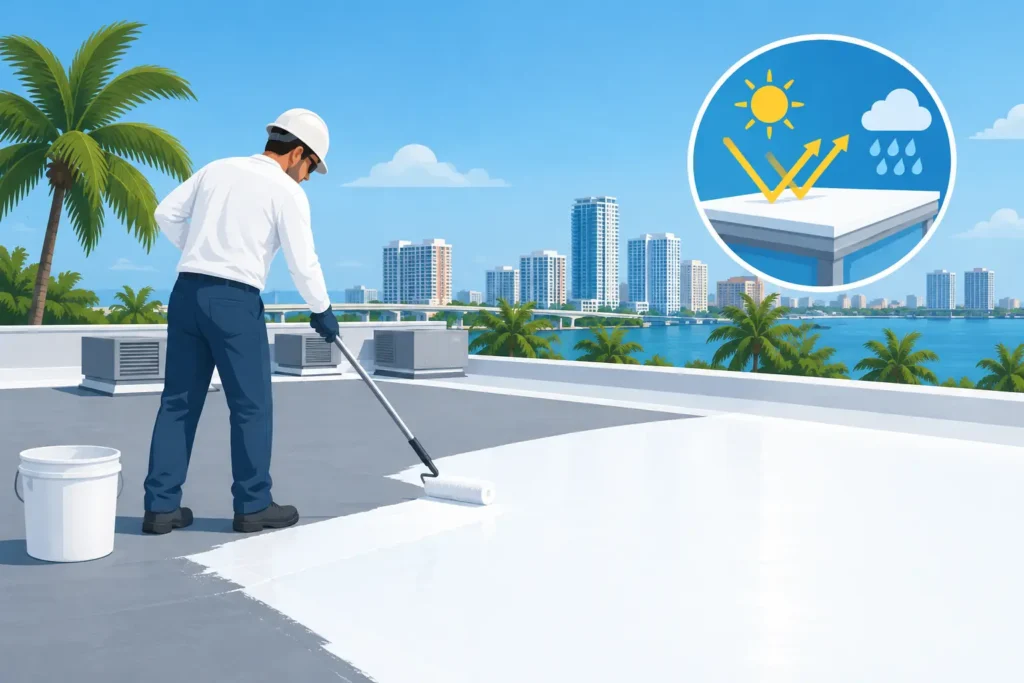
A commercial roof coating is a fluid-applied membrane installed over an existing roofing system. Once it cures, it forms a continuous protective layer across the roof field, seams, penetrations, and other vulnerable areas. Most coatings are white or light colored to reflect sunlight, which can reduce roof-surface temperatures and lessen heat gain into the building.
The biggest benefit is restoration without automatically removing the existing roof. A properly coated low-slope roof can gain a new protective surface with less demolition, less landfill waste, and less interruption to daily operations than a full replacement. That matters when the building is occupied by tenants, customers, inventory, or sensitive equipment.
Coatings do have limits. They cannot correct saturated insulation, extensive membrane failure, rotten decking, major structural movement, or drainage problems that leave water standing for long periods. A roof that looks worn from the ground may be a strong coating candidate. A roof with hidden moisture and recurring leaks may need targeted repairs or replacement first.
Is Your Roof a Candidate for Coating?
The right answer begins with a professional inspection, not a sales pitch. An experienced commercial roofing contractor should inspect the roof surface, seams, flashings, drains, scuppers, expansion joints, and penetrations around HVAC units or vents. Where moisture is suspected, additional testing may be needed to identify wet materials beneath the membrane.
A coating often makes sense when the existing roof is generally dry, stable, and still firmly attached to the deck. Minor splits, open seams, weathered areas, and aging flashings can frequently be repaired during preparation. The roof must also have enough positive drainage for the selected coating system.
A replacement may be the better long-term choice when there is widespread trapped moisture, repeated leaks in multiple areas, deteriorated decking, or insulation that has lost its performance. Coating over those conditions can conceal a larger problem while allowing damage to continue below the surface. Reliable advice sometimes means recommending repairs or replacement before restoration.
Questions to Ask Before You Approve a Coating
Ask what condition the contractor found beneath the visible surface, how seams and penetrations will be reinforced, and whether the proposed material is rated for ponding water. You should also ask how the roof will be cleaned, what happens if rain interrupts the work, and what workmanship and manufacturer warranty options apply.
For occupied buildings, discuss access and scheduling. Coating work is usually less disruptive than replacement, but crews still need safe access, dry conditions, and time for the product to cure. A clear work plan protects your tenants, customers, and normal business operations.
Choosing the Right Commercial Roof Coating System
There is no single best coating for every Florida property. The best system is the one matched to the existing roof, roof slope, drainage pattern, and expected wear.
Silicone Coatings
Silicone is often considered for roofs that regularly hold water because many silicone systems perform well in ponding-water conditions. It handles UV exposure effectively and typically does not become brittle from constant sun. That can make it a strong option for older flat roofs with complicated drainage challenges.
The trade-off is that silicone can attract dirt over time, which may reduce reflectivity if the roof is not maintained. It can also be slick when wet, so walk pads and careful access planning are especially important around frequently serviced equipment.
Acrylic Coatings
Acrylic coatings are water-based, highly reflective, and commonly used on roofs with positive drainage. They can offer an economical restoration path and may help reduce heat absorption on large commercial roof areas.
However, acrylic systems generally need dry weather to apply and cure properly. They are not always the right fit where water ponds after storms. In Florida’s wet season, project timing and daily weather monitoring matter as much as the coating selection.
Polyurethane Coatings
Polyurethane coatings are known for toughness and abrasion resistance. They can be a practical choice for roof sections that see regular foot traffic, such as paths to HVAC equipment. Some systems use a base coat and a protective topcoat to combine durability with UV resistance.
They can cost more than certain acrylic options, and proper surface preparation remains essential. A durable material will not compensate for poor cleaning, unaddressed seams, or wet substrate conditions.
Preparation Determines Whether the Coating Lasts
The coating itself receives most of the attention, but preparation determines whether it bonds and performs. Roof surfaces need to be cleaned of dirt, chalking, loose material, biological growth, and residue. Drains must be cleared so water can leave the roof as designed.
Next, the crew should complete necessary repairs. This may include sealing cracks, repairing blisters, securing loose membrane edges, replacing damaged flashing, and reinforcing seams or penetrations with compatible fabric and mastic. Areas around curbs, pipes, drains, and transitions deserve special attention because they are frequent sources of leaks.
The roof must then dry fully before coating begins. Florida humidity and afternoon storms can make this step challenging, which is why experienced local crews plan around the forecast rather than rushing the application. Applying a coating to a damp or contaminated roof can lead to adhesion failure, bubbling, or early breakdown.
Thickness also matters. Coatings are specified by dry film thickness, not by how quickly a crew can cover the roof. A professional proposal should identify the material, reinforcement details, target thickness, and the areas included in the work.
Energy Savings Matter, but Water Protection Comes First
A white reflective coating can help lower roof temperatures significantly in direct sun. For many commercial buildings, that may reduce cooling demand and make upper-floor spaces more comfortable. Actual energy savings depend on insulation levels, HVAC efficiency, building use, ceiling conditions, and the size of the roof.
That is why energy efficiency should be treated as an added benefit, not the only reason to coat a roof. The primary objective is to protect the building from water intrusion and preserve a roof system that still has useful life. When a coating also supports lower cooling costs, it can strengthen the financial case for restoration.
Property owners should also consider whether future solar equipment, HVAC upgrades, or other rooftop changes are planned. Coordinating the roof restoration with those projects can prevent newly coated areas from being disturbed shortly afterward.
Maintenance Protects Your Coating Investment
A coated roof still needs attention. Florida storms can deposit branches and debris that block drains, while service technicians can damage the surface if they drag equipment or repeatedly walk the same path. Semiannual inspections, plus inspections after major storms, help catch small issues before they become interior leaks.
Maintenance should focus on drainage, seams, penetrations, rooftop equipment curbs, and any areas with heavy foot traffic. Keeping records of inspections and repairs also supports warranty compliance and helps facility managers budget for future work with fewer surprises.
Get a Clear Plan Before the Next Storm
A commercial roof coating can be one of the most cost-effective ways to restore an aging flat or low-slope roof, but only when the roof is evaluated honestly and prepared correctly. Florida’s Roofing & Construction Group helps commercial property owners assess roof condition, identify repair needs, and choose a protection plan that fits the building rather than forcing a one-size-fits-all solution.
Do not wait for a ceiling stain to dictate the conversation. Schedule an inspection while conditions are manageable, ask for a detailed scope of work, and make the decision based on the roof you have today and the protection your property will need through the next Florida storm season.