A flat roof can look fine from the ground while water is working its way through a seam, around a drain, or beneath an aging flashing detail. For Florida property owners, the choice between EPDM versus modified bitumen is not just about material cost. It affects heat exposure, hurricane readiness, maintenance needs, repair options, and how long your building stays protected from water intrusion.
Both systems have a proven place on low-slope residential and commercial roofs. The better choice depends on the roof deck, drainage, building use, budget, existing conditions, and the way the roof will be installed. A professional inspection should come before a material decision, especially if the roof has ponding water, storm damage, or signs of trapped moisture.
EPDM Versus Modified Bitumen: The Core Difference
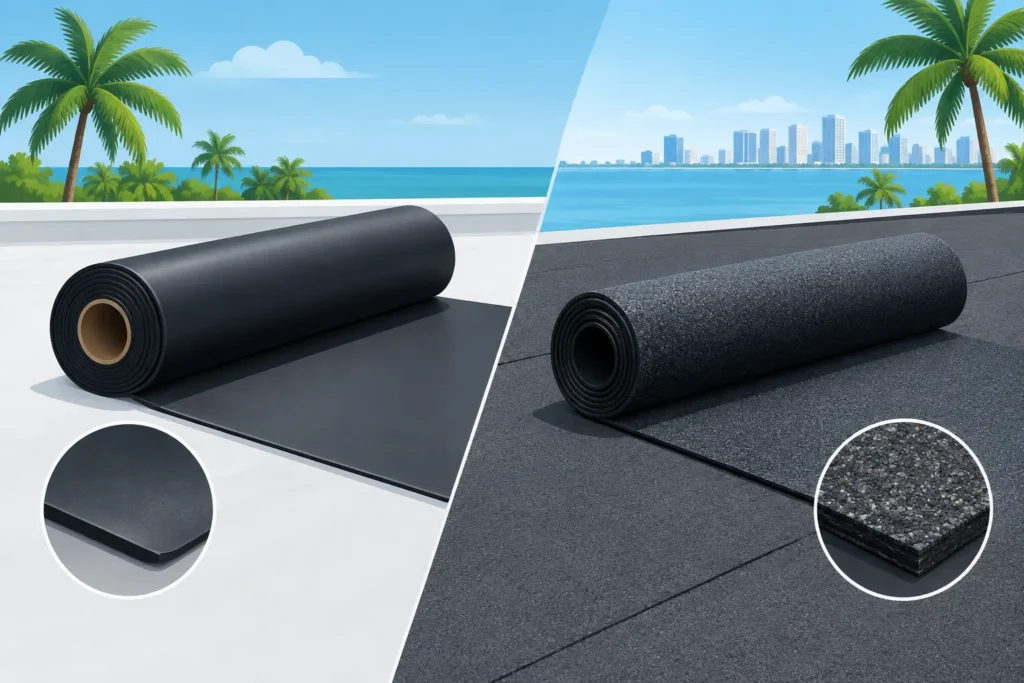
EPDM is a synthetic rubber membrane. It is usually installed in large sheets, then adhered, mechanically attached, or held in place with ballast in certain applications. Because the sheets can cover a broad area, EPDM roofs often have fewer field seams than systems installed in narrower rolls.
Modified bitumen is an asphalt-based roofing membrane reinforced with polyester or fiberglass. It is generally installed in rolls, often as a multi-ply system. The material may be applied with self-adhered sheets, cold adhesives, hot asphalt, or heat-welded methods. In occupied buildings and many Florida projects, self-adhered or cold-applied options can reduce odor and avoid the fire risks associated with open-flame installation.
Neither material is automatically better. EPDM brings flexible rubber performance and a simpler membrane layout. Modified bitumen offers layered protection and familiar repair methods. The right answer is the one that fits the building and the installation plan.
How Florida Heat Changes the Decision
Florida roofs deal with strong UV exposure, high surface temperatures, humidity, and frequent afternoon storms. A roof membrane must handle repeated expansion and contraction without opening at seams or stressing vulnerable details.
EPDM is known for flexibility, including during temperature changes. Traditional black EPDM absorbs substantial heat, which can increase roof-surface temperatures. White EPDM options are available and can reflect more sunlight, but product availability, system design, and warranty requirements vary. A reflective roof coating may also be considered for qualifying systems, though coating is not a substitute for correcting wet insulation, failed seams, or drainage problems.
Modified bitumen is available with reflective cap sheets and mineral surfaces that can help manage solar exposure. APP modified bitumen performs well in hot conditions, while SBS modified bitumen is valued for its flexibility. The distinction matters, but it should not distract from the larger question: Is the entire roof assembly designed for Florida conditions?
Insulation thickness, roof color, ventilation where applicable, deck condition, and drainage all influence energy performance. A white membrane alone will not solve an underinsulated roof or a roof that holds water after every storm.
Seams, Flashing, and Water Control
Most low-slope roof leaks do not begin in the middle of a clean membrane field. They occur at seams, penetrations, roof edges, drains, curbs, wall transitions, and previous repair areas.
EPDM can reduce the number of field seams because it is installed in wide sheets. Its seams are typically joined with approved tapes or adhesives. Proper cleaning, primer application, rolling pressure, and edge detailing are essential. A poorly prepared seam can fail regardless of the quality of the membrane itself.
Modified bitumen uses narrower rolls, so there are more overlaps across the roof surface. That does not make it a poor choice. A well-installed multi-ply modified bitumen roof provides overlapping layers that can add protection. The trade-off is that installation quality becomes especially important at laps, terminations, and flashing points.
On either system, drainage deserves serious attention. Standing water accelerates wear, attracts debris, and exposes weaknesses at seams and flashings. Tapered insulation, properly sized drains, clean scuppers, and corrected low areas may be more valuable than choosing one membrane based on price alone.
Storm and Wind Resistance Are Assembly Issues
During a hurricane or severe wind event, roofing materials are tested as a complete system. The membrane is only one part of that system. Deck attachment, insulation fastening, adhesive coverage, perimeter details, edge metal, parapet walls, and flashing installation all affect wind uplift resistance.
EPDM systems can be fully adhered or mechanically attached to meet project-specific wind requirements. Modified bitumen can also be engineered as a strongly bonded, multi-layer assembly. The correct fastening pattern and approved components should be selected for the building location, height, exposure, and applicable Florida code requirements.
Property owners should be cautious of simple claims that one flat-roof material is hurricane-proof. No membrane can overcome weak edge metal, deteriorated decking, blocked drainage, or an installer who cuts corners at penetrations. A qualified contractor should explain how the entire assembly will be secured, not just name the membrane being installed.
Installation Disruption and Building Use
The way your property is used can influence the best material choice. For a medical office, restaurant, retail space, condominium, or occupied home addition, minimizing fumes, noise, and operational disruption may be a priority.
EPDM installation can be relatively straightforward when the substrate is dry, smooth, and properly prepared. Fully adhered systems require careful adhesive work, while mechanically attached systems may move faster in certain conditions. Weather, moisture in the substrate, and wind can all affect scheduling.
Modified bitumen gives contractors several application options. Self-adhered products can be a practical fit when open flame is not appropriate. Cold-applied systems can also reduce some jobsite concerns. Heat-welded applications have their place, but they require strict safety practices and experienced crews.
If a business cannot close during roof work, ask how the crew will protect entrances, manage staging, control odors, keep drains clear, and respond if rain arrives before the workday ends. A good roofing plan protects the building and the people inside it.
Repairs and Ongoing Maintenance
Every flat roof needs regular attention. Florida’s leaves, windblown debris, salt air in coastal areas, and fast-moving storms can turn a small drainage issue into a costly leak.
EPDM repairs often involve cleaning and preparing the membrane before applying approved patches, tapes, or liquid flashing materials. Repairs can be highly effective when the membrane is still in serviceable condition. However, contaminated surfaces, widespread shrinkage, brittle areas, or saturated insulation can point toward replacement rather than repeated patching.
Modified bitumen is also repairable, particularly when damage is localized. Compatible patches and coatings may address punctures, splits, or deteriorated laps. Because many modified bitumen roofs are multi-ply, the system may offer an added layer of protection after minor surface damage. Still, hidden moisture can travel beneath the surface, so a visible patch does not always reveal the full extent of the problem.
A maintenance program should include inspections after major storms and at least periodic checks of drains, flashings, seams, edge metal, and rooftop equipment supports. Keeping records of repairs also helps property owners make better replacement decisions before a leak damages interiors.
Cost: Look Beyond the Initial Proposal
Installed cost varies widely based on roof size, access, tear-off needs, deck repairs, insulation upgrades, drainage improvements, details, and required wind ratings. It is reasonable to compare bids, but the lowest proposal can become expensive if it excludes essential preparation or uses a system that does not meet the building’s needs.
EPDM may be attractive when a larger-sheet membrane and efficient installation fit the roof layout. Modified bitumen may be worth the investment when a multi-ply assembly, a specific cap sheet, or proven localized repairability better suits the property. The long-term value comes from the complete system, skilled installation, and a warranty that clearly explains what is covered.
Ask for an itemized scope. It should identify tear-off or recover work, insulation, membrane thickness or ply configuration, flashing details, edge metal, drainage corrections, permit requirements, cleanup, and warranty options. Upfront pricing is easier to trust when the scope leaves little room for surprise charges later.
Which Flat Roof Material Fits Your Property?
EPDM may be a strong choice for a property that needs a flexible, large-sheet membrane with fewer field seams and a well-designed attachment method. It can work particularly well on broad, uncomplicated roof areas when the deck and insulation are in good condition.
Modified bitumen may be the better fit for roofs where a layered system, a reflective cap sheet, or a particular installation approach makes sense. It is often a practical option for roofs with detailed layouts, frequent penetrations, or owners who value the familiarity of multi-ply asphalt-based protection.
The best decision begins with facts, not a sales pitch. A roof inspection should identify moisture, deck condition, drainage deficiencies, wind-exposure needs, flashing failures, and the condition of any existing roof layers. Florida’s Roofing & Construction Group can help property owners evaluate those conditions and build a replacement or repair plan around the protection the building actually needs.
Before the next heavy rain turns a small concern into interior damage, have the roof assessed by a qualified local professional. The right membrane is valuable, but careful design, dependable workmanship, and ongoing care are what keep Florida weather outside where it belongs.