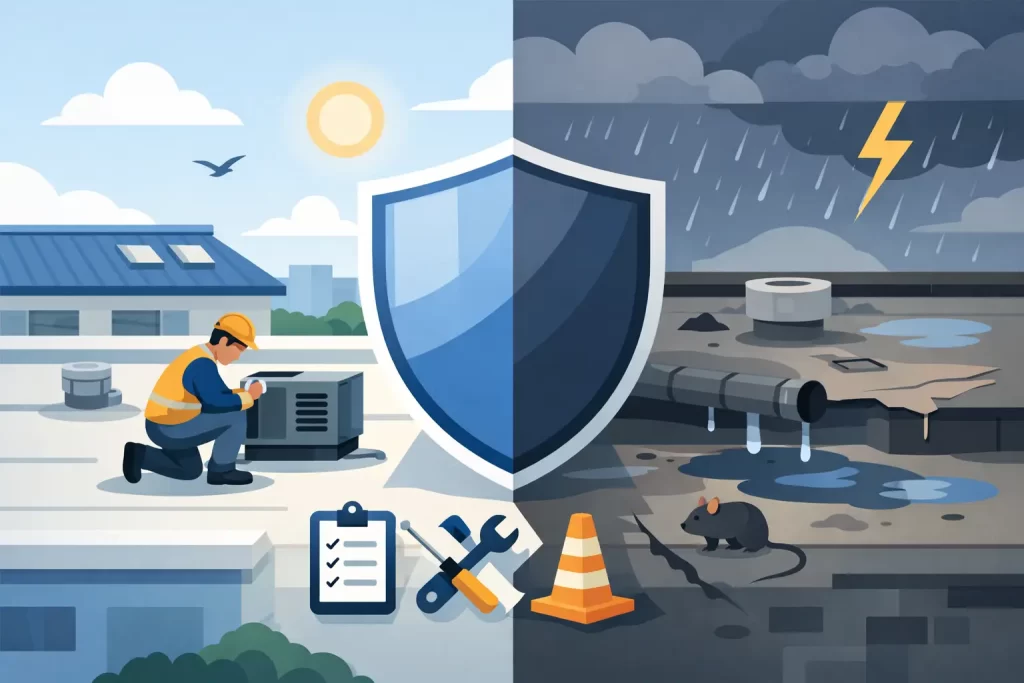
A small stain on a ceiling tile can be the first visible sign of a much larger problem above it. By the time water reaches the occupied space, it may have already saturated insulation, weakened roof decking, damaged electrical components, or created conditions for mold. A commercial roof maintenance program helps Florida business owners and facility managers find those issues while they are still manageable.
For a retail center, warehouse, medical office, restaurant, or multifamily property, the goal is not simply to keep the roof looking clean. The goal is to keep water out, protect the building’s operations, preserve the useful life of the roof system, and avoid an emergency that disrupts tenants, customers, employees, or inventory.
Why Florida Commercial Roofs Need Regular Attention
Florida roofs deal with conditions that can accelerate wear: intense UV exposure, sustained heat, heavy rain, high humidity, wind-driven debris, and tropical storms. Flat and low-slope commercial roofing systems are especially dependent on clear drainage and intact seams because water does not shed as quickly as it does on a steep-slope roof.
A roof can appear fine from the ground while developing small membrane splits, loose flashing, open penetrations, failing sealant, or ponding water. Each condition can let moisture travel beneath the surface. That makes regular inspections more valuable than waiting for an active interior leak.
Maintenance is also about planning. A roof failure rarely arrives at a convenient time. It can happen during a busy season, after hours, or in the middle of a storm when access and repair options are limited. Routine service gives property owners a clearer picture of the roof’s condition and a better chance to schedule repairs around business operations.
What a Commercial Roof Maintenance Program Should Include
A useful maintenance plan is built around the actual roof, not a generic checklist. The type of membrane, roof age, slope, drainage layout, rooftop equipment, previous repairs, and surrounding trees all affect what should be inspected and how often.
At a minimum, a qualified roofing professional should inspect the field membrane or roof covering, seams, edges, flashing, penetrations, drains, gutters, scuppers, and areas around HVAC units. The inspection should also look for signs of ponding water, punctures, cracked coatings, deteriorated sealant, loose metal, wind damage, and debris buildup.
Documentation matters just as much as the inspection itself. Facility managers need clear findings, photos when appropriate, repair recommendations, and a record of completed work. This creates a maintenance history that helps with budgeting, warranty support, insurance discussions, and future replacement planning.
Drainage deserves special focus
Standing water is one of the most common threats to a low-slope commercial roof. It adds weight, exposes materials to prolonged moisture, attracts debris, and can speed up membrane deterioration. In Florida, where sudden downpours are common, a drain or scupper clogged with leaves can turn a manageable rain event into a roof problem.
Cleaning drainage components is not a cosmetic task. It is preventive work that protects the roof system and reduces the chance of water backing up into vulnerable areas. If ponding remains after drains are clear, the roof may need a closer evaluation to determine whether the issue is related to slope, insulation settlement, or drainage design.
Small repairs should not wait
A maintenance program should identify and address minor defects before they spread. Resealing a penetration, securing a loose edge, replacing damaged flashing, or repairing a small membrane opening is typically far less disruptive than responding to widespread water intrusion.
That does not mean every imperfection requires a major project. Good roof maintenance is practical. A qualified contractor should explain what needs immediate attention, what should be monitored, and what can be included in a future budget. Clear priorities help owners protect the property without paying for unnecessary work.
How Often Should a Commercial Roof Be Inspected?
Most commercial properties benefit from inspections at least twice each year, often before and after the most severe weather season. Additional inspections are smart after hurricanes, tropical storms, hail, unusually high winds, or any event that leaves debris on the roof.
Some buildings need more frequent visits. Restaurants with rooftop grease exhaust systems, facilities with heavy HVAC traffic, properties surrounded by trees, and older roofs can require closer monitoring. A building with recurring leaks or drainage concerns should not rely on a twice-yearly schedule alone.
The right frequency depends on risk. A newer roof with limited foot traffic may need routine seasonal service, while an aging flat roof serving a busy commercial property may need quarterly inspections. The cost of more frequent maintenance should be weighed against the cost of water damage, business interruption, and premature roof replacement.
What Maintenance Can Prevent, and What It Cannot
A commercial roof maintenance program can reduce the likelihood of preventable leaks, extend the serviceable life of roofing materials, and reveal storm damage before it becomes a larger claim or repair. It can also help protect manufacturer warranty requirements when those requirements call for documented inspections or professional repairs.
It cannot make a roof last forever. Every roof eventually reaches the point where repairs become less reliable or less cost-effective than replacement. If the membrane is broadly deteriorated, insulation is saturated, seams are failing across large areas, or leaks keep returning in different locations, a repair-only strategy may cost more over time.
That distinction is important for capital planning. Maintenance gives owners accurate information so replacement is a planned investment rather than a rushed response to a major failure. In some cases, a coating system may be worth evaluating. In others, a full replacement is the more dependable option. The best choice depends on the existing roof system, moisture conditions, warranty goals, and the building’s future use.
Protect Operations During Repairs and Storm Season
Commercial roofing work should fit the building’s needs whenever possible. A warehouse may require careful coordination around loading areas. A medical office may need work scheduled to limit noise. A retail property may need protected entrances and clear communication with tenants. The contractor’s job is to solve the roof issue without creating unnecessary disruption below.
Storm preparation should also be part of the conversation. Before severe weather, a professional can check perimeter edges, drains, flashings, rooftop equipment areas, and visible vulnerabilities. After a storm, a prompt inspection can document damage and identify temporary protection or permanent repairs before the next rain event.
Florida’s Roofing & Construction Group helps commercial property owners protect flat and low-slope roof systems with inspections, repairs, maintenance, and responsive storm-damage service. The right team should provide straightforward recommendations, upfront pricing, and a clear scope of work so decision-makers know what is being addressed and why.
Choosing the Right Maintenance Partner
The lowest inspection price does not always create the best value. Commercial property owners need a contractor with experience in the roof systems used on their buildings, the ability to respond when weather causes damage, and the discipline to document findings clearly.
Ask whether the contractor performs repairs as well as inspections, how emergencies are handled, what the inspection report includes, and whether maintenance can be tailored to your building. It is also reasonable to ask about manufacturer credentials, warranties, insurance, safety practices, and how the contractor coordinates work around tenants or operations.
A dependable program should feel organized, not complicated. You should know when inspections occur, what was found, what was repaired, and what to budget for next. That visibility lets facility managers make decisions with confidence instead of reacting to the next ceiling leak.
The best time to protect a commercial roof is when the building is dry, the work can be planned, and a minor repair is still minor. A scheduled inspection today can help keep the next Florida storm from becoming tomorrow’s business interruption.