
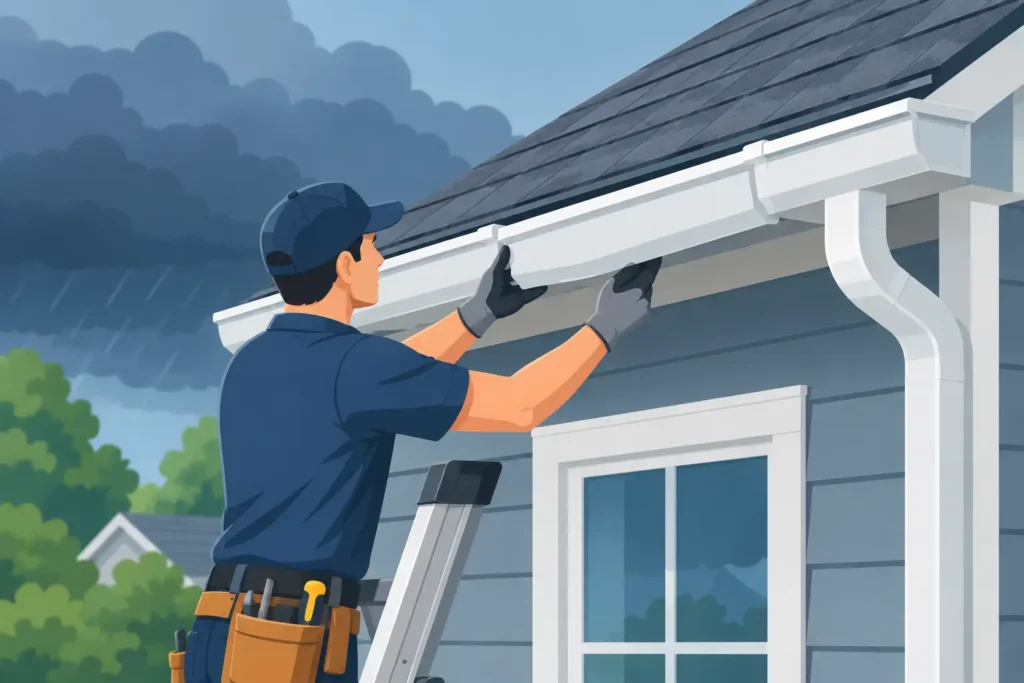
A gutter pulling away from the roofline is more than an eyesore. When you need to fix sagging gutters, you are protecting the fascia, soffit, siding, foundation, landscaping, and roof edge from water that no longer has a controlled path away from the building. In Florida, where a hard afternoon downpour can turn into a wind-driven storm in minutes, a small dip in a gutter can become an expensive exterior repair.
Sagging gutters usually give property owners a warning before they fail completely. You may see standing water after rain, overflowing corners, rust stains, loose spikes, or a section that appears lower than the rest. Acting early gives you more repair options and can prevent water from working its way behind the gutter system.
Why Gutters Start to Sag
Most sagging gutter problems come down to weight, weak support, or improper slope. Gutters are designed to carry moving water, not hold a heavy mix of wet leaves, roof grit, seed pods, and standing water. Once debris blocks an outlet or downspout, water pools in the channel and places constant stress on the hangers and fascia board.
Florida’s weather adds another layer of strain. Heavy rain fills a clogged gutter quickly, while high winds can loosen fasteners and pull sections out of alignment. Salt air near the coast may also accelerate corrosion on older steel components. On commercial buildings, long gutter runs and larger roof drainage areas can magnify the issue if the system does not have enough downspouts or support brackets.
The visible sag is sometimes only part of the problem. If the gutter fasteners are no longer holding, the wood behind them may be soft or rotted. Reattaching a gutter to damaged fascia without correcting the wood can create a temporary-looking fix that fails during the next major storm.
How to Inspect a Sagging Gutter Safely
Start from the ground whenever possible. Look along the gutter line from both ends of the building. A properly installed system should look straight, with a subtle slope toward each downspout. A noticeable low point, a gap between the gutter and fascia, or water spilling over one particular section deserves closer attention.
After a rainfall, check where the water is going. Overflow near a downspout often signals a clog. Overflow from the middle of a run can indicate a sag, inadequate slope, or a gutter that is too small for the roof area it serves. Also inspect the soil below. Washed-out mulch, erosion, staining on siding, and water collecting near the foundation are signs that runoff is not being managed properly.
Use caution before climbing a ladder. Wet ground, uneven landscaping, power lines, and slick roof surfaces create real hazards. Never lean a ladder against the gutter itself, since the added weight can bend the metal or pull loose fasteners free. For multi-story homes, steep roofs, commercial properties, or storm-damaged exteriors, a professional inspection is the safer choice.
Steps to Fix Sagging Gutters
The right repair depends on what caused the sag. Cleaning alone can solve the problem when the gutter is structurally sound but overloaded with debris. If brackets have loosened or the fascia is deteriorating, the repair needs to go further.
Clear debris and test the flow
Remove leaves, roof granules, twigs, and compacted debris from the gutter channel. Pay close attention to the outlet where the downspout connects. Then flush the system with a hose, starting at the end farthest from the downspout. Water should travel steadily without pooling or backing up.
If the downspout is clogged, disconnect the lower section if accessible and flush it from the top. A stubborn blockage may require a drain-cleaning tool or professional service. Do not assume the gutter is sagging because it needs more fasteners until you have confirmed water can exit freely.
Check the slope before tightening hardware
Gutters need a gentle pitch toward the downspout, generally about one-quarter inch for every 10 feet of gutter run. Too little slope leaves water sitting in the channel. Too much slope can look uneven and may allow water to rush past the downspout opening during intense rainfall.
A level, string line, or professional laser measurement can reveal whether the gutter was installed at the correct pitch. This is particularly valuable on long runs. Simply raising the lowest section without checking the rest of the line can create a new low point somewhere else.
Replace loose spikes with secure hangers
Older gutters are often held in place with long spikes. As wood expands, contracts, and weathers, these spikes can work loose. Modern hidden hangers secured with corrosion-resistant screws generally provide a stronger, cleaner connection when installed into solid fascia.
Hangers should be spaced closely enough to support the system under a full water load. In storm-prone parts of Florida, closer spacing may be appropriate, especially on long gutter runs or areas beneath roof valleys where water concentrates. The exact spacing depends on the gutter material, roof configuration, and local conditions.
Avoid driving screws into soft, cracked, or rotted wood. If the fascia gives under the screw or shows dark staining and deterioration, replace the damaged board first. That repair protects the roof edge as well as the gutter attachment point.
Repair seams, corners, and damaged sections
A gutter can sag at a leaking seam because the surrounding metal weakens over time. Small leaks at seams and end caps can often be cleaned, dried, and resealed with a gutter-grade sealant. Bent sections may sometimes be reshaped, but deeply creased aluminum or rusted steel usually warrants replacement.
When one section has pulled away repeatedly, replacing that section and upgrading the hangers may be more reliable than continuing to patch it. Seamless gutter systems also reduce the number of joints that can leak, although they still need proper support, slope, and regular cleaning.
When a Sagging Gutter Needs Professional Repair
Some gutter issues are clearly beyond a simple weekend repair. Call for professional help if you see rotted fascia, peeling paint near the roof edge, water stains on interior ceilings, loose soffit panels, damaged shingles, or gutters that have detached after high winds. These signs can point to moisture intrusion around the roofline, not just a gutter hardware problem.
Professional service is also a smart call when gutters are installed above a screened enclosure, on a steep roof, or along a tall commercial building. Access and drainage design matter as much as the repair itself. A contractor can assess whether the existing gutter size, downspout placement, and roof drainage pattern are appropriate for the property.
For homes and businesses affected by storm damage, Florida’s Roofing & Construction Group can evaluate the gutter system alongside the roof edge, fascia, soffit, siding, and other exterior components. Coordinating those repairs through one experienced exterior team helps prevent a gutter repair from overlooking the damage behind it.
Prevent Future Gutter Sagging
The most dependable way to prevent sagging is to keep water and debris from accumulating. Inspect gutters at least twice a year, plus after major windstorms or hurricanes. Properties beneath pine trees, oaks, palms, or heavy leaf cover may need more frequent attention.
Watch for four conditions that often lead to repeat problems:
- Downspouts that discharge too close to the foundation or building slab
- Roof valleys that send a concentrated stream of water into one short gutter section
- Missing or widely spaced hangers on long runs
- Gutter guards that trap fine debris or restrict flow instead of simplifying maintenance
Gutter guards can help in the right situation, but they are not maintenance-free. Fine sand, pine needles, roof granules, and shingle debris can still collect on top of or beneath certain guard styles. The best option depends on the trees around the property, roof pitch, gutter design, and how much water the roof sheds during a typical Florida storm.
Keep an eye on the roof, too. Granules collecting in gutters may be normal in small amounts on a newer roof, but heavy buildup can be a sign of aging shingles. Damaged shingles, failing flashing, and roof edge deterioration can send water behind the gutter, where it may rot the fascia before any gutter section visibly falls.
A straight, securely mounted gutter does quiet work every time it rains. If yours is dipping, leaking, or pulling away, schedule an inspection before the next storm gives a small drainage issue the chance to become a larger exterior repair.