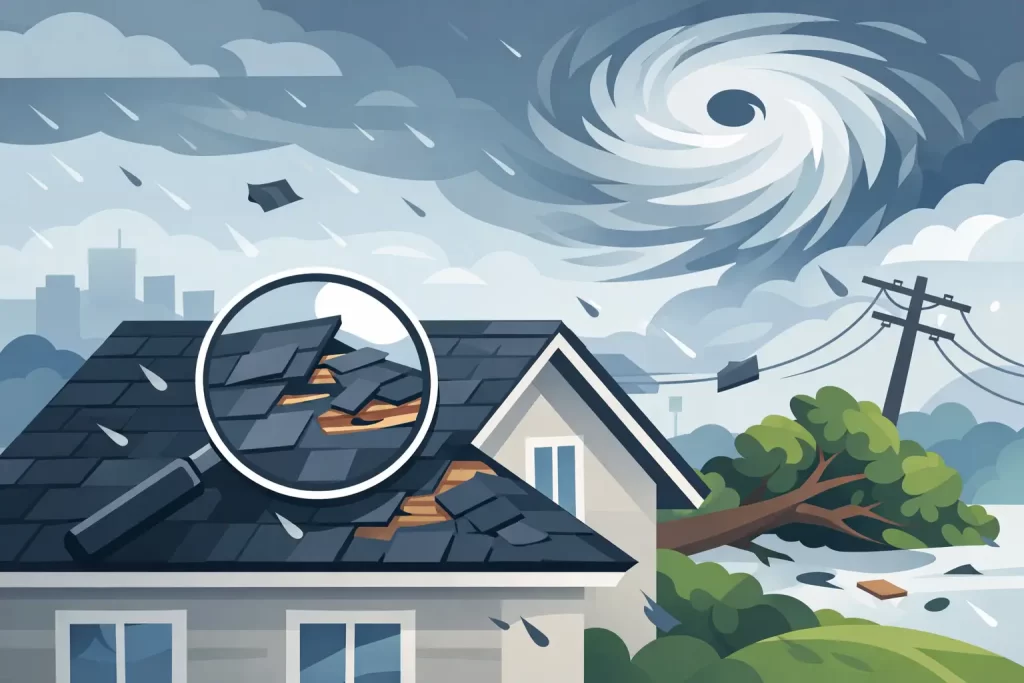
A roof can look intact from the driveway after a hurricane and still have damage that lets water in at the next hard rain. Wind-driven rain finds lifted edges, cracked seals, displaced flashing, and tiny punctures that are easy to miss from the ground. Knowing how to identify hurricane roof damage early gives Florida homeowners and property managers a better chance to prevent a manageable repair from becoming interior water damage, mold growth, or a larger replacement project.
The first rule is simple: do not climb onto a storm-damaged roof. Wet surfaces, loose shingles, hidden soft spots, and downed power lines make post-storm inspections dangerous. Start with a careful ground-level check, then arrange a professional inspection if you see warning signs or your property was in the path of strong winds.
How to Identify Hurricane Roof Damage From the Ground
Walk the property in daylight once conditions are safe. Bring your phone, take clear photos, and inspect every side of the home or commercial building. Look at the roofline from several angles, then check the lawn, gutters, soffits, exterior walls, and areas around roof penetrations.
Wind damage often shows up as shingles that are missing, curled, creased, cracked, or sitting unevenly. A shingle may remain attached while its seal has broken, leaving an edge lifted enough for future wind and rain to work underneath it. On tile and metal roofs, watch for shifted, broken, loose, or missing pieces. Even one displaced tile can expose the underlayment below.
Your yard can tell part of the story. Shingle granules may collect near downspouts or in gutter runoff. A small amount of granule loss can occur with age, but a sudden, noticeable accumulation after a hurricane deserves attention. Also look for roofing nails, flashing pieces, vent covers, torn screen material, branches, and other debris that may indicate impact damage.
Pay close attention to these visible trouble spots:
- Missing or lifted shingles, tiles, metal panels, ridge caps, or roof-edge materials
- Bent, detached, clogged, or overflowing gutters and downspouts
- Loose flashing around chimneys, skylights, vents, wall intersections, and roof valleys
- Damaged soffit, fascia, siding, or eaves that can allow wind-driven rain behind the exterior
- Tree limbs, flying debris, or punctures that made contact with the roof
A flat commercial roof needs a different visual check. From safe access points, look for displaced edge metal, torn membrane, open seams, backed-up drains, standing water that remains after weather clears, and debris that blocks scuppers or roof drains. Do not assume ponding water is harmless. It can reveal drainage problems or added stress that requires a qualified flat-roof inspection.
Check the Attic and Interior Before a Leak Gets Worse
Roof damage does not always create a dramatic ceiling leak immediately. Water can travel along rafters, decking, insulation, or wiring before it appears inside. After checking outdoors, inspect the attic with a flashlight if it is safe to enter. Avoid exposed wiring, wet insulation, and unstable flooring.
Look for fresh water stains on roof decking, damp rafters, dripping, darkened wood, wet insulation, or a musty odor. Daylight visible through the roof structure is an urgent sign that the roof envelope has been compromised. Take photos without touching damaged materials.
Inside living areas, check ceilings, upper walls, closets, and around skylights for yellow or brown stains, peeling paint, bubbling drywall, warped trim, or a new damp smell. Water marks near a ceiling do not always sit directly below the roof opening, so a professional inspection matters. The visible stain is often only the final stop in a longer path of water intrusion.
For business owners and facility managers, inspect areas above inventory, equipment, electrical rooms, tenant spaces, and customer-facing areas as soon as possible. Move vulnerable items away from active drips, place safe temporary containment below leaks, and document any impact on operations. Fast action can reduce both property damage and business disruption.
Know the Difference Between Wind Damage and Normal Wear
Florida roofs face intense sun, heat, humidity, salt air in coastal areas, and seasonal storms. That means a roof may have pre-existing wear before a hurricane arrives. A professional inspection can help separate older conditions from storm-related damage, but there are useful clues to watch for.
Storm damage tends to be concentrated along exposed roof slopes, ridges, eaves, corners, and areas facing the strongest wind direction. It may appear suddenly as clean breaks, fresh torn edges, missing materials, new impact marks, or debris strikes. Normal aging is usually more gradual and widespread, such as general granule loss, brittle shingles, fading, or long-term sealant deterioration.
The distinction matters for planning repairs and documenting a potential insurance claim. It also affects the best solution. A localized wind event may call for targeted repair if the roof system is otherwise sound and matching materials are available. If the storm exposes broad deterioration, repeated leaks, or a roof near the end of its service life, replacement may be the more dependable investment.
Document Everything Before Temporary Repairs Begin
Photos and notes help create a clear record of what happened. Take wide shots of each elevation of the property, then close-ups of damaged shingles, flashing, gutters, fallen branches, water stains, and interior effects. If possible, capture the date and keep images organized by location.
Write down the date of the storm, the time you discovered the damage, and any steps taken to prevent further water intrusion. Keep receipts for emergency mitigation, such as tarping, water removal, or temporary repairs. Do not discard damaged material until your insurer or roofing professional advises you to do so.
Temporary protection can be necessary, but it should be handled carefully. A tarp installed incorrectly can create more damage by trapping water or requiring fasteners through vulnerable roofing areas. For active leaks, missing materials, or visible openings, contact an experienced emergency roofing team rather than attempting a risky repair yourself.
When a Professional Roof Inspection Is the Right Next Step
Call for an inspection after a hurricane if you find missing materials, interior moisture, impact damage, damaged gutters or flashing, or any change in the roof’s appearance. You should also schedule one if the storm brought significant winds to your area even when you cannot see obvious damage. Small failures around vents, valleys, and roof edges can stay hidden until the next storm.
A thorough inspection should assess the roof covering, underlayment indicators, flashing, penetrations, drainage, attic conditions, and exterior components that affect water protection. For commercial properties, it should also evaluate membrane seams, drains, edge details, and areas where rooftop equipment meets the roof system.
Ask for clear findings, photos of documented conditions, repair options, and straightforward pricing. The right recommendation depends on the roof type, the extent of damage, material availability, building code requirements, and whether repairs will provide lasting protection. Quick fixes have a place during an emergency, but they should not replace a proper repair plan.
Protect the Roof Before the Next Storm
Once storm repairs are complete, routine maintenance helps reduce surprises during hurricane season. Keep gutters and roof drains clear, trim limbs away from the structure, secure loose soffit or fascia, and address small leaks before they spread. Schedule inspections periodically, especially for aging roofs and flat commercial systems where drainage performance is critical.
Florida’s Roofing & Construction Group helps homeowners and commercial property owners assess storm damage, secure exposed areas, and choose repairs or replacement options that protect the property for the long term. If your roof has been through a hurricane, trust what you can see, take photos of what you find, and let a qualified local roofer investigate what you cannot.