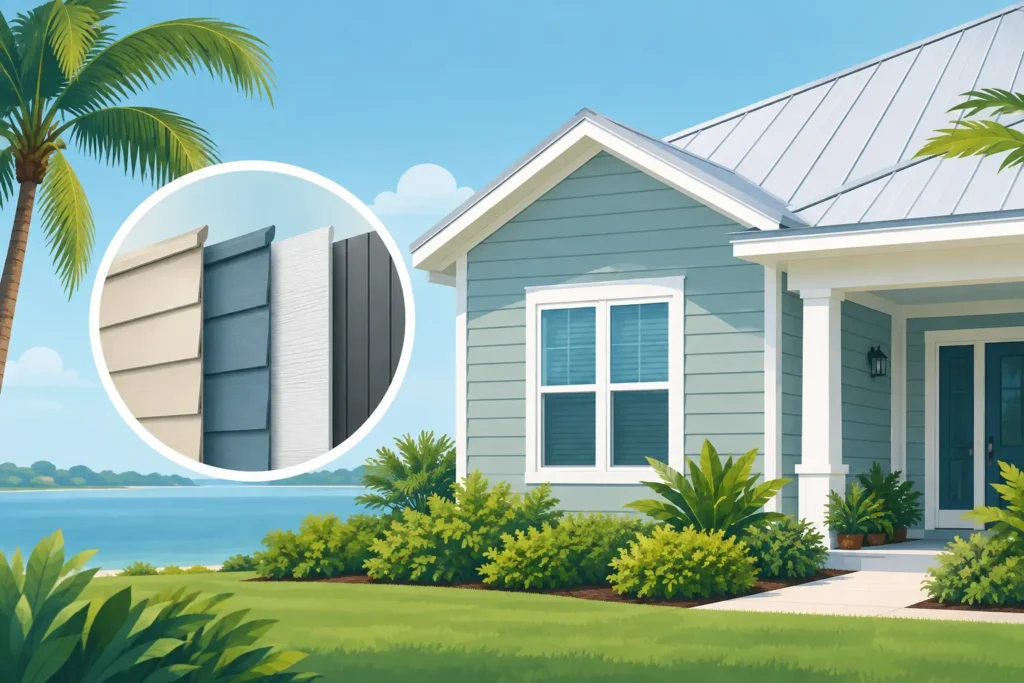
Florida humidity does not stay politely outside. It settles on exterior walls, collects behind loose trim, feeds mold where moisture cannot dry, and puts every siding material to the test. Choosing the best siding for humid climate conditions means looking beyond curb appeal and selecting a system that can handle moisture, heat, wind-driven rain, insects, and the occasional severe storm.
For many Florida homes and commercial properties, fiber cement is the strongest all-around choice. That does not make it the right answer for every budget or building. Vinyl, engineered wood, aluminum, and cellular PVC all have a place when the material, installation details, and maintenance plan match the property. The goal is simple: keep water out of the wall assembly and preserve the value of your property for years to come.
What Humidity Does to Exterior Siding
Humidity alone rarely ruins quality siding overnight. The real trouble starts when humid air combines with rain, poor drainage, shaded walls, roof runoff, or gaps around windows and doors. In Florida, materials may stay damp longer after a storm, especially on north-facing walls or areas protected from sun and airflow.
Wood-based products can absorb that moisture and swell, crack, rot, or support fungal growth if their protective finish fails. Some plastics can expand and contract in intense heat. Metal may corrode in salt-air locations if its coating is damaged. Even a moisture-resistant siding material can fail if water gets behind it and has no proper drainage path.
That is why siding is more than the visible surface. House wrap, flashing, caulking, fasteners, trim, soffits, gutters, and roof-to-wall transitions all work together. A quality installation protects the wall system, not just the appearance of the exterior.
Best Siding for Humid Climate: Fiber Cement
Fiber cement siding is often the best siding for humid climate environments because it resists rot, insects, and moisture-related warping better than traditional wood. Made from cement, sand, and cellulose fibers, it offers the look of painted wood without the same vulnerability to Florida’s damp conditions.
It also performs well in a region where storms are part of property ownership. Fiber cement is noncombustible and stands up well to impact and wind when installed to the proper specifications. It can be painted in a wide range of colors, making it a practical fit for coastal homes, inland neighborhoods, retail buildings, offices, and multifamily properties.
The trade-off is weight and installation complexity. Fiber cement is not a casual weekend project. It requires careful cutting, correct clearances from roofs and ground surfaces, corrosion-resistant fasteners, and proper flashing. It also needs periodic repainting or finish maintenance over its life. When installed by an experienced exterior contractor, however, it provides a durable, polished result that suits Florida well.
Why Fiber Cement Needs Correct Installation
Fiber cement resists moisture, but it is not an excuse to ignore water management. Cut edges, joints, and penetrations need to be handled correctly. The siding must be kept clear of standing water, roof runoff, and landscaping that holds moisture against the wall.
In hurricane-prone areas, the fastening schedule and attachment method matter just as much as the panel itself. A reliable contractor will review the wall condition, local code requirements, wind exposure, and the details around windows, doors, and roof lines before recommending a system.
Vinyl Siding: A Budget-Friendly Option With Limits
Vinyl siding is popular because it is affordable, low maintenance, and naturally resistant to rot and insect damage. It does not need painting, and regular cleaning can keep it looking presentable in humid areas. For homeowners who want an economical exterior update, insulated vinyl can also add a modest thermal benefit.
The key limitation is heat. Florida sun can cause lower-quality vinyl to fade, become brittle over time, or warp if it is installed too tightly or placed near highly reflective windows. Dark colors can be especially demanding under direct sunlight. Vinyl can also crack from hard impact, which matters after debris-heavy storms.
Vinyl performs best when the product is high quality, the color is suitable for the climate, and the installer leaves proper room for expansion and contraction. It is a reasonable option for many properties, but it is not always the longest-lasting choice for a home exposed to intense sun, coastal winds, or repeated storm impacts.
Engineered Wood Can Work With Careful Maintenance
Engineered wood siding gives property owners a warmer, more traditional appearance than vinyl while typically costing less than fiber cement. Modern products are treated to resist fungi and insects, and many arrive factory-primed or prefinished for better weather protection.
Still, engineered wood needs attention in a humid climate. Its performance depends heavily on keeping exposed edges sealed, maintaining paint or factory finishes, and preventing water from sitting at joints or near the bottom of the walls. A missed repair around a window or a leaking gutter can allow moisture into areas where it does not belong.
This option can be a smart choice for a homeowner who wants a wood-look exterior and is prepared to maintain it. It is less forgiving than fiber cement when moisture problems go unnoticed, so it is best paired with good roof drainage, functional gutters, and routine exterior inspections.
PVC and Metal Siding for Specific Florida Conditions
Cellular PVC siding and trim are highly moisture resistant. They will not rot or attract termites, making them particularly appealing for trim boards, porch areas, and details near frequent moisture exposure. PVC products can cost more than vinyl, and they must be installed according to manufacturer guidance to allow for movement in high heat.
Aluminum siding is another moisture-resistant choice, and it does not rot. It can be useful for certain commercial applications or homeowners seeking a lightweight material. However, aluminum can dent, and properties near the coast require extra attention to protective finishes and corrosion risk. Steel siding can be durable as well, but scratches and cut edges must be protected, especially in salt-air environments.
Neither option is automatically better than fiber cement. They are material-specific solutions that deserve a close look at the property’s location, exposure, budget, and desired appearance.
Do Not Overlook the Details Behind the Siding
The siding material gets most of the attention, but many Florida water problems begin at the transitions. A wall can have premium siding and still suffer damage if the roof leaks, the gutter overflows, or flashing around a window is missing or damaged.
Before replacing siding, inspect the exterior as a complete protection system. Look for staining below gutters, soft areas near windows, peeling paint, cracked caulk, mold growth, loose trim, and siding that has pulled away from the wall. These can point to hidden moisture issues that should be corrected before new materials are installed.
Proper ventilation also matters. Attics, soffits, and wall assemblies need to manage heat and moisture effectively. If the home has persistent indoor humidity, condensation, or mold concerns, siding replacement may be part of the solution, but it should not be treated as the only solution.
How to Choose the Right Material for Your Property
Start with your exposure. A home close to the Gulf faces salt air, high winds, and harsh sun. A shaded inland property may deal more with mildew and slow drying. A commercial building may prioritize low maintenance, fire resistance, and minimal disruption to operations. The best answer changes with those conditions.
Next, weigh the total cost rather than the initial material price alone. A lower-cost siding option may require more frequent maintenance or earlier replacement. A higher upfront investment in fiber cement or premium PVC may reduce the risk of rot, pest damage, and repeated repairs over time.
Finally, choose an installer who understands Florida weather systems. Ask how they handle flashing, water-resistive barriers, wind ratings, fasteners, trim clearances, and repairs to damaged sheathing. You should receive a clear scope of work, straightforward pricing, and an explanation of how the proposed siding will protect your particular building.
Florida’s Roofing & Construction Group approaches exterior work with that full-system mindset, because siding should work with your roof, gutters, windows, insulation, and drainage instead of becoming another point of failure.
A siding project is a chance to correct small exterior weaknesses before they become expensive wall damage. If you are seeing stains, loose panels, persistent mildew, or signs of moisture around doors and windows, have the exterior evaluated before the next heavy rain finds the weak spot first.