A shingle that lifts at one corner may look like a small cosmetic issue from the driveway. In Florida, it can become the entry point for wind-driven rain during the next afternoon storm. Acting quickly to repair loose shingles helps protect the roof deck, attic insulation, ceilings, and the investment you have made in your property.
Loose shingles are especially common after high winds, tropical weather, and years of steady sun exposure. The good news is that a localized problem can often be repaired without replacing the whole roof. The key is knowing what caused the shingle to lift, whether water has already entered the system, and when it is safer to call an experienced roofing professional.
Why shingles come loose in Florida
Asphalt shingles are designed to overlap and seal together, creating a layered barrier that sheds water down the roof. That system depends on properly installed fasteners, intact adhesive strips, and solid materials underneath. When one part fails, wind can get beneath the shingle edge and make the damage worse.
Florida weather puts that system under constant pressure. Intense UV exposure can dry and weaken the adhesive seal over time. Heavy rain tests every overlap, while gusts from thunderstorms, hurricanes, and tropical systems can break the bond between shingles or pull fasteners loose. Older roofs are more vulnerable, but even a newer roof can develop loose shingles after a major wind event.
Poor installation can also be a factor. Shingles may lift when nails were placed too high, driven through the shingle, or installed with too few fasteners for the roof’s wind zone. In some cases, the visible shingle is not the only concern. A lifted section may point to damaged underlayment, deteriorated decking, or flashing problems around vents, chimneys, valleys, and walls.
Signs you need to repair loose shingles
You do not need to climb onto the roof to spot every issue. A careful ground-level inspection after a storm can reveal enough to determine whether you need prompt service. Look for shingle tabs that appear raised, curled, cracked, missing, or out of line with the surrounding rows. Dark spots or exposed areas can indicate that the protective granules have worn away.
Inside the property, check for water staining on ceilings, damp attic insulation, peeling paint, or a musty odor near exterior walls. These signs do not always appear directly below the roof damage because water can travel along framing before it becomes visible. For commercial buildings, inspect ceiling tiles, top-floor walls, and areas around rooftop equipment for signs of moisture.
Shingles found in the yard are another clear reason to schedule an inspection. Even if only a few have blown off, the roof may have additional loosened tabs that are not obvious from below. A professional inspection can identify the full extent of the damage before another storm turns a manageable repair into an interior leak.
Can you repair loose shingles yourself?
A homeowner can sometimes address one or two slightly lifted shingles if the roof is low-slope, dry, easily accessible, and otherwise in good condition. However, roof work carries real fall risks, and improper repairs can trap water or void a material warranty. Florida roofs can also become dangerously hot and slick, especially after rain or early-morning humidity.
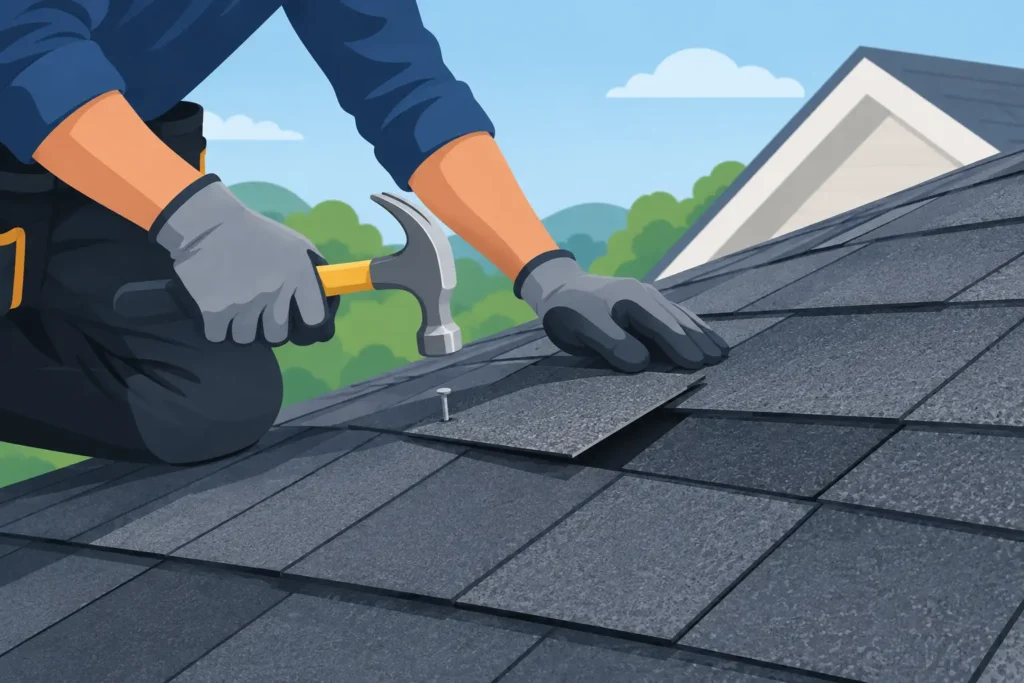
If you choose to make a minor temporary repair, work only in safe, dry conditions. Use a stable ladder, wear footwear with good traction, and never step on brittle, curled, wet, or visibly damaged shingles. Lift the affected tab gently. If the shingle is intact and the surrounding material is sound, roofing cement applied beneath the lifted edge can help reseal it. Press the tab flat without forcing it or cracking the shingle.
Avoid using excessive sealant. Roofing cement is not a substitute for correct fastening, damaged underlayment repair, or proper shingle replacement. Do not nail through the exposed face of a shingle unless you understand the manufacturer-approved installation method and can seal the fastener correctly. A misplaced nail can become the leak you were trying to prevent.
When shingles are torn, missing, badly curled, repeatedly lifting, or located near flashing and roof penetrations, professional repair is the better choice. The same applies after hurricane-force winds or when you see water inside the property. A fast repair may save the roof, but an incomplete repair can hide a more serious problem.
How professionals repair loose shingles
A quality roof repair begins with diagnosis, not just adhesive. A roofing technician checks the lifted shingles, surrounding courses, nails, seal strips, flashing, ridge caps, and underlying roof surface. This helps determine whether the issue is isolated wind damage, normal aging, installation failure, or a broader roofing concern.
For a repairable shingle, the technician may carefully release the damaged section, remove improperly placed or backed-out nails, and install new fasteners in the correct location. The shingle is then resealed according to the material requirements. If the tab is cracked, creased, or missing granules, replacement is usually more reliable than trying to glue it back into service.
A technician may need to remove several shingles to inspect the underlayment and roof deck. That sounds more involved, but it is often the right move when water has gotten beneath the surface. Repairing the deck or underlayment before installing replacement shingles protects the roof system as a whole rather than covering up damage.
Color matching can be a practical consideration. Sun fades shingles over time, so even the same product line may not match perfectly. On a small repair, the difference is often minor and worth accepting to restore weather protection. On an older roof with widespread lifting, visible color variation can be one more reason to compare repair costs with a full replacement.
When a loose-shingle repair is no longer enough
Not every roof with loose shingles needs replacement. If the roof is relatively new, damage is limited, and the surrounding materials are sound, targeted repair is often the most cost-effective route. It restores the roof’s water-shedding ability while preserving the life left in the existing system.
Replacement becomes more likely when loose, curling, or missing shingles appear across multiple roof planes. Other warning signs include recurring leaks, widespread granule loss, soft decking, failing flashing, and a roof approaching the end of its expected service life. Repeated spot repairs can add up quickly if the roof is no longer providing dependable protection.
For business owners and facility managers, timing matters as much as cost. A small roof issue above offices, inventory, electrical systems, or customer spaces can disrupt operations far beyond the price of a repair. A professional assessment helps you plan the work around business needs and address the parts of the roof that create the greatest immediate risk.
Protect your roof after the repair
Once loose shingles have been secured or replaced, keep the roof clear of branches and wind-blown debris that can catch water or damage shingle edges. Make sure gutters and downspouts move water away from the structure. Overflowing gutters can soak fascia boards and roof edges, creating exterior problems that are easy to mistake for a shingle failure.
Schedule a roof inspection after significant storms, especially if your neighborhood experienced strong gusts or visible debris damage. It is also wise to have an aging roof reviewed before hurricane season rather than waiting for a leak. Early detection gives you more repair options and more control over the cost and timing of the work.
Florida’s Roofing & Construction Group provides professional roof inspections and repairs for homeowners and commercial property owners who need clear answers after storm damage or routine wear. An experienced team can identify whether a loose shingle needs a simple repair, a targeted section replacement, or a larger plan to protect the property.
A lifted shingle rarely becomes less urgent with time. If you have noticed movement, missing tabs, or water marks inside, arrange an inspection before the next hard rain has a chance to test the weak spot.