A storm can leave your roof looking perfectly normal from the driveway while water is already working its way beneath shingles, flashing, or a flat-roof membrane. That is why post storm roof questions should start before the next rainfall, not after a ceiling stain appears. For Florida homeowners, business owners, and facility managers, fast, informed action can mean the difference between a targeted repair and widespread interior damage.
What Should I Do First After a Storm?
Start with safety. Do not climb onto a wet roof, walk near downed power lines, or try to pull loose materials into place during windy conditions. Storm damage is not always visible from the ground, and a roof weakened by wind or impact can be unsafe underfoot.
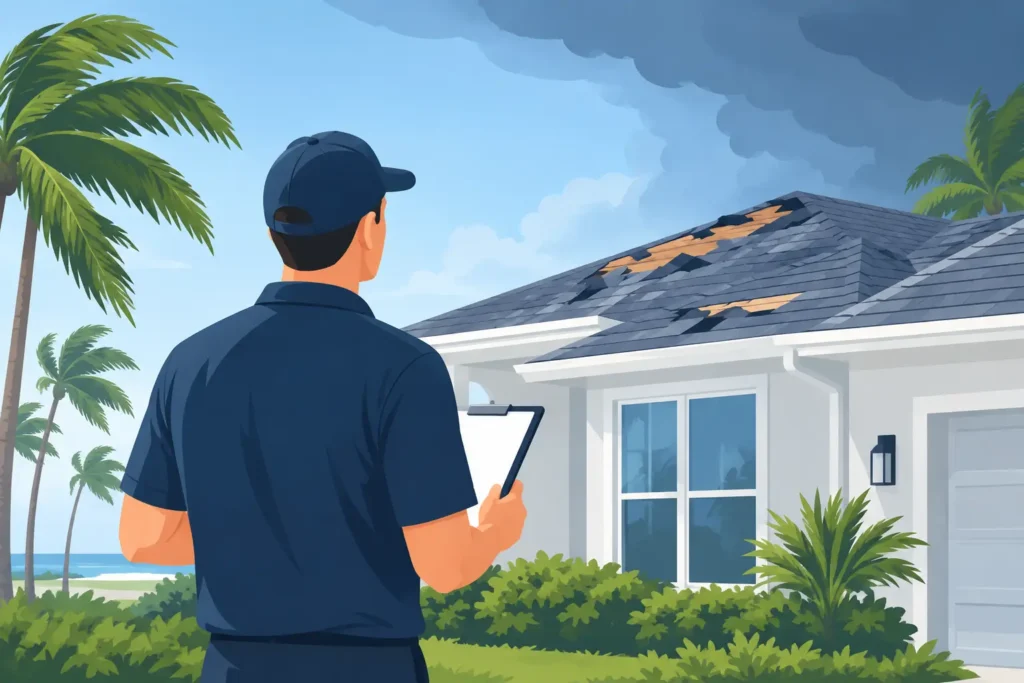
From a safe location, look for obvious warning signs: missing or lifted shingles, bent or detached gutters, damaged soffit or fascia, fallen limbs, loose flashing, and debris around roof drains. Commercial property owners should also watch for ponding water on flat roofs and blocked scuppers or drains. Inside the property, check the attic, upper walls, and ceilings for moisture, discoloration, peeling paint, or a musty odor.
If water is entering the building, move valuables away from the affected area and use containers to catch active drips. A professional emergency tarp or temporary repair can limit additional damage while the roof is evaluated. The goal is to protect the structure without creating a second safety problem.
How Can I Tell Whether My Roof Has Storm Damage?
Wind damage does not always mean shingles are missing. Strong gusts can break the seal that holds shingles down, crease tabs, expose nail heads, or loosen flashing around vents, chimneys, skylights, and wall transitions. Those small openings can allow wind-driven rain into the roofing system long before a leak becomes visible indoors.
Hail and flying debris cause a different type of concern. Asphalt shingles may show bruising, granule loss, cracking, or punctures. Metal roofs can dent or develop damage at seams and fasteners. Tile roofs may crack, shift, or lose pieces. On low-slope and commercial roofs, look for punctures, split seams, lifted edges, and damaged areas around drains and penetrations.
Age matters, but it is not the only factor. A newer roof can still need repairs after a major storm, while an older roof may have preexisting wear that makes it more vulnerable. A professional inspection separates fresh storm damage from normal aging and identifies issues that are easy to miss from the ground.
Do I Need a Roof Inspection If I Do Not See a Leak?
Usually, yes, especially after high winds, hail, tornado activity, or a named storm. Leaks often develop slowly. Moisture may travel along decking, insulation, framing, or electrical pathways before it reaches a visible ceiling surface. By that point, the repair may involve more than the roof itself.
An inspection is also valuable because it creates a condition record close to the date of the storm. That documentation can help if damage becomes more apparent later or if an insurance carrier asks for evidence. For commercial facilities, early inspection helps prevent business interruptions caused by wet insulation, interior damage, or an unexpected roof failure.
A qualified contractor should inspect the full roofing system, not simply replace a few loose shingles. That includes roof coverings, flashing, vents, skylights, penetrations, gutters, drainage components, attic ventilation, and areas where the roof meets walls. On flat roofs, the inspection should include seams, edges, drains, scuppers, and signs of trapped moisture.
Which Post Storm Roof Questions Should I Ask an Inspector?
A clear inspection should give you more than a general statement that the roof is “fine” or “damaged.” Ask what was found, where it is located, and whether the issue is active, storm-related, or likely to worsen. You should also ask whether a repair will restore the roof’s weather resistance or whether the damage affects a larger area.
These post storm roof questions are especially useful: Is there evidence of wind lift, impact damage, or water intrusion? Are the roof deck and underlayment intact? Has damage affected flashing, gutters, vents, or drainage? Is emergency protection needed now? What work is recommended, and what could happen if it is delayed?
For commercial properties, add a few operational questions. Can the repair be completed with minimal disruption to tenants, customers, or staff? Is wet insulation present below the membrane? Are drains flowing properly? Does the roof need a repair, restoration, or replacement plan? The right answer depends on the roof type, the severity of damage, and the remaining service life of the system.
Should I File an Insurance Claim Right Away?
Document first, then make an informed decision. Take date-stamped photos and videos from the ground or other safe areas, including damaged exterior components, fallen debris, ceiling stains, and personal property affected by leaks. Keep records of emergency mitigation work, inspection findings, and all receipts.
Whether you should file a claim depends on the extent of damage, your deductible, your policy terms, and the cost of recommended work. A contractor can provide an inspection report and repair or replacement estimate, but your insurance carrier determines coverage. Avoid making assumptions based on what a neighbor received or what a storm-chasing salesperson promises.
Do not wait too long if there is clear damage. Policies may have reporting deadlines, and a delay can make it harder to show that the storm caused the problem. At the same time, a claim is not automatically the best option for every minor repair. Transparent pricing and a straightforward assessment help you make the right call for your property.
Can I Make a Temporary Repair Myself?
Simple interior protection is reasonable if it can be done safely. You can place buckets under drips, move furniture, remove wet rugs, and take photos of damage. Beyond that, caution is the better choice. Improper tarping can puncture the roof, trap water, or expose you to a serious fall.
Temporary repairs should be treated as temporary. A tarp may keep rain out for a short period, but it does not correct lifted shingles, failed flashing, cracked tile, or membrane damage. Once conditions are safe, arrange for a professional evaluation and a clear plan for permanent repairs.
Repair or Replacement: How Do I Know Which Is Right?
A localized repair may be the best value when damage is limited and the rest of the roof is in good condition. Replacing a damaged flashing section, repairing a small puncture, resealing a problem area, or replacing a defined group of shingles can restore protection without the cost of a full replacement.
Replacement becomes more practical when storm damage is widespread, the roof is near the end of its expected life, matching materials are unavailable, or repeated repairs are beginning to add up. For a business, the calculation may also include downtime risk, energy performance, drainage needs, and the value of a stronger long-term warranty.
Florida’s weather makes material choice part of the conversation. Asphalt shingles remain a cost-effective option for many homes, while metal can offer excellent wind performance and longevity. Tile provides a distinctive look but requires the right structure and experienced installation. Flat-roof systems need materials and drainage details selected for the building, exposure, and use of the property.
How Do I Avoid Storm-Chasing Contractors?
After a major storm, urgent offers can feel helpful, but property owners should slow down enough to verify who is working on their roof. Be cautious of anyone who pressures you to sign immediately, promises a guaranteed insurance result, asks for full payment upfront, or cannot provide a detailed written scope of work.
Choose a locally established contractor that can explain the inspection findings in plain language, provide upfront pricing, and stand behind the completed work. Ask about licensing, insurance, manufacturer credentials, warranty options, and how emergency repairs transition into permanent work. A reliable contractor will answer questions directly instead of using fear to force a decision.
Florida’s Roofing & Construction Group helps property owners move from storm uncertainty to a clear repair plan, with inspections, emergency response, and exterior services designed to protect the whole property.
The best next step after a storm is simple: protect the area, document what you can safely see, and get a professional assessment before the next round of Florida weather tests your roof again.