
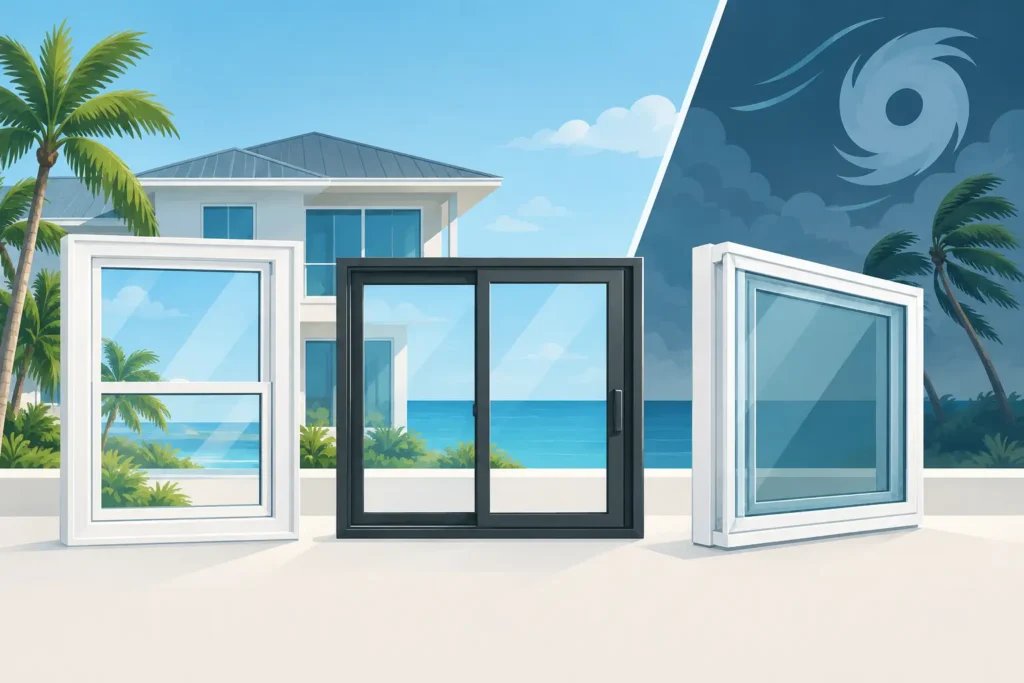
A broken window during a Florida storm is not just a glass-replacement problem. Once wind and rain enter the building envelope, water can damage insulation, drywall, flooring, electrical systems, and the roof structure above. This impact window comparison explains what separates impact-rated windows from standard windows, where the investment makes sense, and what Florida property owners should look for before signing a contract.
For homes, condos, storefronts, and office buildings near the coast or in hurricane-prone areas, the right window system is part of a larger protection plan. Your roof, siding, gutters, doors, and windows have to work together when severe weather arrives.
Impact Window Comparison: What Makes Them Different?
Standard windows generally use one or two panes of glass held in a frame. They can provide good daylight, ventilation, and insulation, but ordinary glass may shatter when struck by flying debris. Even tempered glass, while safer when broken, is not automatically hurricane impact rated.
Impact windows use laminated glass designed to remain held together after an impact. A durable interlayer sits between glass panes, helping keep the opening covered even if the outer layer cracks. The frame, glazing, hardware, and installation method are also engineered and tested to handle substantial wind pressure.
That distinction matters. A window does not need to look destroyed to fail during a storm. If the glass breaks and wind enters the structure, pressure can build inside the building. In extreme conditions, that pressure can contribute to roof damage, wall damage, and major water intrusion.
Impact-rated windows are tested as complete systems, not simply as strong glass. For Florida property owners, that means comparing the full product rating, the frame construction, and the installation details rather than choosing based on appearance alone.
Impact Windows vs. Hurricane Shutters
Hurricane shutters remain a practical option for many properties. They are often less expensive upfront than replacing every existing window, and they can provide strong protection when correctly installed and closed before a storm. For a homeowner with newer, energy-efficient windows, shutters may be the more sensible immediate upgrade.
The trade-off is preparation. Panels must be stored, carried out, and installed. Accordion or roll-down shutters are easier to deploy but add visible exterior components and require periodic service. If a storm changes direction quickly or a property is vacant, there may not be enough time to secure every opening.
Impact windows provide protection that is always in place. There is no need to install panels before a tropical system, and they continue to offer daily benefits such as improved noise reduction, UV filtering, and energy performance. They can also preserve the look of a home or commercial façade without permanent exterior shutter systems.
For some buildings, the best answer is a combination. Impact windows can protect frequently used living areas, entryways, conference rooms, or street-facing storefronts, while shutters protect less-accessible openings. A professional exterior assessment can identify the highest-risk areas first.
The Costs Behind an Impact Window Upgrade
Impact windows cost more than conventional replacement windows because they use specialized glass, reinforced framing, tested hardware, and more demanding installation practices. Window size, opening shape, frame material, glass options, access conditions, and local permit requirements all affect the final price.
A large picture window or custom arched opening will cost more than a standard single-hung window. Multi-story installations, masonry walls, coastal exposure, and repairs to damaged framing can also increase labor requirements. Commercial properties may need additional planning around tenant access, safety, storefront systems, and operating hours.
The lower initial cost of standard windows can be attractive, especially if you are preparing to sell soon or addressing a limited repair need. But the comparison should not stop at the purchase price. Consider the cost of shutters, storm preparation, possible damage after broken glass, utility bills, maintenance, and the long-term value of a protected property.
Financing can make a full replacement project more manageable, particularly when windows are part of broader storm restoration or energy-efficiency work. The right contractor should provide clear, upfront pricing and explain which costs are related to products, permits, labor, and any needed repairs around the opening.
Energy Efficiency Is Not Automatic
Many impact windows can improve comfort and reduce solar heat gain, but impact resistance alone does not guarantee the most efficient window for your property. Florida’s heat, humidity, and intense sun make glass selection especially important.
Look closely at the window’s energy performance ratings. Low-E coatings can help manage heat gain, while insulated glass units can improve thermal performance. Tint, visible light transmission, and solar heat gain characteristics should fit the orientation of the building. West-facing glass may need a different approach than a shaded north-facing wall.
There is a balance to strike. Darker or more heavily coated glass can reduce heat and glare, but it may also reduce natural light. A homeowner who values a bright waterfront view may make a different choice than a facility manager trying to control cooling loads across a large office façade.
Proper installation is just as important as glass performance. Gaps, missing flashing, poor sealant work, or improperly fastened frames can lead to air leaks and water intrusion. A premium window installed poorly is not premium protection.
What Florida Ratings and Approvals Mean
Florida has demanding building requirements because the state faces hurricanes, wind-driven rain, coastal exposure, and intense heat. Products used in high-wind areas may need specific approvals and installation methods based on the property’s location and wind zone.
Ask your contractor to explain the rating and approval documentation for the exact window system being proposed. The glass, frame, size, configuration, and anchoring method must align with the approved application. A rating associated with a smaller window does not automatically apply to a larger opening or a different style.
It is also worth asking whether the product is designed for large-missile impact zones when applicable. This testing evaluates how the window holds up after being struck and then subjected to repeated pressure cycling. That is far more meaningful than a general claim that a window is “storm resistant.”
Permits and inspections are not paperwork to rush past. They help confirm that the replacement meets applicable requirements and that the installation is performed as specified. For commercial owners and facility managers, documented compliance can also support maintenance records, future property transactions, and insurance conversations.
Frame Materials: Vinyl, Aluminum, and More
The best frame material depends on the opening, budget, building style, and exposure conditions. Vinyl frames can offer solid thermal performance and low maintenance. They are common in residential replacement projects, though quality varies by manufacturer and product line.
Aluminum frames are strong and can suit large openings, contemporary designs, and many commercial applications. In coastal areas, corrosion resistance and finish quality deserve close attention. Thermally improved aluminum systems can help address heat transfer, but specifications should be matched to the building’s needs.
Other materials and composite options may offer their own advantages in appearance, strength, or insulation. Do not choose solely based on the frame material name. Compare the complete system, including structural ratings, glass package, warranty coverage, maintenance requirements, and suitability for Florida’s climate.
When Impact Windows Are the Right Choice
Impact windows are often a strong investment when existing windows are aging, leaking, difficult to operate, or due for replacement anyway. They are particularly valuable for coastal homes, buildings with frequent vacancy, properties where shutter installation is difficult, and owners who want year-round protection without storm preparation.
They can also make sense after roof or siding damage, when exterior work already requires close inspection of flashing, wall conditions, and water-management details. Coordinating projects can reduce disruption and help ensure exterior components are properly integrated.
However, a full impact window replacement is not the only responsible decision. If windows are relatively new and in good condition, hurricane shutters may provide needed protection at a lower upfront cost. If water is entering around windows, the immediate issue may be failed sealant, damaged trim, or wall flashing rather than the glass itself. A thorough inspection should identify the actual source before replacement is recommended.
Questions to Ask Before You Buy
Before approving a proposal, ask which impact rating applies to each window, whether the product is approved for your location, and how the contractor will protect the opening from water intrusion. Confirm who handles permits, inspections, debris removal, interior protection, and repairs if hidden damage is discovered.
Also review the warranty in plain language. Separate product warranties from workmanship coverage, and understand what is excluded. Salt air, improper maintenance, glass breakage, and finish issues may be treated differently depending on the manufacturer and installation terms.
A window project should leave your property safer, more comfortable, and easier to maintain, not create unanswered questions. Florida’s Roofing & Construction Group helps property owners evaluate exterior protection as a complete system, so window decisions support the roof, walls, drainage, and long-term value of the building.
When you compare impact windows, focus on more than a brochure claim or the lowest bid. Choose a tested system, a qualified installation plan, and a contractor prepared to explain how every detail protects your property when Florida weather puts it to the test.