
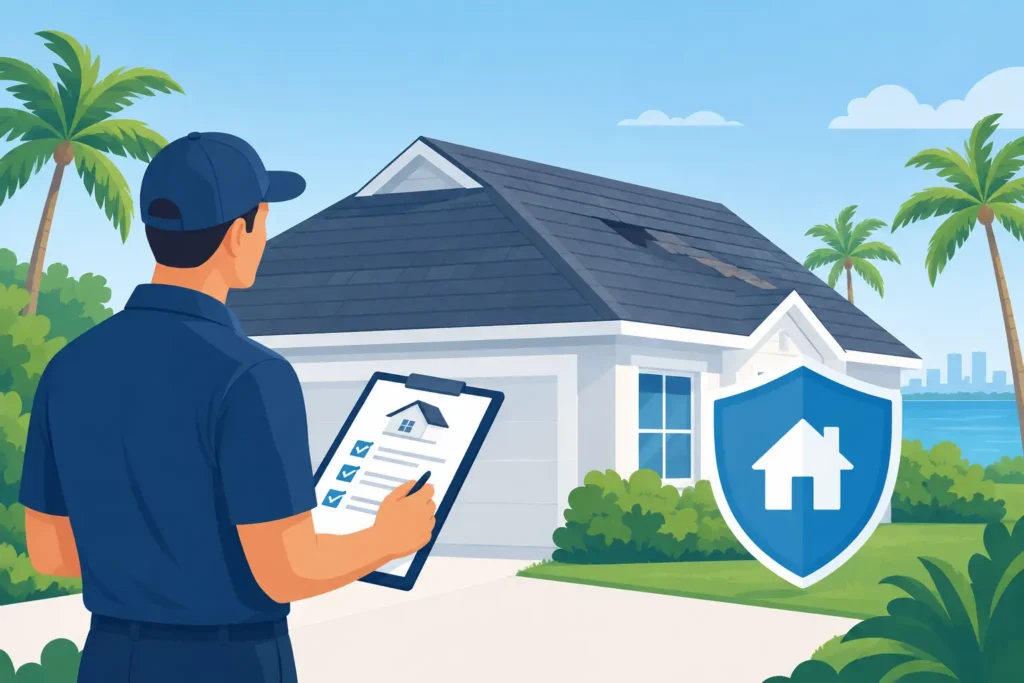
A roof leak can move from a ceiling stain to damaged insulation, flooring, inventory, or electrical systems fast. After a Florida storm, knowing how to file a roof insurance claim can help you protect the property while giving your insurer the clear information it needs to review the loss. The goal is not to rush into a replacement decision. It is to stop further damage, document the facts, and make decisions based on your policy and a professional inspection.
For homeowners, that may mean protecting a family home after wind-driven rain. For business owners and facility managers, it can mean keeping customers safe and limiting downtime. In either case, a calm, organized response matters.
Start With Safety and Emergency Protection
Do not climb onto a storm-damaged roof to inspect it yourself. Loose shingles, wet decking, damaged flashing, and fallen branches create real fall hazards. If there are downed power lines, structural concerns, active electrical hazards, or water entering near electrical equipment, keep people away and contact the appropriate emergency professionals.
Your insurance policy generally expects you to take reasonable steps to prevent additional damage after a covered event. That does not mean beginning permanent repairs before the insurance company has a chance to inspect. It means using practical temporary protection, such as a professionally installed tarp, removing standing water where it is safe to do so, and moving furniture, inventory, or equipment away from the leak.
Keep every receipt related to emergency mitigation. Save invoices for tarping, water removal, temporary repairs, hotel stays if your policy allows them, and damaged materials that may be useful as evidence. Take photos before and after temporary protection is installed whenever possible.
Document the Damage Before It Changes
Florida weather can make evidence disappear quickly. Wind damage may look subtle from the ground, and a short period of heavy rain can turn a small opening into substantial interior damage. Start a written record as soon as conditions are safe.
Take wide photos of the property, then closer photos of visible roof damage, displaced shingles, lifted metal panels, damaged gutters, torn screens, broken skylights, and fallen limbs. Inside, photograph ceiling stains, wet drywall, bubbling paint, warped flooring, and damaged personal or business property. Video can also help show active leaks and the overall condition of affected areas.
Write down the date and approximate time the damage occurred, the weather conditions you observed, and when you first noticed the problem. If neighbors experienced the same storm, that may provide context, but your claim must stand on the documented condition of your own property.
For commercial properties, include photos of affected roof sections, drains, scuppers, rooftop equipment, interior operations areas, and any temporary measures taken to keep the facility functioning. Document business disruption separately and review your policy for applicable business-income or extra-expense coverage.
Get a Professional Roof Inspection
A qualified roofing contractor can identify damage that is not visible from the ground and distinguish recent storm impacts from ordinary wear. This is especially valuable in Florida, where sun exposure, humidity, salt air, wind, and frequent storms can affect roofing materials differently over time.
Ask for a detailed inspection that identifies the roof system, affected slopes or sections, visible storm-related conditions, interior moisture concerns, and recommended emergency or permanent work. Photos should be clear and tied to specific areas of the roof. A thorough inspection report gives you a factual starting point when you speak with the insurer.
A contractor can document damage and provide an estimate for repairs or replacement. The insurance carrier, however, determines coverage according to your policy. Be cautious of anyone who guarantees claim approval, tells you to exaggerate damage, or pressures you to sign a contract before you understand the scope of work and payment terms.
Florida’s Roofing & Construction Group provides inspections and emergency roof protection designed to help property owners understand the condition of their roof and prevent further water intrusion. That practical documentation can make the claims conversation more organized from the start.
Review Your Policy Before You Call
Pull out your current declarations page and policy documents. You do not need to become an insurance expert overnight, but you should know the basics before opening a claim.
Look for your deductible, the type of roof coverage you carry, whether your settlement is based on replacement cost or actual cash value, and any special limitations or endorsements related to wind, named storms, water damage, or roof surfaces. A hurricane deductible may be different from your standard all-other-perils deductible. Commercial policies may also have separate provisions for business interruption, code upgrades, or equipment damage.
Pay attention to claim reporting deadlines. Policies often require prompt notice, and Florida insurance requirements can change over time. If you are unsure about a deadline or policy provision, contact your insurance company or agent directly and ask them to explain it in writing.
How to File a Roof Insurance Claim
Once you have protected the property and gathered initial evidence, contact your insurer through its claims line, app, website, or your agent. Be clear, factual, and specific. State the date of loss, the type of event, and the damage you observed. Avoid guessing about causes you cannot confirm.
When you file a roof insurance claim, ask for the claim number, the adjuster’s contact information, and the next required steps. Keep this information in one folder with your policy, photos, inspection report, receipts, emails, and notes from every phone call.
During the first call, ask whether the carrier needs additional photos, whether it has preferred procedures for emergency work, and when you can expect adjuster contact. Write down the representative’s name, the date, and what was discussed. Follow up by email when possible so you have a written record.
Do not delay reasonable emergency protection while waiting for an adjuster if water is actively entering the building. At the same time, avoid authorizing full replacement work solely on the assumption that insurance will pay. Coverage, depreciation, deductibles, exclusions, and scope are policy-specific.
Prepare for the Adjuster’s Inspection
The adjuster assesses the reported loss for the insurance company. Make sure the affected areas are accessible and that you can provide your documentation. If a contractor inspected the roof, it is often helpful to have that professional available to point out the conditions found and answer construction-related questions.
Bring your photos, timeline, emergency repair receipts, maintenance records, and inspection findings. If you have prior roof installation paperwork, warranties, or photos that show the roof before the storm, include those as well. Good maintenance records can be particularly useful when the insurer needs to distinguish a sudden event from long-term deterioration.
Walk through both exterior and interior damage. For commercial roofs, include all affected spaces, not just the most obvious leak location. Water can travel beneath membranes, insulation, decking, and interior finishes before it becomes visible.
You do not have to agree with an initial assessment on the spot. Ask for a copy of the insurer’s estimate and explanation of coverage. Review it carefully against the documented damage and the contractor’s scope. If something appears missing, ask the carrier how to submit supplemental information.
Understand the Estimate Before Repairs Begin
An insurance estimate may use terminology that is unfamiliar, but the key question is simple: does the approved scope address the actual damaged components and the work needed to restore the roof correctly? A repair may be appropriate for limited, isolated damage. A replacement may be necessary when damage is widespread, materials cannot be matched, or repairs would compromise the roof system. The answer depends on the roof’s age, condition, material, code requirements, and the documented loss.
Compare line items, not just the total price. Check whether the estimate includes tear-off, underlayment, flashing, ventilation, drip edge, disposal, permits, detached structures, interior repairs, and code-related work where applicable. For flat commercial roofs, review drainage components, insulation, membrane details, penetrations, and edge metal.
If the contractor finds additional damage after work begins, stop and document it. Your contractor can provide photos and a supplemental estimate, and the insurer can review the new information. Never treat an insurer’s initial estimate as automatically final if the conditions on site show more work is required.
Avoid the Mistakes That Complicate Claims
Most claim problems begin with gaps in documentation or rushed decisions. Do not throw away damaged materials before they are photographed or inspected, unless they create an immediate safety issue. Do not rely only on verbal conversations. Do not sign an assignment of benefits or a broad contract without reading it carefully and understanding your responsibilities.
Be wary of door-to-door storm chasers who appear immediately after severe weather and promise a free roof through insurance. A legitimate contractor should be able to explain the roof condition, provide clear pricing, show proof of licensing and insurance where required, and give you time to review the agreement. Local experience matters when a roof must perform through Florida’s heat, rain, wind, and hurricane season.
Keep up with reasonable maintenance after the claim as well. Clear debris from gutters, address small leaks promptly, and schedule inspections after major storms. Insurance is designed for covered losses, not routine aging or preventable deterioration.
A well-documented claim gives you the best chance to move from storm damage to a secure, weather-ready roof without unnecessary confusion. Protect the property first, keep the facts organized, and choose experienced professionals who will explain the work clearly before the next Florida storm tests your roof.