
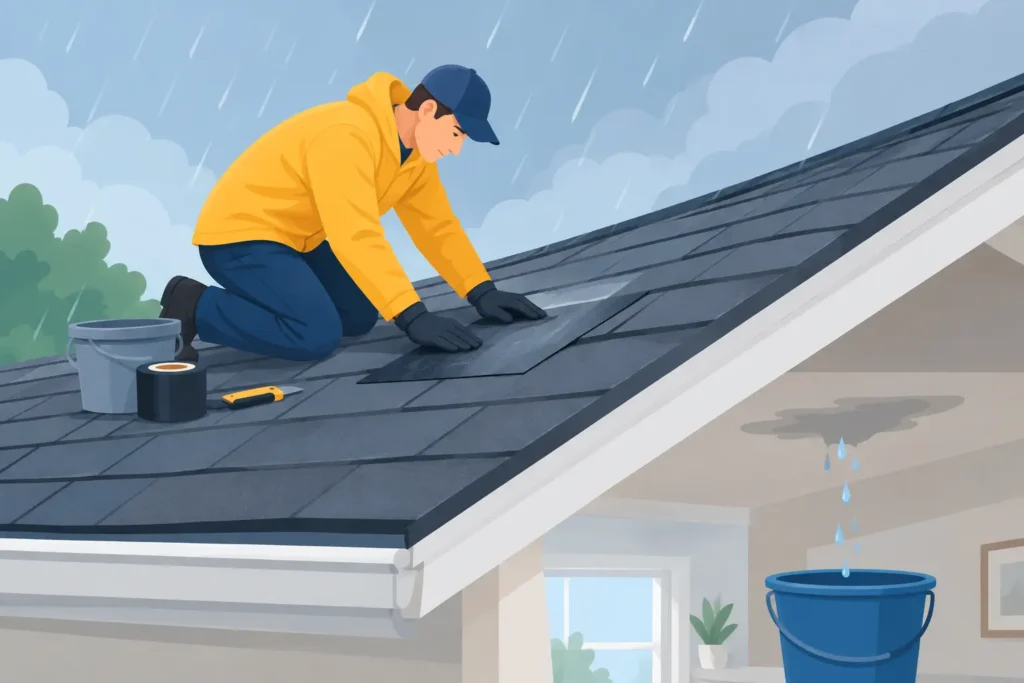
A drip from the ceiling can turn into stained drywall, damaged insulation, ruined inventory, or a dangerous electrical problem faster than most property owners expect. Knowing how to stop roof leaks temporarily can protect your Florida home or business while you arrange a professional repair. The goal is not to make a permanent fix from the ground or risk a fall on a wet roof. It is to control the water, limit damage, and get the roof assessed before the next downpour.
Florida rainstorms, wind-driven water, and hurricane-season debris can expose a weakness that was not visible the day before. Even a small leak deserves immediate attention because water often travels along roof decking, framing, wiring, or ductwork before it reaches the ceiling below.
Start Inside: Contain the Water and Protect the Property
Your first job is protecting people and the space below the leak. Move furniture, electronics, documents, merchandise, and anything else that water could damage. Place a bucket, storage tote, or other sturdy container beneath the drip. Add an old towel to the bottom to reduce splashing.
If the ceiling is bulging or sagging, water may be collecting above the drywall. Do not stand directly beneath it. If you can safely reach the area from a ladder on solid flooring, carefully puncture the lowest point of the bulge with a screwdriver or similar tool and let it drain into a bucket. This can prevent a larger, uncontrolled ceiling collapse. Wear eye protection, keep children and pets away, and stop if you see electrical wiring or suspect the ceiling is unstable.
Turn off electricity to the affected area if water is near light fixtures, outlets, ceiling fans, or electrical panels. If you cannot safely isolate the power, contact an electrician or emergency professional. Water and electricity are never a do-it-yourself combination.
How to Stop Roof Leaks Temporarily From Outside
Only attempt an exterior temporary repair when conditions are dry, daylight is available, and you can reach the affected area without climbing onto a steep, wet, damaged, or high roof. In many cases, especially after a storm, the safest choice is to stay off the roof and call a qualified roofing team.
The temporary solution depends on the type and location of damage. A missing shingle, lifted flashing, punctured flat roof membrane, or damaged roof vent each needs a different repair. What works on an asphalt shingle roof can make a flat roof leak worse.
Use a tarp correctly after storm damage
A heavy-duty tarp can be one of the most effective short-term ways to limit water intrusion. It must extend well beyond the suspected damage, not merely cover the visible hole. Rain can travel underneath roofing materials, so start several feet above the damaged location whenever possible and cover the roof slope down past the leak area.
Avoid driving nails through the middle of the tarp. Every nail hole is another possible entry point. Instead, wrap the tarp edge around 2-by-4 boards and secure the boards along the tarp perimeter. On a shingle roof, position the upper tarp edge beneath a row of shingles if it can be done safely, then secure it so wind cannot lift it.
Do not use loose bricks, pavers, or other heavy objects to hold a tarp in place. Florida winds can turn them into hazards, and their weight can damage shingles or membranes. A tarp is a short-term weather barrier, not a repair. Check it after wind or heavy rain, but do not climb up during active weather.
Seal a small opening only when the surface is dry
Roofing cement or compatible roof sealant may slow a small leak around exposed fasteners, a minor puncture, or a lifted shingle edge. The roof surface needs to be dry and reasonably clean for the material to adhere. Apply only the amount needed and follow the product instructions.
This approach has limits. Smearing sealant across a broad area can trap water, hide the actual failure, and complicate a later repair. It is also not a dependable answer for cracked flashing, deteriorated valleys, widespread shingle damage, or a failing flat-roof system. If the leak appeared after a major storm, the visible opening may be only part of the problem.
Flat roofs need a different response
Commercial buildings and low-slope residential roofs often leak at seams, drains, penetrations, edge metal, or areas where water ponds. Do not assume that covering one spot solves the issue. Water can enter at one location and appear indoors many feet away.
If it is safe to do so from ground level or a secure access point, keep gutters, scuppers, and drains clear of leaves and storm debris so standing water has a path off the roof. Do not walk across a soft, blistered, or ponding flat roof to investigate. A professional should identify the membrane type and use compatible materials for any repair.
Find Clues Without Causing More Damage
The ceiling stain is rarely an exact map to the roof leak. In an attic, water may run down rafters or roof decking before it drips. When it is safe, use a flashlight to look for wet insulation, dark wood, mold-like spotting, rusty nails, or active drips. Take photos and video before moving materials or starting a temporary patch.
Outside, look from the ground for missing shingles, bent flashing, damaged ridge caps, fallen branches, clogged gutters, loose vent covers, or areas of roof decking that appear uneven. For commercial properties, document any puddling near drains and rooftop equipment. These details can help a roofer locate the source efficiently and can also support an insurance claim when storm damage is involved.
Do not use a garden hose to “test” the roof during an active leak. Adding more water can enlarge interior damage, and a rushed test often produces misleading results. A careful professional inspection is safer and more reliable.
Avoid These Common Temporary Fixes
A temporary fix should reduce risk, not create a more expensive repair. Skip these common mistakes:
- Applying caulk or roofing tar to wet shingles, wet membrane, or a roof covered in debris.
- Nailing a tarp directly through damaged shingles or through a flat roof membrane.
- Walking on a roof during rain, high wind, lightning, or immediately after a storm.
- Ignoring attic moisture because the ceiling has stopped dripping.
- Covering a roof vent or blocking drainage paths in an attempt to stop water.
It also pays to avoid waiting for a leak to become obvious again. A ceiling may dry out while moisture remains in insulation, decking, or wall cavities. That trapped moisture can encourage mold growth and wood deterioration long after the weather clears.
Know When an Emergency Roofer Is the Right Call
Some roof leaks are not suitable for a homeowner or facility manager to handle with a tarp and a bucket. Call for emergency service when water is entering near electrical equipment, the ceiling is sagging, a large section of roofing is missing, a tree or branch has struck the roof, or the leak is affecting occupied business space. A fast response can protect customers, employees, inventory, and operations.
You should also call when the roof is steep, the damage is above a second story, the source is unclear, or the temporary patch fails after the next rain. For a commercial flat roof, recurring leaks around drains, seams, skylights, HVAC curbs, or penetrations need targeted diagnosis rather than repeated surface patching.
A professional inspection should look beyond the visible leak. The right repair may involve replacing damaged shingles, resealing flashing, repairing a membrane seam, correcting drainage, replacing wet decking, or addressing gutters that are forcing water back toward the roofline. The best option depends on the roof system, age, storm exposure, and condition of the surrounding materials.
Florida’s Roofing & Construction Group can help property owners move from emergency protection to a clear repair plan, with experienced assessment and upfront guidance on the work needed. Keep photos of the damage, note when the leak began, and document any temporary measures you took. Then get the roof examined before the next Florida storm has a chance to test it again.