A roof leak rarely starts with water dripping through a ceiling. In Florida, it often begins with a lifted shingle after a summer storm, a clogged gutter holding water at the edge, or a small crack in flat-roof flashing. A preventive roof maintenance checklist gives homeowners and property managers a practical way to catch those warning signs before they turn into interior damage, mold concerns, business disruption, or a premature roof replacement.
The goal is not to climb onto your roof after every rainstorm. It is to establish a routine, know what can safely be checked from the ground, and bring in a qualified roofing professional when conditions call for a closer look. Florida roofs face year-round UV exposure, wind-driven rain, humidity, tropical weather, and debris. Consistent attention protects the building beneath them.
Start With Safe Ground-Level Observations
Begin your inspection from the driveway, sidewalk, or another stable position. Binoculars can help you see roof surfaces without taking unnecessary risks. Never walk on a wet, steep, damaged, tile, or aging roof. Even a roof that looks solid may have weak spots or slick algae growth.
Look for shingles that are missing, curling, cracked, buckled, or noticeably darker than surrounding areas. On metal roofs, watch for loose panels, displaced fasteners, corrosion, or gaps around penetrations. Tile roofs may show broken, slipped, or missing tiles. These issues can allow water beneath the exterior surface, where damage is harder and more expensive to detect.
Also look at the roofline itself. A sagging ridge, uneven plane, or visible dip can point to moisture-damaged decking or a structural concern. This is not a wait-and-see issue. Arrange a professional inspection promptly, especially if the condition appeared after heavy rain or strong winds.
Preventive Roof Maintenance Checklist: What to Review
A seasonal check is a smart baseline for most Florida properties. Add an inspection after a tropical storm, hurricane, major hail event, or any period of unusually high winds. For commercial buildings with flat or low-slope roofs, scheduled maintenance is particularly valuable because ponding water and membrane damage may not be visible from ground level.
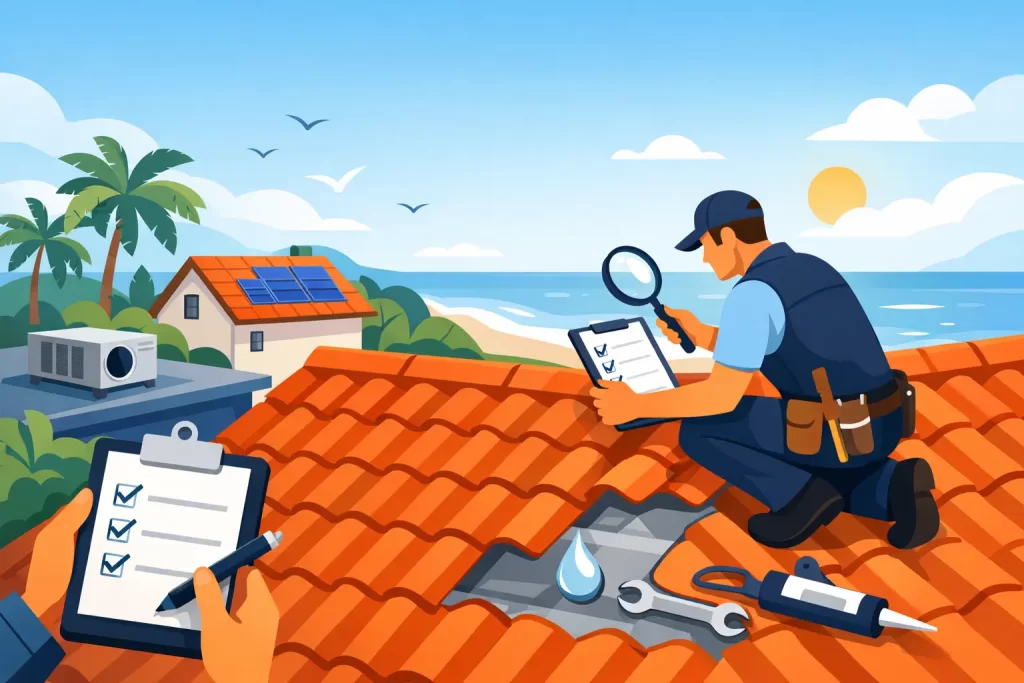
Use this checklist to organize what you see and what needs a professional follow-up:
- Roof covering: Check for missing, loose, cracked, worn, blistered, or displaced shingles, tiles, metal panels, coatings, or membrane materials.
- Flashing and sealants: Inspect areas around chimneys, vents, skylights, valleys, walls, and roof transitions. Damaged flashing is one of the most common sources of leaks.
- Gutters and downspouts: Remove leaves, pine needles, seed pods, and roof granules. Confirm downspouts direct water away from the foundation and do not overflow during rain.
- Roof drainage: On flat roofs, look for standing water that remains more than 48 hours after rainfall. Ponding water can accelerate wear and expose drainage problems.
- Tree limbs and debris: Trim branches that rub the roof or hang directly over it. Remove loose debris that traps moisture or blocks water flow.
- Attic or ceiling conditions: Look for damp insulation, stains, mold-like growth, peeling paint, musty odors, or daylight visible through the roof deck.
- Ventilation: Confirm soffit, ridge, gable, and powered vents are clear and functioning as intended. Heat and moisture buildup can shorten roofing material life.
- Exterior walls and openings: Check fascia, soffits, siding, windows, and doors near roof edges for water staining or rot. A roofing issue can show up beyond the roof itself.
Take clear photos and note the date, location, and size of any issue. This simple record helps you track whether a problem is stable or getting worse. It can also be useful when discussing repairs, warranties, or storm-related insurance claims.
Keep Gutters and Drainage Working
Gutters may seem like a separate maintenance item, but they are part of the roof’s water-management system. When they clog, rainwater can back up under shingles, spill over fascia boards, and saturate the soil around your property. In Florida’s heavy downpours, a small blockage can become a big problem quickly.
Clean gutters at least twice a year, and more often if your property has mature trees. Check that hangers are secure, seams are not leaking, and downspouts are firmly attached. Water should flow away from the building, not collect near the foundation, walkways, or commercial entry points.
For larger homes, multi-story buildings, or properties with difficult roof access, professional gutter maintenance is safer and often more thorough. It also gives a trained crew an opportunity to spot roof-edge damage that may otherwise go unnoticed.
Pay Close Attention After Florida Storms
A roof can appear intact after a storm while still having wind damage beneath the surface. High winds may lift shingles enough to break their seal, loosen flashing, or shift tiles without tearing them off completely. Wind-driven rain can then enter through openings that are not obvious from the ground.
After severe weather, walk the property and look for fallen branches, debris, shingle pieces, granules near downspouts, bent gutters, damaged screens, or water stains inside. Check your attic only if it is safe to do so. Wet insulation, damp framing, or a fresh musty smell deserves immediate attention.
Do not pressure wash roof materials to remove stains or storm debris. High-pressure cleaning can strip shingle granules, break tiles, damage coatings, and force water into vulnerable areas. Roof cleaning methods should match the material and be handled carefully.
If you find active leaking, protect interior belongings, collect dripping water in containers, and document visible damage. Avoid attempting emergency roof repairs during rain, high winds, or lightning. A professional emergency response can secure the affected area and help prevent further water intrusion.
Protect the Roof From Heat, Humidity, and Moisture
Florida’s intense sun can dry out sealants, fade coatings, and accelerate the aging of roofing materials. At the same time, warm, humid conditions create an environment where algae, mildew, and moisture problems can spread. Maintenance is as much about managing heat and airflow as it is about spotting missing shingles.
Attic ventilation and insulation deserve attention because they influence the roof system from below. Poor ventilation can trap heat and humidity in the attic, raising cooling costs and stressing the roof deck. The right approach depends on the home’s design, existing venting, insulation levels, and roof type. More ventilation is not automatically better if it disrupts a balanced system, which is why an evaluation is worthwhile before making changes.
For commercial properties, inspect rooftop equipment curbs, drains, penetrations, and the areas around HVAC units. Service technicians and equipment maintenance crews can accidentally puncture or stress roofing membranes. Clear coordination between your roofing contractor and facility team helps prevent repeat repairs.
Know When Maintenance Becomes a Repair
Preventive care cannot reverse every problem. An isolated damaged shingle, loose flashing section, or clogged drain may be a straightforward repair when addressed early. Widespread granule loss, recurring leaks, soft decking, major storm damage, or an aging roof near the end of its service life may call for a larger solution.
The right choice depends on the roof’s age, material, damage extent, repair history, and the condition of the structure below. Repeated spot repairs can be sensible for a newer roof with localized damage. On an older system with multiple failure points, investing in replacement may provide better long-term protection and a stronger warranty position.
A professional inspection offers the clarity that a visual check cannot. Florida’s Roofing & Construction Group can assess the roof, drainage, ventilation, and related exterior components, then explain the condition in straightforward terms with transparent repair or replacement options.
Build Maintenance Into Your Property Calendar
Put roof maintenance on the calendar before hurricane season, after the most active storm months, and any time you notice a change inside or outside the property. Keep invoices, inspection reports, photos, and warranty documents in one place. For businesses and multifamily properties, assign a clear point person so storm checks and maintenance requests do not get lost between teams.
Your roof works hardest when Florida weather is at its worst. A quick seasonal review and prompt professional attention when something changes can keep a minor weakness from becoming the repair that interrupts your home, your business, or your budget.