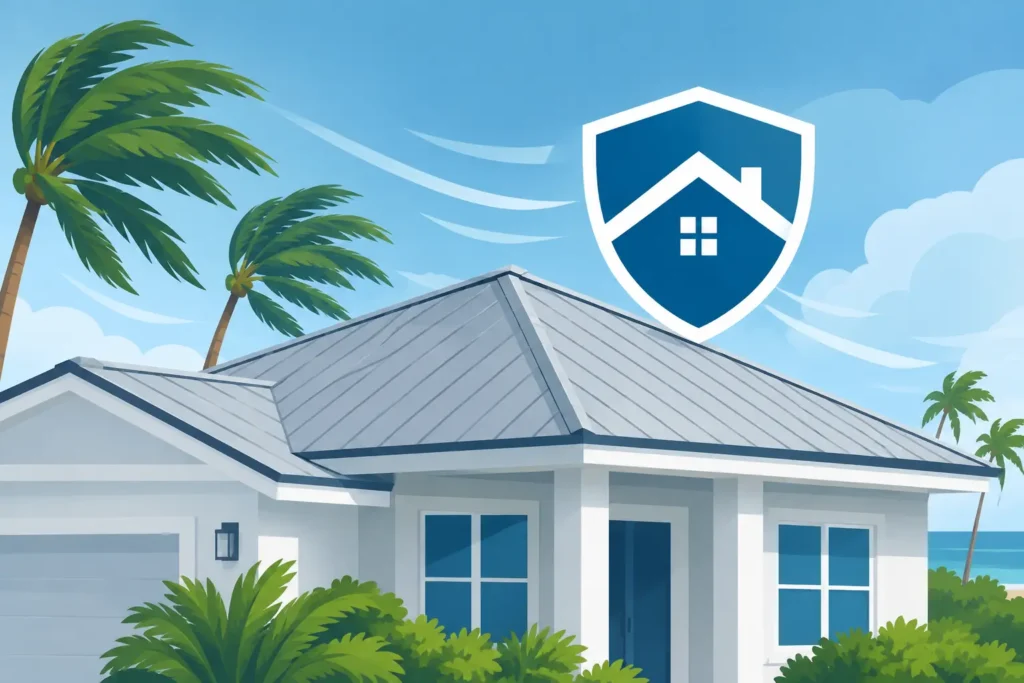
A Florida roof does more than keep out rain. During a hurricane or severe windstorm, it helps hold the entire home together. So, what is roof wind mitigation? It is the process of documenting construction features that can reduce wind damage, such as how the roof is attached to the walls and whether windows and doors are protected from flying debris. A qualified inspection may help your insurance carrier determine whether your property qualifies for wind-mitigation discounts.
For homeowners, this is not just paperwork. A wind mitigation inspection can identify the strengths of your roof system, reveal areas worth improving, and provide documentation that may lower eligible windstorm insurance costs. Results vary by insurer and by home, but the inspection itself gives you a clearer picture of how your property is prepared for Florida weather.
What Is Roof Wind Mitigation and Why Does It Matter?
Roof wind mitigation refers to the building features that help a roof resist uplift, water intrusion, and damage caused by high winds. When wind moves across a roof, it can create upward pressure strong enough to lift shingles, tear away decking, or pull the roof structure away from the walls if the connections are weak.
Florida building practices have improved significantly over the years, especially in coastal and hurricane-prone areas. However, many homes were built before current requirements took effect. Even a well-maintained older roof may not have the fastening pattern, roof-to-wall connectors, or impact protection that insurers look for today.
The goal is not to promise that a home will be storm-proof. No roof can guarantee zero damage in a major hurricane. The goal is to reduce the likelihood of catastrophic failure and keep the building envelope intact for as long as possible. A roof that stays attached and resists water intrusion can prevent a storm event from becoming a much larger restoration project.
What a Florida Wind Mitigation Inspection Looks For
A wind mitigation inspection is a visual review of specific construction details. The inspector documents qualifying features, typically with photographs and measurements, on a standard Florida insurance form. Your insurer then reviews the form and determines any applicable premium credits.
The inspection is different from a general roof inspection. A roof inspection focuses on condition, remaining life, leaks, damaged materials, and repair needs. Wind mitigation focuses on how the home is built to handle wind forces. Both can be valuable, particularly before hurricane season, after a roof replacement, or when shopping for homeowners insurance.
Roof Covering and Roof Deck Attachment
The roof covering includes materials such as asphalt shingles, metal panels, tile, or another finished surface. While a newer roof can be a major advantage for insurance eligibility and property protection, the wind mitigation inspection also considers what is beneath it.
Roof deck attachment refers to how the plywood or oriented strand board decking is fastened to the roof framing. Inspectors may look for nail size, nail spacing, and the pattern of attachment. Properly fastened decking is less likely to peel away when wind pressure builds at the roof edge or ridge.
This is one reason a quality roof replacement is about more than selecting attractive shingles. The underlayment, deck condition, fasteners, flashing, ventilation, and installation details all work together to protect the property.
Roof-to-Wall Connections
A roof is only as secure as its connection to the walls below. Roof-to-wall connections may include toe nails, clips, single wraps, double wraps, or engineered straps. In general, more substantial connectors can provide stronger resistance to uplift than basic toe-nailed construction.
Inspectors often document these connections from the attic, where accessible. They may need to move insulation carefully to photograph the hardware. Limited attic access, finished ceilings, or heavy insulation can make verification more difficult. If a feature cannot be verified, it may not receive credit, even if the home may have been built with it.
Roof Geometry
The shape of a roof affects how wind moves around it. Hip roofs, which slope down on all sides, often perform better in high winds than gable roofs, which have vertical end walls. That does not mean every gable roof is unsafe or needs to be replaced. It simply means roof geometry can affect the insurance rating.
A home with a gable roof can still benefit from other mitigation improvements, including stronger roof-to-wall connections, reinforced gable ends, and approved opening protection.
Secondary Water Resistance
Secondary water resistance is an extra layer of protection beneath the roof covering. If wind blows off shingles, tiles, or metal panels, this layer can help limit water from entering the home through the roof deck seams.
It is especially valuable in Florida, where wind-driven rain can enter small openings quickly. Secondary water resistance is commonly addressed during a full roof replacement because the roof covering must be removed to install or confirm the system properly.
Opening Protection
Openings include windows, exterior doors, skylights, garage doors, and other vulnerable areas of the building envelope. If wind breaks a window or door, pressure can build inside the home and increase the chance of roof failure.
Impact-rated windows and doors, approved hurricane shutters, and properly rated garage doors may qualify as opening protection. The protection must meet the applicable standards and cover the required openings. A few shutters stored in the garage or impact windows on only one side of the home may not provide the same credit as complete, documented protection.
Can Roof Wind Mitigation Lower Insurance Costs?
It can, but there is no universal discount amount. Each insurance company applies its own underwriting rules, coverage options, deductibles, and credit calculations. The age, location, construction type, roof shape, and documented mitigation features of your home all matter.
A wind mitigation inspection does not force an insurer to reduce your premium, and it does not replace the need for homeowners insurance. Still, many Florida property owners find that an updated report is worth obtaining after a roof replacement or major exterior upgrade. In some cases, the potential savings can offset the inspection cost over time.
Before scheduling an inspection, ask your insurance agent or carrier which form they require and whether they have specific documentation standards. Keep copies of your roof permit, final inspection records, product approvals, invoices, warranty information, and any previous wind mitigation reports. Good records can make it easier to verify qualifying features.
When to Schedule a Wind Mitigation Inspection
The best timing depends on your property and insurance situation. For many owners, the most practical time is immediately after a roof replacement, when installation details and permits are current. It can also make sense when purchasing a home, changing insurance carriers, renewing a policy, or completing upgrades such as impact windows, hurricane shutters, or a new garage door.
If your roof has suffered storm damage, address active leaks and compromised materials first. A mitigation inspection documents qualifying construction features, but it does not repair wind damage or certify that a roof is free of defects. After a storm, a professional roof assessment should identify urgent repair needs, temporary protection options, and whether an insurance claim may be appropriate.
Commercial property owners should take a similar approach. Flat roofs, rooftop equipment, parapet walls, roof drains, and access points all need regular attention in Florida’s wind and rain conditions. While commercial insurance requirements differ from residential policies, sound roof maintenance and accurate property documentation remain essential.
Improvements That May Strengthen Your Home
Some mitigation features are practical only during a reroof because they are located beneath the roof covering. Others can be addressed as separate exterior projects. The right path depends on your current roof condition, the age of the home, your insurer’s requirements, and your budget.
A contractor should evaluate the complete roof system before recommending upgrades. For example, replacing a roof that is otherwise in good condition solely for a possible insurance credit may not make financial sense. But if the roof is nearing the end of its service life, adding secondary water resistance, confirming deck attachment, and improving vulnerable connections during replacement can provide meaningful long-term value.
Florida’s Roofing & Construction Group helps homeowners and property owners assess roof condition, storm readiness, and practical repair or replacement options with clear estimates and local experience. The priority is straightforward: protect the building, address weaknesses before severe weather arrives, and make informed decisions rather than rushed ones.
A wind mitigation report is most useful when it leads to action. Whether it confirms that your roof already has strong protective features or points to improvements worth planning, keep the documentation current and give your property the attention it needs before the next storm is on the radar.