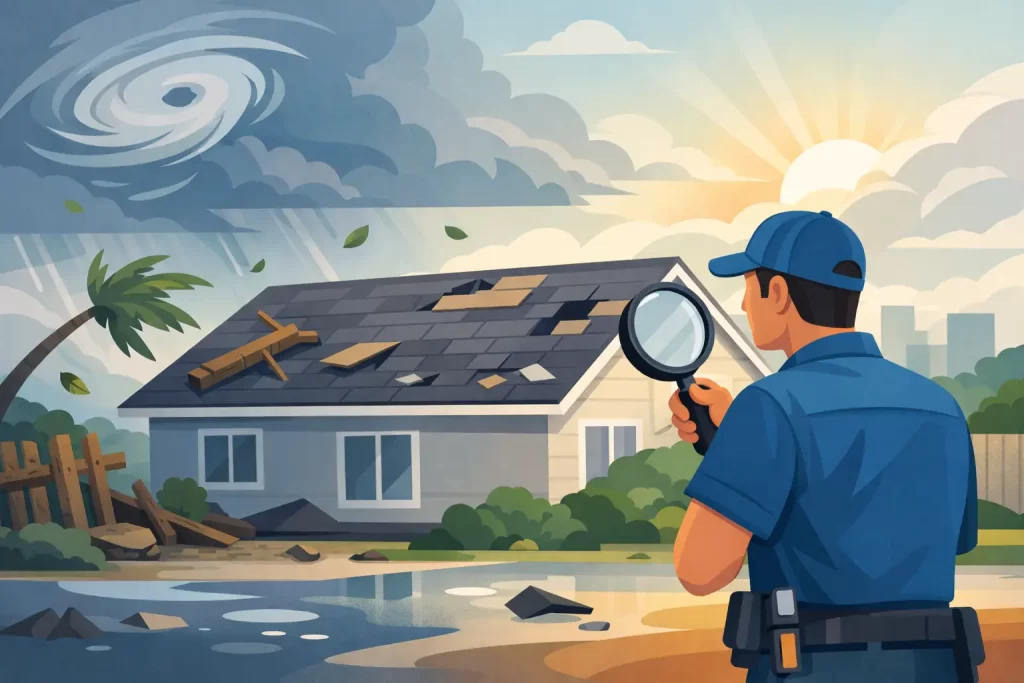
The rain may be gone, but that does not mean your roof is in the clear. Florida hurricanes can lift shingles, drive water beneath flashing, loosen fasteners, and strain flat-roof drainage systems without leaving an obvious hole overhead. A roof inspection after a hurricane gives homeowners and commercial property owners a clear picture of what happened before a small weakness turns into an interior leak, mold issue, or major repair.
The right time to act is as soon as conditions are safe. You do not need to see water dripping from the ceiling to have a qualified professional assess the roof. In fact, waiting for visible leaks often means the damage has already spread beyond the roof deck.
Why hurricane roof damage is easy to miss
Hurricane damage is not always dramatic. A missing shingle or fallen tree limb makes the need for repair clear, but many of the most expensive problems begin with damage that is difficult to see from the ground. Wind can break the adhesive seal on shingles, bend flashing around vents and chimneys, or create tiny openings where wind-driven rain enters the roofing system.
Florida’s heat and humidity make this especially urgent. Moisture trapped under roofing materials can deteriorate decking, insulation, and fasteners. In a home, that can lead to stained ceilings, peeling paint, and mold. In a commercial building, a small breach over a flat roof can interrupt operations, damage inventory, or affect sensitive equipment.
A professional inspection is not simply a search for missing materials. It is an assessment of how the complete roof system handled the storm, including the roof surface, penetrations, edges, drainage, and the areas where water is most likely to enter.
When should you schedule a roof inspection after a hurricane?
Schedule an inspection as soon as local conditions are safe and access is permitted. If your property has obvious damage, active leaking, a tarp in place, or debris on the roof, treat the situation as urgent. Emergency measures can help limit water intrusion while a permanent repair plan is developed.
Even if the roof looks normal from the driveway, an inspection is wise after your property has experienced hurricane-force winds, prolonged wind-driven rain, hail, or nearby tree damage. This is particularly true for older roofs and roofs that had minor wear before the storm. A roof nearing the end of its service life may be more vulnerable to lifted shingles, cracked sealants, and exposed fasteners.
For commercial properties, facility managers should inspect promptly after any storm that affects the building envelope. Flat roofs can retain water, and ponding water may reveal drainage problems or membrane damage that is not visible from the building interior until much later.
What a professional hurricane roof inspection should cover
A thorough inspection starts with safety. Homeowners and employees should not climb onto a storm-damaged roof. Wet surfaces, loose materials, downed utility lines, and hidden structural damage create real risks. A trained roofing professional can examine the system without turning a repairable problem into an injury.
The inspection should evaluate visible wind damage, such as missing, creased, cracked, or lifted shingles; damaged ridge caps; loose metal panels; and displaced tiles. It should also look closely at flashing around chimneys, skylights, vents, valleys, wall transitions, and roof edges. These areas are common entry points for wind-driven rain.
On flat and low-slope commercial roofs, the assessment should include membrane seams, penetrations, drains, scuppers, coping, and areas of standing water. A roof can appear intact while seam separation or punctures allow moisture below the membrane.
A qualified inspector should also check gutters and downspouts. Clogged or detached gutters can force water toward the roof edge, fascia, soffit, and foundation. If storm debris has blocked drainage, clearing it quickly can prevent the next rainstorm from causing additional damage.
Signs you should not wait to call
Some storm damage needs immediate attention. Call for emergency roofing help if you notice active water intrusion, sagging ceilings, a fallen branch on the roof, exposed roof decking, loose metal, or shingles scattered around the property. Keep people away from areas with ceiling bulges or electrical concerns, and move valuables away from leaks if it is safe to do so.
Other warning signs may appear days or weeks later. Watch for water stains, bubbling drywall, musty odors, peeling exterior paint near rooflines, granules collecting in gutters, or damp insulation in an attic. For business owners, inspect ceiling tiles, upper-wall finishes, storage areas, and equipment rooms after the storm. A stain that seems minor can indicate water traveling along framing before it becomes visible.
Do not assume that a roof is undamaged because a neighbor’s roof has issues while yours does not. Wind patterns vary from block to block and even across one building. The direction of the wind, roof design, surrounding trees, and prior roof condition all affect the outcome.
Document damage without putting yourself at risk
Before repairs begin, take clear photos and videos from the ground of visible damage, debris, interior stains, and affected belongings. Note the date of the storm and when you first noticed each issue. This documentation can be useful when communicating with your insurance carrier and your roofing contractor.
Avoid making permanent repairs before the damage has been documented unless waiting would allow serious water intrusion. Temporary protection, such as professional tarping or covering an opening, may be necessary to prevent further loss. Keep receipts for emergency mitigation work and save all estimates, invoices, and inspection reports in one place.
An honest roofing assessment matters here. Not every storm requires full roof replacement. Some roofs need targeted shingle, flashing, gutter, or membrane repairs. Others have widespread wind damage, aging materials, or repeated leaks that make replacement the more dependable long-term choice. The best recommendation depends on the roof’s condition, the extent of storm damage, the material type, and whether repairs can reliably restore the system’s weather protection.
Avoid common post-storm mistakes
The first contractor who knocks on the door is not automatically the right choice. After hurricanes, property owners are often approached by out-of-area crews making quick promises. Verify that any contractor is properly licensed and insured, has local experience, provides a written scope of work, and explains what is included in the estimate.
Be cautious about signing documents you do not understand or agreeing to a major replacement based only on a quick ground-level look. A dependable contractor should explain the findings in plain language, identify urgent needs, and separate emergency protection from recommended permanent work. Clear pricing and a documented scope help you make decisions with confidence.
It is also a mistake to delay because you are concerned about cost. Early repairs are often less disruptive and less expensive than addressing water-damaged decking, insulation, ceilings, and interior finishes later. Ask about financing options when needed, but do not let uncertainty keep a known roof opening exposed through Florida’s next heavy rain.
Protect the property after repairs are complete
Once the immediate storm issue is resolved, use the inspection findings to plan ahead. Routine maintenance can catch worn sealant, loose flashing, clogged drainage, and aging materials before hurricane season places extra stress on the roof. For homes, that may include maintaining gutters, trimming overhanging branches, and checking attic ventilation. For commercial buildings, regular roof maintenance and drainage checks can reduce the risk of ponding water and surprise leaks.
If a replacement is recommended, consider more than the immediate repair. Material selection, ventilation, underlayment, edge protection, drainage, and installation quality all influence how a roof performs in Florida weather. The lowest initial bid is not always the best value if it leaves out the components that protect the building when the next storm arrives.
Florida’s Roofing & Construction Group helps property owners move from uncertainty to a clear repair or replacement plan, with experienced inspections, emergency response, upfront estimates, and exterior solutions that protect the whole property. When the storm passes, getting answers early is one of the strongest steps you can take to keep a manageable roof issue from becoming a larger loss.