A roof rarely fails all at once. More often, Florida homeowners notice a small ceiling stain after a heavy downpour, a few shingles in the yard, or an upstairs room that never seems to cool down. Knowing the signs you need roof replacement helps you act before a manageable roofing problem turns into damaged insulation, mold, interior repairs, or business interruption.
Florida roofs work hard. Relentless UV exposure, humidity, wind-driven rain, tropical storms, salt air in coastal areas, and sudden temperature changes all shorten the margin for error. A repair may be the right answer when damage is isolated. But when your roof system is aging or failing in several places, replacement is the more protective and cost-effective decision.
Signs You Need Roof Replacement Before the Next Storm
1. Your roof is near or past its expected service life
Age does not automatically mean a roof must be replaced, but it should change how closely you watch it. Many asphalt shingle roofs last roughly 15 to 25 years, depending on material quality, installation, ventilation, maintenance, and weather exposure. Florida conditions can push a roof toward the lower end of that range.
Metal, tile, and commercial flat-roof systems can last longer, but they still need regular inspections. Once a roof reaches its expected lifespan, repairs can become less predictable. Materials may be brittle, discontinued, or weakened beyond the visible problem area. An inspection can determine whether there is enough useful life left to justify a repair.
2. Shingles are curling, cracking, bald, or missing
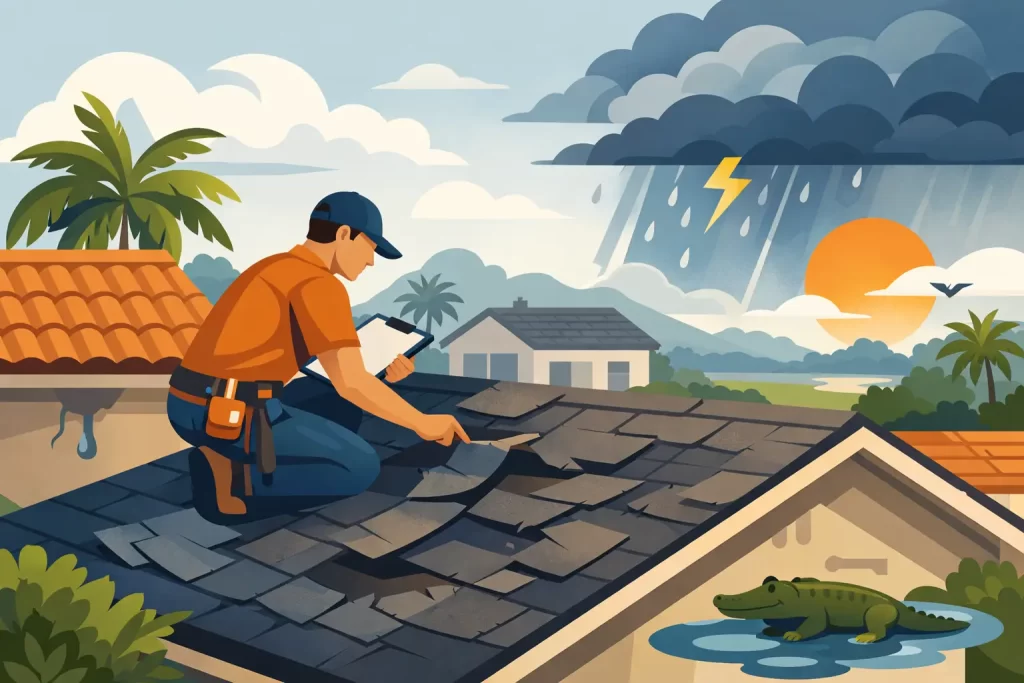
Shingles are your roof’s first defense against water and sun. Curling edges, cracked surfaces, missing tabs, and widespread loss of protective granules are clear signs that the material is deteriorating. You may see those granules collecting in gutters or at the end of downspouts.
One missing shingle after a storm can often be repaired. A broad pattern of damage is different. When shingles are lifting or breaking across multiple roof slopes, patching individual areas may leave the rest of the roof vulnerable during the next period of high wind and rain.
3. You see stains, dampness, or peeling paint inside
A brown ring on the ceiling is not just a cosmetic issue. It often signals that water has already moved past the roofing material and into the structure below. Damp attic insulation, peeling paint near the ceiling, warped drywall, musty odors, or bubbling wall finishes can all point to an active or recurring roof leak.
The entry point may not sit directly above the stain. Water can travel along decking, rafters, wiring, or insulation before it becomes visible indoors. That is why a professional inspection matters. Treating only the interior symptom does not stop the source of the moisture.
4. Your attic shows daylight or water damage
A quick attic check can reveal a lot. On a bright day, look for pinpoints of daylight coming through the roof deck. Also watch for wet insulation, darkened wood, mold-like growth, rusty nails, or a persistent musty smell.
Small openings may be repairable if the surrounding roof is in good condition. However, widespread water staining or soft, deteriorated decking can indicate a larger system failure. Replacing the roof may also require replacing compromised decking, which is necessary to create a sound base for the new roof.
5. Your energy bills have risen without a clear reason
A roof does more than keep rain out. Its condition affects attic temperature, ventilation, insulation performance, and the load on your air conditioning system. If your home feels hotter upstairs, your HVAC runs constantly, or cooling bills climb even after normal seasonal changes, the roof and attic system deserve attention.
Poor ventilation alone does not always require a full replacement. In other cases, aging materials, failing underlayment, and inadequate airflow are all contributing to the problem. A replacement project can be an opportunity to address the complete system instead of placing new shingles over conditions that continue to trap heat and moisture.
6. Leaks keep returning after repairs
A well-executed repair is valuable when damage is limited. But repeated leaks are one of the strongest signs that a roof is nearing the end of its useful life. If you are calling for service after every major storm, paying for temporary fixes can cost more over time than replacing the roof with a dependable new system.
This is especially true when leaks appear in different places. Multiple failure points can mean the underlayment, flashing, sealants, or roofing material has aged throughout the roof. For commercial properties, recurring ponding water, seam separation, blistering, or leaks around penetrations can create the same pattern on a flat roof.
Storm Damage Can Change the Replacement Decision
7. Wind has lifted materials or damaged flashing
After a hurricane, tropical storm, or severe thunderstorm, damage is not always obvious from the ground. Wind can lift shingles without fully removing them, break seals, bend metal flashing, and expose areas where water can enter. Even if the roof does not leak immediately, a weakened seal can fail during the next storm.
Do not rely on a quick visual check from a ladder. Walking on a damaged roof can be unsafe and may cause more harm, particularly on tile, metal, or older shingles. A qualified roofing professional can assess storm damage safely and explain whether targeted repairs will restore protection or whether replacement is the more reliable path.
8. The roof deck feels soft or sags
A sagging roofline, soft spots, or visible dips deserve immediate attention. These conditions can indicate moisture-damaged decking, weakened framing, or long-term structural stress. They are not issues to cover over with a new layer of roofing material.
A replacement project allows the roofing contractor to expose the deck, identify damaged sections, and make necessary repairs before installing a new system. Addressing structural concerns early protects the building and helps prevent a much larger repair later.
9. Your roof no longer fits your property’s needs
Sometimes replacement is not only about visible failure. A property owner may need better wind resistance, improved energy performance, updated drainage, or materials suited to a coastal environment. Homeowners considering solar may also prefer to replace an aging roof first, rather than remove and reinstall panels a few years later.
For commercial buildings, replacement may be the right move when an aging flat roof creates maintenance disruptions or limits planned improvements. The right system depends on the building, slope, drainage, occupancy, budget, and long-term ownership plans. There is no one material that is best for every Florida property.
Repair or Replacement: How to Make the Right Call
The practical question is not whether a roof has any damage. Nearly every roof will need a repair at some point. The question is whether the roof can still provide reliable protection after that repair.
Repair is often appropriate when the roof is relatively new, the problem is confined to one area, and the surrounding materials remain in good condition. Replacement becomes more sensible when the roof is older, damage is widespread, leaks recur, or repairs would only postpone a predictable failure.
Cost matters, but so does timing. Waiting until water enters the building can add drywall, flooring, electrical, insulation, inventory, and mold-related costs to a roofing project. Planning replacement before the roof becomes an emergency gives you more control over materials, scheduling, financing, and the scope of work.
What to Do If You Notice These Warning Signs
Start with a professional roof inspection and ask for a clear explanation of what was found. A trustworthy estimate should distinguish immediate safety or leak concerns from maintenance items that can be scheduled later. It should also explain the condition of the roof deck, flashing, ventilation, drainage, and underlayment, not just the visible surface material.
Take photos of interior stains and any storm-related damage you notice, but avoid climbing onto the roof yourself. If water is actively entering the property, move valuables away from the affected area and arrange emergency service as soon as possible.
Florida’s Roofing & Construction Group helps homeowners and commercial property owners evaluate roof damage, understand their options, and move quickly when replacement is the right answer. With transparent estimates, financing options, and responsive service, the goal is simple: restore dependable protection without leaving you to guess what comes next.
Your roof does not need to be collapsing to deserve attention. A timely inspection after a storm, at the first sign of a leak, or as your roof approaches its expected lifespan can protect the property you have worked hard to maintain.