
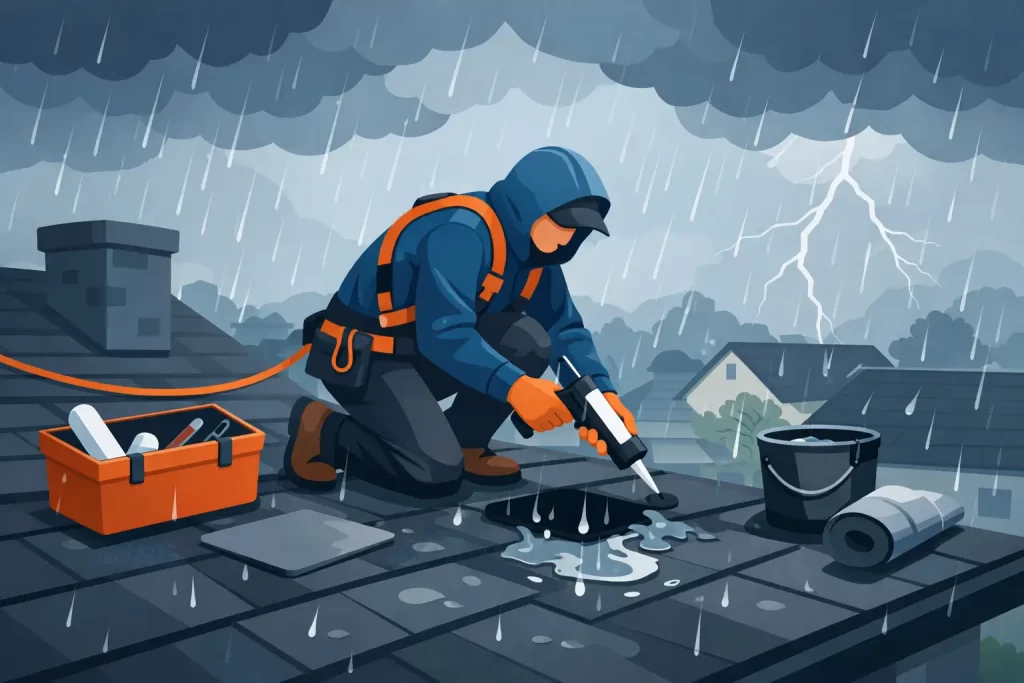
A ceiling stain can wait. Water actively dripping onto a hardwood floor, electrical fixture, server rack, or inventory cannot. Roof leak repair during heavy rain is less about climbing onto the roof and more about protecting people and property until conditions allow a qualified roofer to identify and repair the source.
Florida storms can push rain sideways, lift shingles, overwhelm drainage, and expose weak points that looked fine in dry weather. The first goal is to control the damage indoors. The second is to document what happened and get professional help in motion without taking a dangerous risk on a wet roof.
1. Stay off the roof during the storm
A wet roof is not a DIY work surface. Shingles, metal panels, tile, and flat-roof membranes become extremely slippery in rain. Wind, lightning, poor visibility, and unstable footing raise the risk even further. A temporary repair is never worth a fall.
This also applies to ladders. Do not lean a ladder against a roof edge in high winds or climb it while rain is falling. If water is entering fast, focus on the interior response and call an emergency roofing contractor that can assess conditions and determine whether a safe temporary measure is possible.
A professional crew may be able to install an emergency tarp or make limited exterior protection once wind and lightning conditions permit. That is different from performing a permanent roof repair in active, heavy rain. Adhesives, sealants, underlayment, and roofing materials need reasonably dry conditions to perform as intended.
2. Control the water inside before it spreads
Move furniture, electronics, documents, merchandise, and anything absorbent away from the leak. Place buckets, storage bins, or other waterproof containers beneath drips. Line the surrounding area with towels, but keep water away from extension cords, outlets, power strips, and electrical appliances.
If water is coming through a ceiling near a light fixture, ceiling fan, or electrical outlet, treat it as a potential electrical hazard. Do not touch the fixture or stand in pooled water. If it is safe to do so, shut off power to the affected area at the breaker panel and contact an electrician if there is any concern about wiring exposure.
For commercial properties, protect equipment and isolate the affected space when possible. Water above a suspended ceiling can travel farther than the visible drip point, so check adjacent rooms, hallways, and areas below rooftop drains or HVAC penetrations.
Release a sagging ceiling carefully
A bulging or sagging ceiling often means water is pooling above the drywall. Left alone, it can collapse unpredictably and spread water across a much larger area. After moving people and valuables out of the area, place a large container under the lowest point of the bulge.
If there are no electrical hazards nearby, a small puncture at the lowest point can allow water to drain in a controlled stream. Use a long-handled tool rather than standing directly underneath. If the ceiling is badly compromised, water is near electrical equipment, or the area is unsafe to access, step away and wait for emergency help.
3. Find the interior clues, but do not assume the leak source
The spot where water appears indoors is often not directly below the roof opening. Rain can enter around a vent, chimney flashing, skylight, ridge, valley, damaged shingle, wall transition, or rooftop unit, then travel along decking, framing, or insulation before reaching the ceiling.
Take photos and short videos of active dripping, stains, ceiling damage, wet insulation, and any visible exterior damage you can safely observe from the ground. Note the time, the direction of the wind, and whether the leak occurs only during heavy rain or also during lighter showers. Those details help a roofer narrow down the cause.
Do not rely on caulk, spray foam, duct tape, or a tarp thrown from a window as a long-term answer. These quick fixes can trap water, interfere with a proper inspection, or create a false sense of security. A roof that leaks in wind-driven rain may have a flashing, drainage, or material issue that needs a complete repair approach.
4. Know when the situation is an emergency
Every leak deserves attention, but some require immediate response. Call for emergency roofing assistance when water is entering rapidly, a large section of roofing is missing, a tree limb has struck the roof, or the ceiling is sagging. The same urgency applies when water is near electrical systems, business equipment, critical inventory, or an occupied area that cannot be safely closed off.
A leak around a skylight or vent may appear minor at first, yet water can saturate insulation and framing over time. In Florida’s heat and humidity, trapped moisture can quickly contribute to mold growth and material deterioration. Quick action can reduce the size and cost of the restoration work.
If the storm includes lightning, hurricane-force winds, or unsafe flooding conditions, prioritize personal safety and follow local emergency guidance. A roofer can respond as soon as conditions allow, but no responsible contractor should put workers on a roof during an active lightning event or dangerously high winds.
Roof Leak Repair During Heavy Rain: What Pros Can Do
An experienced roofing team begins by evaluating the active water intrusion, visible storm damage, roof age, drainage, and the condition of flashing and penetrations. If conditions permit, emergency services may include securing loose material, covering an exposed area with a properly installed tarp, or taking other temporary steps to reduce additional intrusion.
The lasting repair usually follows after the roof dries and the weather clears. That may involve replacing damaged shingles or tiles, repairing flashing, sealing a vent boot, correcting a failed transition, restoring a flat-roof membrane, or addressing drainage that is allowing water to back up. The correct repair depends on the roof system and the actual entry point, not simply where the interior stain appeared.
For a commercial flat roof, ponding water, clogged drains, failed seams, and deteriorated penetrations are common concerns. For homes, wind-lifted shingles, aging pipe boots, valley damage, and compromised flashing often show up during severe rain. A proper inspection should explain the cause, the recommended scope, and whether nearby areas need preventive attention.
5. Protect your insurance claim and repair records
Document the damage before cleanup whenever it is safe. Photograph the roof from the ground, the affected rooms, damaged belongings, and any temporary measures taken. Keep receipts for emergency mitigation, water removal, and protective materials.
Then notify your insurance carrier according to your policy requirements. An insurance claim and a roofing inspection are separate processes, but clear documentation can help establish the timing and extent of storm-related damage. Avoid authorizing major work based only on a quick drive-by assessment or a vague verbal promise.
Ask for a written estimate that identifies the issue, proposed repair, materials, and warranty terms. Florida’s Roofing & Construction Group provides free estimates and can help property owners understand the repair options after storm damage, with emergency response available when the situation calls for it.
6. Reduce the odds of the next leak
Heavy rain does not always create a roof problem. Often, it reveals one that has been developing quietly. Routine inspections help catch loose flashing, cracked sealants, missing shingles, damaged roof penetrations, clogged gutters, and drainage problems before the next storm tests them.
Keep gutters and downspouts clear so water can move away from roof edges and the building foundation. Trim back branches that could scrape roofing materials or break over the structure. After a major storm, look for displaced shingles, granules in gutters, bent metal, damaged soffit, or debris around rooftop drains from the safety of the ground.
Older roofs deserve closer attention, especially if repairs have been made repeatedly in the same area. There is a practical trade-off: a targeted repair can be the right value when the roof is otherwise sound, while widespread wear or repeated leaks may make replacement the more reliable long-term decision.
When rain is coming down hard, protect the people and belongings below the leak, not the roof from above. Once the storm eases, a timely professional inspection can turn a stressful night into a clear plan for keeping your property dry.