A small roof leak can turn into a business interruption faster than most property owners expect. Water can travel beneath a membrane, saturate insulation, stain ceilings, disrupt tenants, and damage inventory well beyond the point where the leak first appeared. This commercial roofing decision guide helps Florida business owners and facility managers make a clear choice: repair, restore, or replace the roof before a manageable issue becomes an expensive emergency.
Start With the Building, Not the Material
Commercial roofing decisions should begin with the property’s real demands. A warehouse, medical office, retail center, restaurant, condominium building, and industrial facility may all have low-slope roof systems, but they do not carry the same risks or operating priorities.
Consider what is below the roof. If the building houses sensitive equipment, inventory, records, food service, or occupied spaces that cannot easily close, leak prevention and fast response should carry extra weight. If tenants rely on uninterrupted access, construction scheduling and noise control matter just as much as the roofing material itself.
Florida conditions also change the equation. Intense sun, high humidity, wind-driven rain, hurricanes, salt air near the coast, and rapid temperature shifts can accelerate wear on seams, flashings, drains, and roof penetrations. A system that performs well in a mild climate may require a different maintenance approach here.
Before approving any work, request a professional inspection that identifies the roof’s age, existing system, insulation condition, drainage performance, visible damage, and likely remaining service life. The goal is not simply to find a leak. It is to understand why it developed and whether the underlying roof can still protect the building.
Repair, Restoration, or Replacement?
The most cost-effective option is not always the lowest upfront price. A targeted repair can be the right choice when damage is isolated, the roof is still structurally sound, and the system has meaningful life remaining. Repairs may address punctures, open seams, deteriorated flashing, clogged drainage areas, or damage caused by storm debris.
A restoration or coating system may make sense when the existing roof remains dry and stable but needs better weather protection. Depending on the roof type and condition, a properly selected coating can help seal minor vulnerabilities, reflect heat, and extend service life. Coatings are not a cure-all, though. They should not be applied over trapped moisture, failing insulation, major substrate damage, or widespread seam failure.
Replacement becomes the responsible choice when leaks are recurring, moisture has spread beneath the surface, storm damage is extensive, or repairs are becoming a repeating operating expense. Replacement also gives owners the opportunity to improve insulation, drainage details, wind resistance, and long-term energy performance.
A contractor should be able to explain the trade-off plainly. If a repair buys several dependable years at a reasonable cost, it may protect your budget. If it only postpones a failing roof for a few months, replacement may be the better financial decision.
Compare Commercial Roof Systems by Performance
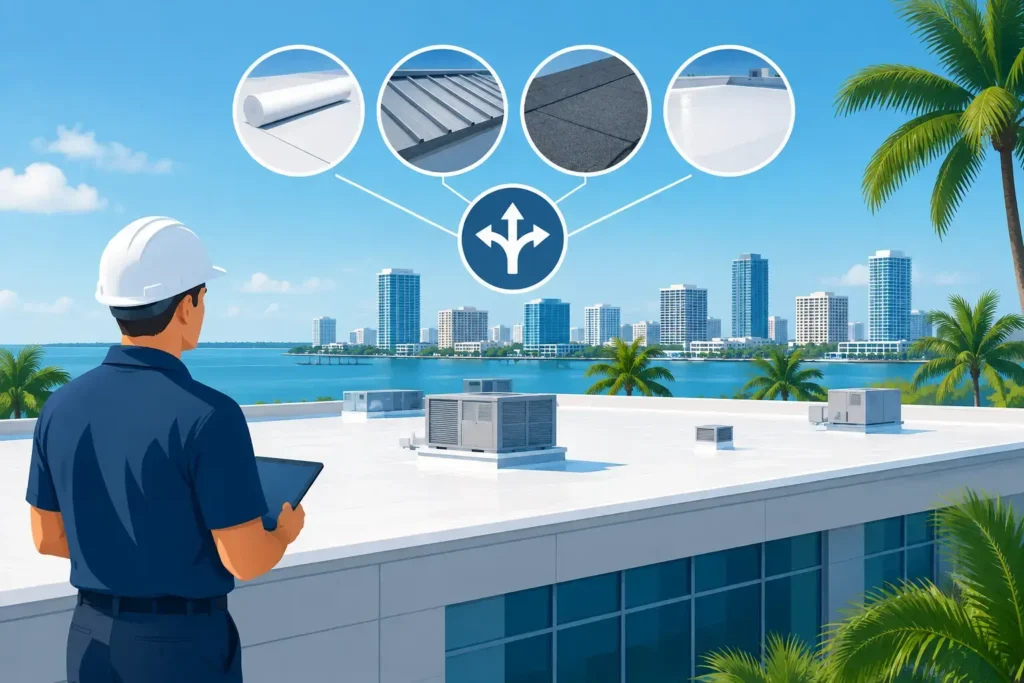
There is no single best commercial roof for every Florida property. The right system depends on the roof deck, slope, building use, exposure, budget, and maintenance plan.
TPO Roofing
TPO is a popular single-ply membrane for low-slope commercial roofs. Its white surface can reflect sunlight, which may help reduce heat absorbed by the building. TPO can be an attractive option for owners seeking energy efficiency and a clean, modern roof system.
Its performance depends heavily on installation quality, especially at seams and penetrations. A qualified contractor should evaluate the membrane thickness, fastening or adhesion method, flashing details, and wind requirements for your property.
PVC Roofing
PVC is another white single-ply system often chosen for buildings with grease, chemical, or exhaust exposure, such as restaurants and certain industrial uses. Heat-welded seams can provide strong water resistance when installed correctly.
PVC may cost more than some alternatives, but its chemical resistance can make the investment worthwhile for the right facility. The building’s use should drive the decision, not just the initial material price.
Modified Bitumen and Built-Up Roofing
Modified bitumen and built-up roofing systems use multiple layers to create durable protection. They can be a practical fit for certain low-slope roofs, particularly where toughness and proven performance are priorities.
These systems can offer reliable protection, but they are not automatically maintenance-free. Regular inspections remain necessary to catch flashing wear, surface damage, and drainage concerns before water reaches the deck.
Metal Roofing
Metal roofing can be an excellent choice for commercial buildings with the proper slope and design. It offers a long service life, strong visual appeal, and potential energy benefits when paired with reflective finishes and appropriate insulation.
The details matter. Fasteners, panel connections, penetrations, and edge systems must be designed for Florida’s wind and rain exposure. Metal roofs can be a major long-term asset, but they require experienced installation and careful planning around expansion, drainage, and hurricane conditions.
Make Drainage a Non-Negotiable
Standing water is one of the clearest warning signs on a commercial roof. Even if a membrane is designed for low-slope use, prolonged ponding can increase stress on seams, coatings, and drains. It can also signal a larger issue with roof slope, blocked scuppers, undersized drains, or settlement in the roof structure.
During an inspection, ask where water goes after a heavy Florida storm. The answer should include drains, scuppers, gutters, downspouts, and overflow paths. Those components work together. A well-installed roof can still face trouble if drainage is neglected or exterior water-management components are undersized.
Facility teams should also keep rooftop drains clear of leaves, debris, and loose materials. That simple maintenance task can prevent costly water buildup during a severe storm.
Budget for the Full Cost of Ownership
A commercial roofing proposal should give you more than a total price. It should explain the scope of work, materials, tear-off requirements, deck repairs if needed, insulation, drainage improvements, flashing, permits, cleanup, and warranty terms.
Be cautious with estimates that seem dramatically lower than others without a clear explanation. A low number may leave out necessary prep work, quality materials, safety requirements, or weatherproofing details that protect the roof at its most vulnerable points.
Look at the expected cost over time. A less expensive system that needs frequent repairs may cost more over a decade than a higher-quality installation with stronger materials and a solid maintenance plan. Financing can also make it easier to address a necessary replacement before damage spreads into the building.
Plan Work Around Your Operations
Commercial roofing should protect your business without creating avoidable disruption. Before work begins, discuss access routes, delivery staging, parking impacts, tenant communication, daily cleanup, noise, odors, and emergency weather procedures.
A reliable contractor will help establish a schedule that respects your operations. Retail properties may need work timed around customer traffic. Medical and professional offices may need advance notice for noise. Restaurants and facilities with sensitive equipment may require additional protections during tear-off or rooftop work.
Ask who will be your point of contact during the project and how weather delays will be handled. In Florida, a clear storm plan is not an extra. It is part of responsible project management.
Questions That Help You Choose the Right Contractor
A commercial roof is only as dependable as the team that installs and services it. Ask whether the contractor has experience with your roof type, understands local wind requirements, carries the proper insurance, and can provide a detailed written scope.
You should also ask about manufacturer credentials, workmanship warranty coverage, emergency repair availability, and ongoing maintenance options. The answers reveal whether the contractor is prepared to protect the building after installation, not just complete the initial project.
Florida’s Roofing & Construction Group helps commercial property owners evaluate roof conditions, storm damage, repairs, replacements, and maintenance needs with a practical focus on uptime and long-term protection. A clear estimate and an experienced inspection give decision-makers the information they need before the next storm tests the roof.
Your roof does not need to fail dramatically to deserve attention. If you have recurring leaks, ponding water, aging materials, or uncertainty after a storm, schedule an inspection while you still have time to choose the solution that best protects your property, tenants, and business.