A ceiling stain over a storage room, a puddle near an HVAC unit, or a sudden jump in cooling costs can signal commercial roof problems long before the roof looks damaged from the ground. In Florida, intense sun, wind-driven rain, humidity, and tropical storms put flat and low-slope roofing systems under constant pressure. Waiting for a visible leak to become a major disruption can turn a manageable repair into damaged inventory, tenant complaints, mold concerns, and costly downtime.
For business owners and facility managers, the goal is not simply to stop water when it appears. It is to find the source, protect the building envelope, and make a repair decision that supports the property over the long term.
The Commercial Roof Problems That Need Fast Attention
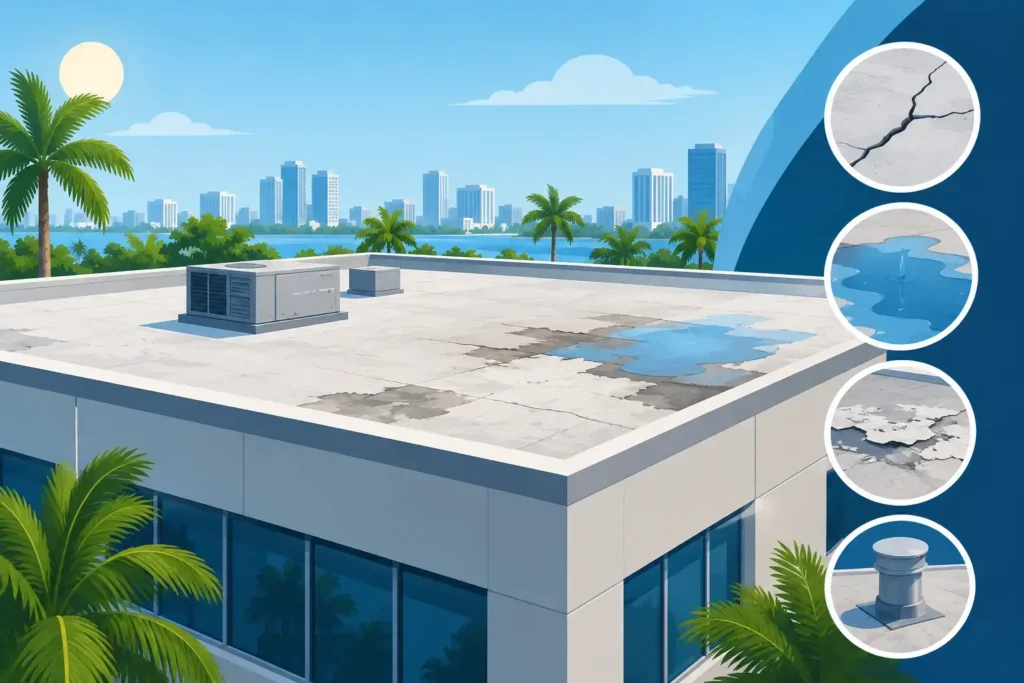
Commercial roofs often fail gradually. Water can move beneath a membrane or through insulation before it reaches the ceiling deck, which means the interior leak may be several feet away from the actual breach. A professional inspection is the surest way to identify the full extent of the issue.
Ponding Water That Does Not Drain
Standing water is common on low-slope roofs after a hard Florida rain, but it should not remain for days. Persistent ponding adds weight, speeds up membrane deterioration, and can expose drainage problems. It also allows debris to collect around drains and scuppers, making the next storm more likely to create an overflow.
Sometimes the solution is as straightforward as clearing blocked drainage and correcting a small area of the roof. In other cases, ponding points to poor slope, settlement, compressed insulation, or an aging system that needs a more complete restoration plan.
Membrane Cracks, Blisters, and Open Seams
Many commercial systems rely on a continuous membrane to keep water out. Heat, ultraviolet exposure, foot traffic, trapped moisture, and normal expansion and contraction can weaken that barrier over time. Blisters, splits, punctures, and separated seams may look minor, but each creates an entry point for water.
Seams deserve particular attention after heavy wind. Wind uplift can pull at membrane edges, flashing, and roof penetrations. If a seam lifts near a parapet wall or rooftop equipment, a driving rain can force water beneath the surface quickly.
Flashing Failures Around Equipment and Edges
Most commercial roof leaks develop at transitions, not in the broad middle of the roof. Flashing around vents, skylights, curbs, pipes, walls, drains, and HVAC units must remain securely sealed while accommodating movement. When sealants crack or metal flashing loosens, water finds the gap.
This is why a quick patch applied without checking adjacent details may not solve the problem. A reliable repair includes inspecting the surrounding roof area, the substrate, and the drainage path so the same leak does not return during the next storm.
Interior Warning Signs
A wet ceiling tile is an obvious concern, but it is not the only one. Musty odors, peeling paint, discolored wall finishes, damp insulation, corrosion around rooftop equipment, and unexplained humidity can all indicate water intrusion. Business operators should also pay attention to electrical areas, server rooms, stock rooms, and spaces where moisture could create a safety hazard.
Do not assume an interior stain is old just because it is dry on the day you notice it. The roof may leak only during wind-driven rain, and moisture can remain trapped within the assembly between storms.
Why Florida Commercial Roofs Face More Stress
Florida’s climate creates a demanding combination of moisture and heat. High temperatures cause roofing materials to expand, while cooler nighttime conditions encourage contraction. Over years, that movement can fatigue seams, fasteners, flashing, and coatings.
Sun exposure is equally significant. Ultraviolet rays dry and break down certain materials, particularly where repairs were delayed or protective coatings have worn thin. On a black or dark-colored roof, surface temperatures can rise far above the outdoor air temperature, adding stress to the membrane and increasing cooling demands inside the building.
Then there is storm season. Wind can dislodge edge metal, tear loose membrane sections, and carry debris across the roof. Branches and loose materials can puncture a surface, while backed-up drains can turn a short downpour into standing water. Even a roof that survived a storm without obvious damage may need an inspection, especially if nearby properties suffered wind or hail impacts.
Repair, Restoration, or Replacement: How to Decide
There is no responsible one-size-fits-all answer. The right path depends on the roof’s age, material, condition of the insulation and deck, leak history, drainage, and whether damage is isolated or widespread.
A targeted repair may be the best value when the roof is relatively young and the issue is confined to a seam, penetration, or storm-related puncture. Fast repair can prevent water from spreading into insulation and structural components.
A roof coating or restoration system can make sense when the existing roof remains structurally sound but needs renewed surface protection. Coatings may improve reflectivity and extend service life, but they are not a shortcut for wet insulation, failing seams, major ponding, or a deteriorated roof deck. Surface preparation and material compatibility matter as much as the coating itself.
Replacement becomes the smarter investment when repairs are becoming routine, moisture has spread below the membrane, the roof has reached the end of its expected service life, or storm damage is extensive. Replacement can also provide an opportunity to improve drainage, insulation performance, and wind resistance. The upfront cost is higher, but repeated emergency repairs and business disruption carry costs of their own.
What Facility Managers Should Do After a Leak or Storm
Start by protecting people and operations. Keep staff and customers away from active leaks, move vulnerable equipment or inventory when it is safe to do so, and place containers under drips. If water is near electrical equipment, treat it as an urgent safety issue and involve the appropriate professionals.
Document the conditions with dated photos from inside the building and, if safely accessible, from the ground outside. Note when the leak appeared, which weather conditions were present, and whether water seems tied to a specific area. This information helps roofing professionals diagnose intermittent leaks and can support an insurance claim when storm damage is involved.
Avoid sending untrained personnel onto the roof. Wet commercial roofs are hazardous, and walking on a compromised membrane can create additional damage. Call a qualified commercial roofing team that can inspect the roof safely, identify temporary protection needs, and explain the repair scope in clear terms.
Preventing Costly Commercial Roof Problems
A commercial roof maintenance plan is one of the most practical ways to reduce surprise expenses. Inspections should generally occur at least twice a year and after major storms. The inspection should cover seams, flashing, drains, penetrations, rooftop equipment areas, edge metal, visible membrane condition, and signs of ponding.
Between professional visits, building teams can help by keeping roof drains and gutters clear, reporting interior stains promptly, and limiting unnecessary roof traffic. Any contractor who accesses the roof for HVAC, communications, or other work should avoid leaving debris, loose fasteners, or unsealed penetrations behind.
It also helps to keep accurate records. A file containing inspection reports, repair dates, photos, warranty information, and storm documentation makes it easier to track recurring issues and plan capital work before the roof reaches a breaking point.
Florida’s Roofing & Construction Group helps commercial property owners assess active leaks, storm damage, maintenance needs, and long-term replacement options with clear recommendations and upfront pricing. For urgent damage, fast action can protect more than the roof itself – it can protect the people, equipment, inventory, and income inside the building.
A commercial roof does not need to be perfect to keep performing, but it does need attention before small failures become expensive interruptions. If your property has recurring leaks, standing water, visible membrane wear, or recent storm exposure, schedule an inspection while the repair options are still on your side.