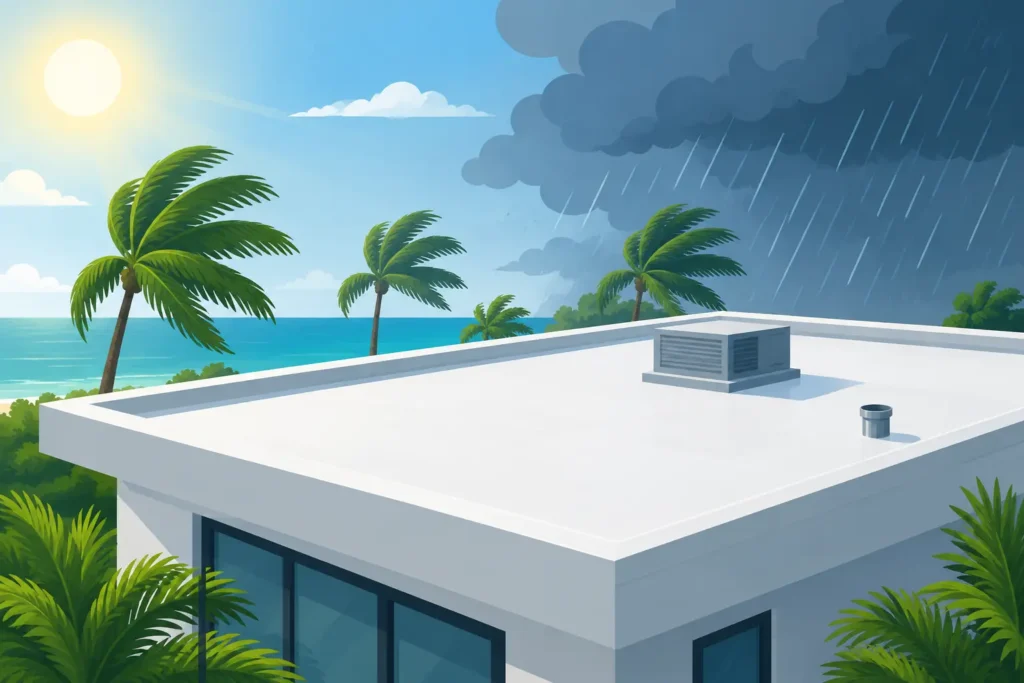
A flat roof can look simple from the ground, but Florida weather puts every seam, drain, edge, and penetration to work. Flat roofing protects countless homes, retail spaces, offices, warehouses, and multifamily buildings across the state, yet it demands the right material, proper drainage, and consistent care to perform as it should.
When a flat roof fails, water does not always announce itself with a dramatic ceiling stain. It can travel beneath the membrane, saturate insulation, damage decking, and disrupt business operations long before the full extent of the problem is visible. A proactive approach protects your building, your budget, and your peace of mind.
Why Flat Roofing Performs Differently in Florida
Despite the name, a flat roof is not completely flat. It is designed with a slight slope that directs rainwater toward drains, scuppers, or gutters. That slope is especially important in Florida, where heavy afternoon rain, tropical storms, hurricane winds, intense sun, and year-round humidity can test a roof in a single season.
Standing water is one of the most common threats. A small low spot may not seem urgent after a storm, but repeated ponding can accelerate membrane wear and put added stress on seams. Water that remains on the roof longer than it should may also point to clogged drains, inadequate slope, or a drainage system that needs attention.
Heat is another major factor. Florida sun causes roofing materials to expand and contract day after day. Over time, that movement can weaken flashing around vents, HVAC curbs, skylights, and roof edges. Humidity adds another concern: when moisture enters the roof assembly, it can remain trapped and create conditions that lead to deterioration below the visible surface.
For commercial property owners and facility managers, the stakes are even higher. A leak above a sales floor, medical office, restaurant, or production area can interrupt operations, create safety issues, and affect inventory or equipment. The right flat-roof system is not simply a building expense. It is a line of defense for the property and the people who rely on it.
Choosing the Right Flat Roofing Material
There is no single best material for every Florida property. The right choice depends on the roof’s size, slope, drainage, foot traffic, existing roof condition, energy goals, and budget. An experienced roofing contractor should inspect the entire system before recommending a repair, coating, restoration, or replacement.
TPO Roofing
TPO, or thermoplastic polyolefin, is a popular option for commercial flat roofs. Its light-colored surface can reflect a significant amount of sunlight, helping reduce heat absorption and potentially easing cooling demands. Seams are heat-welded, creating strong connections that are well suited for large roof areas.
TPO can be an excellent choice when installation quality is high and the roof design supports dependable drainage. Details matter. Penetrations, perimeter edges, and transitions need careful workmanship because these areas often experience the most movement and wind exposure.
PVC Roofing
PVC roofing is another single-ply membrane known for strong seam performance and resistance to chemicals, grease, and moisture. It is often worth considering for restaurants, commercial kitchens, and buildings where rooftop exhaust may expose the roof to grease or other contaminants.
PVC usually carries a higher upfront cost than some alternatives, but it may provide strong long-term value in the right setting. Property owners should weigh that investment against expected roof traffic, building use, maintenance needs, and warranty coverage.
Modified Bitumen and Built-Up Roofs
Modified bitumen and built-up roofing systems have a long history on low-slope roofs. These layered systems can offer durability and are often effective on roofs with complex details. Depending on the product and installation method, they may be applied with asphalt, adhesives, or self-adhered sheets.
These systems can be a practical fit for certain properties, but they are not automatically the answer for every roof. Their weight, the condition of the underlying structure, and the number of existing roof layers should all be evaluated before work begins.
Roof Coatings
A roof coating can extend the service life of an existing flat roof when the underlying membrane is still sound. Coatings may improve reflectivity, seal minor surface wear, and create a renewed protective layer. They are not a shortcut for a roof with saturated insulation, failed seams, widespread cracks, or structural issues.
The key question is whether the roof is a good candidate for restoration. A thorough inspection can separate a roof that needs targeted repairs and coating from one that requires replacement before water damage gets worse.
Drainage Is Not an Afterthought
A quality membrane cannot compensate for poor drainage forever. Drains, scuppers, gutters, downspouts, and tapered insulation all work together to move water away from the roof and building exterior.
After a heavy rain, take note of where water collects and how long it stays. Puddles that disappear quickly may not be a concern, but recurring ponding deserves professional attention. Leaves, roof debris, tennis balls, and windblown material can clog drains surprisingly fast, particularly around trees and after a storm.
Drainage problems can also show up at the building perimeter. Overflowing gutters and downspouts can send water down walls, around foundations, and into entry areas. Coordinating flat-roof work with gutter and exterior drainage improvements helps protect the complete building envelope, not just the roof surface.
Warning Signs Your Flat Roof Needs Service
Some roof problems are obvious, such as a visible tear after storm debris hits the building. Others are subtle. Interior stains, peeling paint near the ceiling, musty odors, blistering material, loose flashing, cracked sealant, and rising energy bills can all signal a roof issue.
On the roof itself, look for open seams, wrinkles, punctures, exposed fasteners, deteriorated edge metal, or water collecting around drains. Never walk on a roof you are not trained to access safely. Wet membranes can be slippery, and stepping in the wrong place can cause further damage.
If your building has rooftop HVAC equipment, pay particular attention to the areas around service paths and equipment supports. Repeated technician traffic can wear down a membrane over time. Protective walk pads and regular inspections can make a meaningful difference.
Repair, Restore, or Replace?
A repair is often the right answer when damage is isolated and the roof has years of service life remaining. Prompt repairs can stop a small leak before it spreads into insulation, decking, walls, or interior finishes.
Restoration may make sense when the roof is aging but structurally sound, with manageable surface wear and no widespread moisture beneath the membrane. A coating system can be a cost-effective option in those circumstances, provided preparation and repairs are handled correctly.
Replacement becomes the smarter investment when leaks are recurring, insulation is saturated, seams are failing across large areas, or the roof has reached the end of its expected life. While replacement is a larger project, it can eliminate repeated repair costs and give you a clean opportunity to improve drainage, insulation, and energy performance.
A professional assessment should include more than a quick look at the top layer. Moisture detection, inspection of flashings and drains, review of previous repairs, and an honest discussion of the roof’s condition all help property owners make a confident decision.
Protect Your Roof Before the Next Storm
Florida storm season does not leave much room for delay. Schedule an inspection before peak storm activity, clear drains and gutters, and address loose flashing or damaged sealant before wind-driven rain finds an opening. After a major weather event, a timely inspection can document damage and identify issues before they turn into interior losses.
For commercial properties, maintenance planning is especially valuable. Regular inspections create a record of roof condition, help budget for future work, and allow repairs to be scheduled around business operations when possible. For homeowners, an inspection can provide clarity before listing a property, installing solar equipment, or making other major exterior improvements.
Florida’s Roofing & Construction Group helps homeowners and businesses evaluate flat-roof concerns with clear recommendations, upfront pricing, and dependable service when protection cannot wait. Whether the job calls for a targeted repair or a complete system replacement, the goal is the same: keep water out and keep your property moving forward.
If you have noticed ponding water, ceiling stains, or worn roof details, do not wait for the next hard rain to provide the answer. A professional flat-roof inspection now can give you a practical plan for protecting your property through Florida’s toughest weather.