
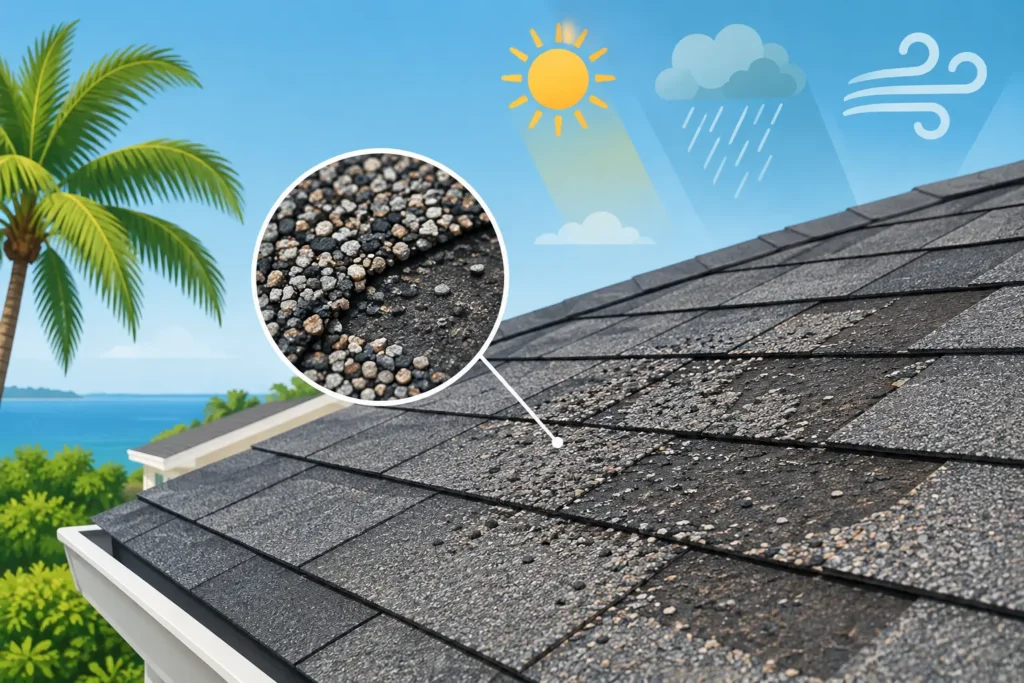
A handful of gritty particles in a gutter after a hard Florida storm may be normal. A growing pile that returns after every rain, paired with bare-looking shingle patches, is not. Knowing what causes roof granule loss helps homeowners and property managers separate ordinary aging from a roof problem that can lead to leaks, higher cooling costs, and premature replacement.
Asphalt shingles are covered with mineral granules for a reason. They shield the asphalt layer from ultraviolet light, add fire resistance, help manage surface temperature, and give the roof its finished color. When too many granules come loose, the shingles lose a key layer of protection. Florida sun, wind, humidity, and severe storms can accelerate that process.
What Causes Roof Granule Loss?
Granule loss is not caused by one thing alone. The age of the roof, the condition of the shingles, installation quality, attic heat, and weather exposure all matter. A professional inspection looks at the pattern of loss, not just the amount found in the gutters.
Normal shedding on a new roof
New asphalt shingles can release some loose, excess granules after installation. Manufacturers embed granules into the shingle surface, but a small amount does not fully adhere during production and handling. Rain can wash these particles into gutters during the first few months.
This shedding should taper off. If a new roof develops bald streaks, exposed black asphalt, or a heavy concentration of granules in one area, it deserves attention. Those signs can point to shipping damage, installation damage, or a material issue rather than normal settling.
Age, sun exposure, and Florida heat
Asphalt shingles do not last forever, especially under intense Florida conditions. Daily heat expands roofing materials, while cooler nights allow them to contract. Over years, that constant movement weakens the bond between the shingle surface and its granules.
Ultraviolet exposure is a major factor. Once granules thin out, the exposed asphalt dries, becomes brittle, and loses more material even faster. South- and west-facing slopes often show wear first because they receive the strongest afternoon sun. On an older roof, widespread and even granule loss is often a sign that the system is approaching the end of its service life.
Wind, hail, and flying debris
Florida storms can remove granules in a single event. Strong wind can lift shingle edges, flex the material, and create friction that loosens the protective surface. Wind-driven branches or debris may scuff shingles, while hail can create small impact marks that knock granules away and bruise the asphalt underneath.
Storm-related loss is often uneven. You may see concentrated bare spots, circular impact marks, damaged ridge caps, or granules collecting heavily below one roof slope. Not every windstorm means a roof needs replacement, but prompt documentation and inspection are smart. Small damage can become a leak after the next heavy rain.
Improper installation and handling
A roof is only as dependable as its installation. Shingles can lose granules when crews drag materials across the roof, walk repeatedly on hot shingles, use poor fastening practices, or install products outside manufacturer requirements. Installing shingles in unsuitable temperatures can also affect how well the material seals and performs.
Ventilation and underlayment matter, too. If a roof system is not built to manage heat and moisture, shingles may age faster than expected. A reputable contractor should inspect the full assembly, including flashing, ventilation, decking, and drainage, instead of treating granule loss as a surface-only problem.
Trapped attic heat and moisture
A hot attic puts extra stress on the underside of the roof deck and the shingles above it. In Florida, inadequate intake and exhaust ventilation can create extreme attic temperatures, particularly in homes with poor insulation or blocked soffit vents. That heat can contribute to accelerated shingle aging and granule release.
Moisture is another concern. Condensation, roof leaks, or poor airflow can soften decking and affect the roof system over time. Granule loss alone does not prove there is an attic ventilation problem, but it is one reason a complete roof inspection should include conditions beneath the shingles.
Foot traffic and physical abrasion
Shingles are designed to handle weather, not unnecessary foot traffic. Service calls for HVAC equipment, satellite dishes, solar work, or gutter cleaning can scuff granules from shingles, particularly when the roof is hot and soft. Pressure washing and aggressive brushing can cause similar damage.
This does not mean a roof should never be walked on. It means roof access should be limited and handled carefully by trained professionals. If work must be done overhead, the contractor should protect the shingles and avoid treating them like a walkway.
When Granule Loss Is a Real Warning Sign
Granules in a gutter do not automatically mean the roof is failing. Gutters collect years of runoff, and one cleaning can reveal old buildup that has accumulated gradually. The condition of the roof itself provides the clearer answer.
Look for dark or shiny patches where the underlying asphalt is visible, shingles with a noticeably uneven color, cracking, curling edges, missing tabs, or granules gathering in downspouts after each storm. Water stains on ceilings, damp insulation, or a musty attic smell raise the urgency. At that point, the concern is no longer appearance. The roof may be losing its ability to shed water reliably.
For commercial properties, the same principle applies but the materials may differ. Many low-slope roofs use modified bitumen or built-up roofing with a mineral-surfaced cap sheet rather than asphalt shingles. Loss of that mineral surface can expose the membrane to ultraviolet damage. Flat roofs should be evaluated for ponding water, seam issues, punctures, and drainage problems along with visible surface wear.
What to Do if You Find Granules in Your Gutters
Start by taking clear photos of the gutters, downspout outlets, and any visible changes on the roof from the ground. If a recent storm passed through, record the date and keep photos of fallen branches or other debris. This information can be useful when determining whether the damage is age-related or storm-related.
Avoid climbing onto the roof to investigate. Walking on compromised shingles can worsen damage, and wet or steep roof surfaces are dangerous. Instead, schedule a professional inspection that identifies the source and extent of the wear.
A qualified roofer can determine whether the issue is isolated to a small repair area, tied to storm damage, or part of broader roof aging. Minor flashing damage or a limited area of damaged shingles may be repairable. Widespread exposed asphalt, brittle shingles, repeated leaks, or extensive storm impacts often make replacement the more reliable long-term investment.
It depends on the roof’s age, the availability of matching shingles, the condition of the decking, and whether the roof has already had multiple repairs. A patch can be the right solution when it restores protection without sacrificing the integrity of the system. It is not the right solution when it only delays a larger failure.
Protecting a Florida Roof From Early Wear
No roof can eliminate weather exposure, but regular maintenance can reduce avoidable damage. Keep gutters and downspouts clear so water moves away from the roofline. Trim limbs that scrape the roof or could break during high winds. Address loose flashing, lifted shingles, and small leaks before water reaches the decking.
It also pays to have the roof inspected after major storms and at least periodically as it ages. A professional can spot subtle changes that are easy to miss from the ground, including damaged seal strips, wind-lifted edges, worn penetrations, and early surface deterioration. If replacement is needed, selecting materials suited to Florida heat and wind ratings, along with proper ventilation and installation, protects the investment from day one.
Florida’s Roofing & Construction Group helps homeowners and business owners make that call with clear findings, upfront options, and dependable repair or replacement recommendations. When granules start showing up where they should not, acting before the next storm is one of the simplest ways to protect the building beneath them.