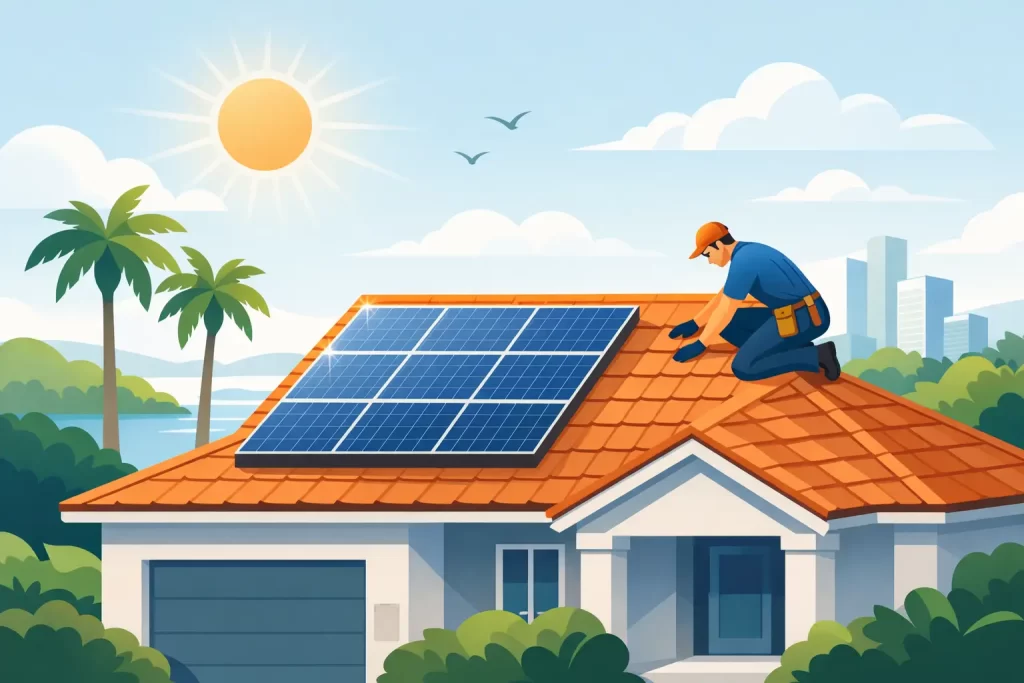
A Florida roof sees intense sun, heavy rain, salt air in coastal areas, and hurricane-force winds. That makes solar panels a smart energy conversation, but not one to separate from the condition of the roof beneath them. A system can produce clean power for decades. If the roof needs replacement halfway through that period, removing and reinstalling the panels adds cost, scheduling, and risk.
For homeowners and commercial property owners, the best solar decision starts with a clear look at the building as a whole: its roof age, electrical use, shading, storm exposure, and plans for the next 20 years. The goal is not simply to place panels on a roof. It is to protect the property while making a practical long-term energy investment.
Why Solar Panels Make Sense in Florida
Florida has one of the strongest solar resources in the country. Air conditioning runs hard for much of the year, and peak electricity demand often arrives when the sun is high. A properly designed solar system can offset a meaningful share of daytime power use and help reduce exposure to rising utility costs.
The exact savings depend on several factors. Your utility rate structure, household or business consumption, roof orientation, panel output, local shading, and available utility credits all affect the numbers. A south-facing roof may be ideal, but east- and west-facing roof sections can also perform well, especially when they better match morning and afternoon energy use.
Solar also adds another layer of value when it is planned alongside a major roof project. Instead of coordinating roofers, solar installers, electricians, and inspectors at different times, property owners can make decisions with the complete exterior system in view. That helps avoid a common problem: installing solar on a roof that is nearing the end of its useful life.
Your Roof Comes Before Solar Panels
A roof inspection should be the first step, not an afterthought. Solar panels are designed to last 25 years or longer. If shingles are curling, granules are collecting in gutters, flashing is failing, or a flat roof has ponding water, repair or replacement should come first.
This is especially true after a major Florida storm. A roof can look acceptable from the ground while carrying lifted shingles, compromised seals, punctures, or moisture intrusion. Adding a solar array before identifying that damage can complicate a future insurance claim and make repairs more involved.
When Replacement Should Happen First
If an asphalt shingle roof is already well into its expected lifespan, replacing it before solar installation is usually the more economical choice. The same principle applies to aging metal roofs, tile systems with damaged underlayment, and commercial flat roofs with recurring leaks or membrane deterioration.
During a replacement, the roofing team can address ventilation, decking, flashing, drainage, and wind-resistance details before panel mounting begins. The solar layout can then be designed around vents, ridges, skylights, roof access, and future maintenance needs. That is better for performance and better for the roof.
A newer roof in good condition may be ready for solar without major work. The answer depends on a professional inspection, not a rule of thumb based solely on the roof’s age.
Design for Production, Protection, and Access
High panel output matters, but it is not the only design priority. A quality system must also preserve roof drainage and provide safe access for maintenance. Panels should not block pathways needed to service roof penetrations, HVAC equipment, drains, or gutters.
On residential roofs, placement should account for shade from trees, chimneys, neighboring buildings, and dormers. Tree trimming may improve production, but it should be balanced against the shade and wind protection that healthy trees can provide. On commercial properties, equipment placement, parapet walls, rooftop units, and future expansion plans all deserve attention before finalizing the array.
Mounting is equally important. Solar attachments penetrate or secure to the roof system according to the roof type and engineering requirements. Proper flashing, sealants, attachment spacing, and load calculations help prevent leaks and protect the roof through severe weather. Cheap installation shortcuts can turn an energy upgrade into a water-intrusion problem.
For Florida properties, wind design is not optional. The system should be engineered and permitted for the applicable local wind conditions, including the added exposure common near the coast. Ask how the design addresses uplift, what roof penetrations are required, and who is responsible if an issue develops at the roof-to-solar connection.
Battery Storage Changes What Solar Can Do
Solar panels alone do not automatically keep a property powered during an outage. Most grid-tied systems shut down when the utility grid goes down. This safety feature protects line workers from backfeeding electricity into damaged lines.
A battery can provide backup power for selected circuits or, with the right design, much of the property. That can mean refrigeration, lighting, internet equipment, security systems, well pumps, medical devices, and a limited amount of cooling remain available when the grid is out. For businesses, battery backup may protect communications, point-of-sale systems, refrigeration, or essential operations.
Battery storage adds cost, so it should be sized around priorities. Running an entire large home with central air conditioning through a multi-day outage requires far more capacity than supporting lights, a refrigerator, and charging devices. A clear load calculation prevents expensive surprises and helps property owners decide whether a battery is worth the investment.
Understand Costs Without Chasing a Shortcut
A solar proposal should show more than a final price. It should explain system size, expected annual production, equipment, roof work, electrical upgrades, permitting, monitoring, warranties, and any battery capacity. It should also state assumptions about utility rates and available incentives.
Federal tax incentives may help eligible property owners, but tax situations vary. Commercial owners may have additional accounting and depreciation considerations. Speak with a qualified tax professional before treating an incentive as guaranteed savings.
Financing can make a system more accessible, but monthly payment terms should be compared with expected energy savings realistically. A low monthly payment can come with a longer term or higher total cost. Cash purchase, loans, and other arrangements each have trade-offs. The right choice depends on the property owner’s budget, ownership timeline, and tolerance for upfront expense.
Be cautious with promises that solar will erase every electric bill. Utilities may still charge fixed fees, and high nighttime use, stormy weather, seasonal changes, and future utility policy can affect results. Honest projections leave room for real-life energy use.
Questions to Ask Before You Sign
Before approving a solar project, get straightforward answers about the scope of work. You should know whether the installer has inspected the roof, who handles permits and utility coordination, how roof leaks are handled, and whether electrical-panel upgrades are included.
Also ask about workmanship coverage separate from manufacturer warranties. Panel manufacturers may offer long product and performance warranties, while inverters, batteries, mounting components, roofing materials, and installation labor can have different terms. A warranty only helps when responsibility is clear.
For a commercial building, ask how installation will affect operations. The contractor should plan roof access, staging, tenant safety, noise, and shutdowns around the facility’s needs. For both homes and businesses, confirm the expected schedule and the point of contact if weather delays or inspection issues arise.
A Better Way to Plan a Solar Project
The strongest solar projects are planned as property-protection projects first and energy projects second. Start with a roof inspection, then review your electric bills and future needs. A family adding an electric vehicle, a homeowner planning to age in place, or a business expanding its equipment may need a different system than current usage suggests.
Florida’s Roofing & Construction Group can evaluate roofing, exterior protection, and solar needs together, so the investment is built on a roof prepared for the work. Whether your priority is lower energy use, storm readiness, or protecting a commercial facility, choose a plan that keeps the roof, electrical system, and solar equipment working as one.
The right time to consider solar is before a roof problem forces the decision. A careful inspection and a clear proposal give you the confidence to invest in power that supports your property instead of complicating it.