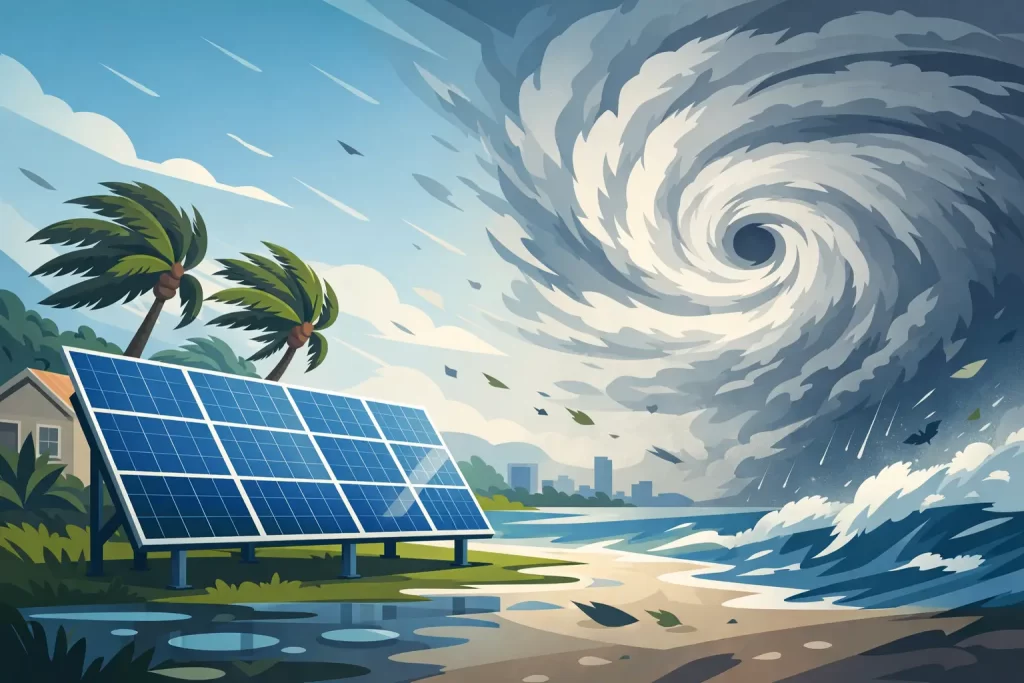
A hurricane watch changes the way Florida property owners look at every part of the building – especially anything attached to the roof. Can solar panels survive hurricanes? In many cases, yes. A properly designed, permitted, and professionally installed solar system can withstand serious wind and rain. But the panels are only as secure as the roof, mounting system, attachment points, and electrical work beneath them.
For homes and commercial buildings across Florida, solar should never be treated as a simple add-on. It is a long-term energy investment that must be planned around hurricane exposure, local building requirements, and the condition of the roof it will protect.
Can Solar Panels Survive Hurricanes? Yes, With the Right System
Modern solar panels are built to handle demanding outdoor conditions. Many quality modules are tested for high wind pressure, heavy rain, hail impact, temperature changes, and UV exposure. Florida installations also must meet local permitting and wind-load requirements, which are designed around the risks in each region.
That does not mean every system will come through every storm without damage. Hurricane-force winds can lift roofing materials, send branches airborne, flood electrical equipment, and expose weak installation details. A panel may remain intact while the roof deck, flashing, racking, or wiring around it suffers damage.
The real question is not whether a solar panel can handle wind on its own. It is whether the complete roof-and-solar assembly was engineered and installed to act as one protected system.
What Actually Protects a Solar System During a Storm
The visible panels get most of the attention, but several less-visible components determine hurricane performance. The mounting rails must be rated for the expected wind loads. Fasteners need to penetrate secure structural framing, not just roof sheathing. Proper flashing at every roof penetration is critical for keeping wind-driven rain out.
The roof itself matters just as much. Installing solar on an aging roof can create an avoidable problem. If shingles are curling, a metal roof has corrosion, or a flat commercial roof has failing seams or ponding water, the roof should be evaluated before panels are installed. Replacing or repairing a compromised roof after solar installation may require removing and reinstalling the array, adding time and cost to an already urgent project.
Wind uplift is a major concern. As wind moves over a roof, it creates pressure that can pull at the edges and corners of the structure. Solar layout, roof height, panel angle, attachment spacing, and local wind zone all affect how much force the system must resist. An experienced installer does not use a one-size-fits-all layout for a Florida roof.
Electrical protection also counts. Panels and wiring should be installed to code, with secure conduit runs, weather-rated components, proper grounding, and disconnects that remain accessible. If the home includes battery storage, the battery and related equipment should be located and protected according to manufacturer requirements and flood-risk considerations.
The Biggest Hurricane Risks for Solar Panels
Solar panels are durable, but hurricanes create hazards that no product can fully eliminate. Flying debris is often the largest direct threat. A loose patio chair, tree limb, roof tile, or piece of siding can strike a panel with enough force to crack the glass or damage the frame.
Water intrusion is another concern, particularly when the roof has existing weaknesses or mounting penetrations were not flashed correctly. A small leak may not show up immediately. After a storm, moisture can travel through insulation, decking, or wall cavities before it becomes visible inside.
The third major risk is roof failure. If a roof covering begins to peel away or the deck is damaged, even a well-built solar array can be affected. This is why solar planning and roofing expertise should go together. Property owners should not have to coordinate one contractor for the roof and another for the solar system while trying to determine who is responsible for the finished result.
For commercial properties, flat roofs require additional attention. Ballasted systems, penetrations, drainage patterns, parapet walls, and rooftop equipment all need to be considered. Standing water and wind-driven debris can turn a minor roofing weakness into a business interruption.
Why Florida Building Standards Matter
Florida has some of the strongest building requirements in the country for a reason. Coastal exposure, hurricane history, wind zones, and local jurisdiction rules can affect how a solar system is designed and approved. The right installation should account for the property’s location, roof configuration, structural capacity, and applicable permits.
Beware of quotes that focus only on panel count and projected energy savings. Those details matter, but they do not replace a site-specific evaluation. A lower upfront price is not a value if it skips structural review, uses inadequate roof attachments, or leaves you uncertain about warranty coverage after a storm.
A professional evaluation should look at roof age and material, deck condition, attic ventilation where applicable, drainage, tree exposure, panel placement, and the location of inverters or batteries. It should also identify whether roof work needs to happen before solar installation.
Steps to Take Before Hurricane Season
The best time to prepare a solar system is before a named storm enters the forecast. Start with a visual ground-level inspection. Look for cracked panels, loose-looking hardware, exposed wires, staining beneath roof penetrations, or branches hanging over the array. Do not climb onto the roof or attempt to tighten solar hardware yourself. Panels, electrical connections, and roof surfaces can be damaged by improper foot traffic or repairs.
Keep nearby trees trimmed by qualified professionals, and secure loose outdoor items that could become projectiles. Review your system documentation so you know who installed the panels, what equipment is covered, and how to contact the service provider if damage occurs.
If your roof is nearing the end of its expected service life, do not wait for hurricane season to force the decision. A roof inspection can reveal problems that are still manageable before heavy rain and high winds arrive. Florida’s Roofing & Construction Group helps property owners evaluate roofing and exterior conditions alongside solar needs, so the work can be planned around protection, performance, and long-term value.
What to Do After a Hurricane
After the storm passes, safety comes first. Stay clear of downed power lines, damaged electrical equipment, broken glass, and standing water near solar components. If panels appear cracked, shifted, or partially detached, do not touch them. Solar panels can generate electricity whenever they are exposed to light.
From the ground, document visible damage with photos if it is safe to do so. Check the roofline for missing shingles, lifted metal panels, displaced flashing, blocked gutters, and fallen branches. Inside, look for ceiling stains, dripping, damp insulation, or signs of water around electrical equipment.
A qualified roof and solar inspection is the right next step when there is visible damage, a roof leak, an error message from the system, or a noticeable change in energy production. Even when panels look fine, a post-storm inspection can catch loose mounts, damaged seals, or wiring issues before the next rainfall causes further trouble.
Do not assume an insurance claim will be straightforward. Clear documentation, a professional damage assessment, and prompt temporary protection for roof openings can help support the recovery process. If emergency roof repairs are needed, address the building envelope first to prevent additional water damage.
Solar and Battery Storage: A Separate Storm Question
Many homeowners assume solar panels automatically provide power during an outage. Most grid-tied systems shut down when the utility grid goes offline to protect line workers. Panels may survive the hurricane, yet the home may not have usable backup power until grid service returns.
Battery storage can change that, but only when the system is designed for backup operation. The battery capacity, critical-load panel, inverter capability, and household energy use determine what can run during an outage. Some systems can support essentials such as refrigeration, lighting, internet equipment, and selected outlets. Running a whole home, central air conditioning, or large commercial loads requires more capacity and more careful planning.
That trade-off is worth discussing before installation. Backup power can provide meaningful security during storm season, but it should be sized around real priorities, not assumptions.
A hurricane-ready solar system begins with a hurricane-ready roof. When the roof, mounting system, electrical equipment, and storm plan are working together, solar can remain a dependable part of your property’s protection strategy long after the forecast clears.