A roof can look perfectly fine on a clear Florida afternoon and still be one weak connection away from serious storm damage. When hurricane-force winds get beneath a loose shingle, flashing edge, or poorly fastened panel, they can begin lifting the roof system piece by piece. That is why the best hurricane resistant roof materials are only part of the decision. The material, installation method, deck condition, underlayment, and fastening all have to work together.
For Florida homeowners and commercial property owners, the right roof should do more than meet a minimum requirement. It should help keep water out during wind-driven rain, reduce the risk of debris damage, and provide dependable performance through years of heat, humidity, and storm seasons.
What Makes a Roof Hurricane Resistant?
Wind resistance is not simply about choosing the heaviest material. Hurricanes create uplift – a pulling force that is strongest along roof edges, ridges, corners, and overhangs. A roofing system needs secure attachment at every layer, from the roof deck and fasteners to the underlayment, flashing, and final roof covering.
Florida building codes set wind-resistance requirements based on location, building type, roof height, and exposure. Coastal properties and structures in more exposed areas may need a higher-rated assembly than homes farther inland. A material that performs well in one part of the state may not be the right specification for a Gulf-front home or a large commercial facility.
Impact resistance matters, too. Wind can carry branches, patio furniture, and other debris into a roof surface. A roof that resists punctures and cracking can limit the chance that a small impact becomes an interior water emergency.
Best Hurricane Resistant Roof Materials for Florida Properties
Standing-Seam Metal Roofing
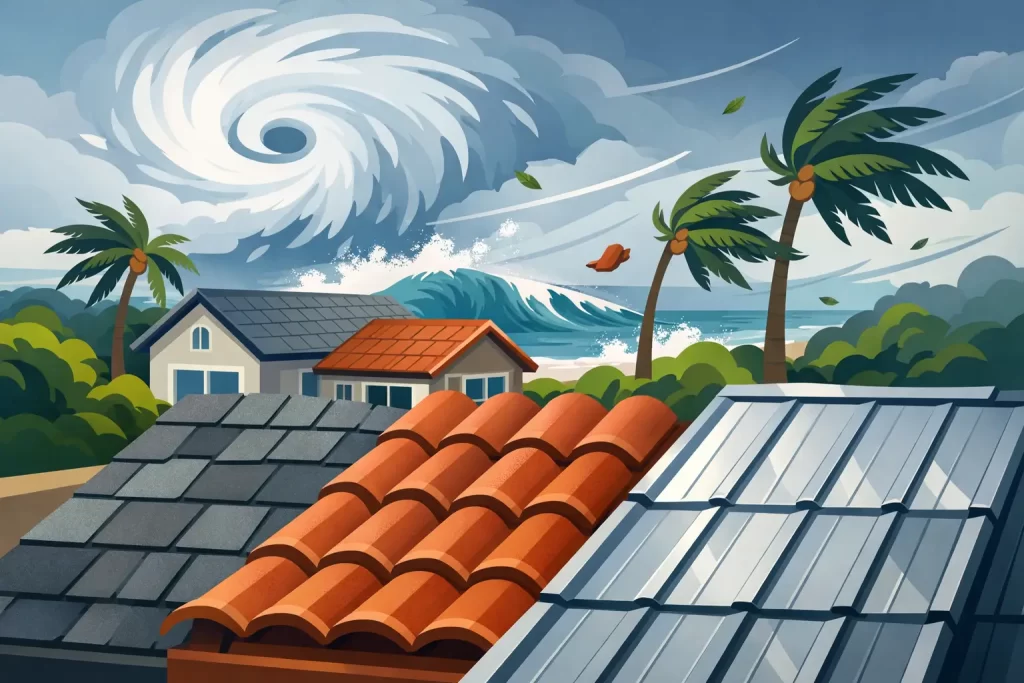
Standing-seam metal is one of the strongest choices for Florida property owners who want long-term wind performance. Its panels are secured with concealed clips or fasteners, while the raised seams reduce the number of exposed points where water can enter. When engineered and installed for the property’s wind zone, a metal roof can achieve high wind ratings.
Metal also sheds rain quickly, resists rot and insect damage, and reflects a portion of the sun’s heat. That can be valuable during long Florida summers, especially when paired with proper attic insulation and ventilation.
The trade-off is upfront cost. A quality standing-seam system generally costs more than asphalt shingles, and installation details matter greatly. Panel width, clip spacing, edge metal, fasteners, and the roof deck all affect performance. Metal is not automatically hurricane-proof because it is metal. A poorly installed system can still fail under extreme uplift.
Architectural Asphalt Shingles
Architectural asphalt shingles remain a practical and widely used option for Florida homes. They cost less than metal or tile, come in many colors and styles, and can provide strong wind resistance when selected and installed as a complete rated system.
For hurricane-prone areas, look beyond the shingle’s appearance. The relevant questions are its tested wind rating, the manufacturer’s approved nailing pattern, the number of nails required, the starter strip, and whether the roofing crew follows the specified installation instructions. High-wind shingles typically require enhanced fastening and careful sealing at vulnerable edges.
Asphalt shingles are often the best fit when budget, quick replacement, and curb appeal are top priorities. They may not last as long as metal or tile, particularly under intense sun and repeated storms, but a professionally installed architectural shingle roof can offer reliable protection at a more accessible price point.
Concrete and Clay Tile Roofing
Concrete and clay tile roofs are common across Florida because they offer a distinctive appearance, excellent heat performance, and a long service life. Tile itself can stand up well to sun, rain, and high winds when it is properly fastened to a suitable roof structure.
The key phrase is properly fastened. Older tile roofs may use installation methods that do not meet current wind requirements. During a replacement, the attachment system should be evaluated carefully, including fasteners, adhesives where appropriate, battens, underlayment, and perimeter details. Broken or displaced tiles can expose the underlayment, allowing wind-driven water to reach the roof deck.
Tile is also heavy. Before choosing it, a contractor should confirm that the structure can support the load. For owners who value a premium architectural look and are prepared for the investment, concrete or clay tile can be an excellent Florida roof material. It is not always the best choice for every home, especially if budget or structural limitations are concerns.
Stone-Coated Steel Roofing
Stone-coated steel combines the strength of metal with the appearance of shingles, shake, or tile. It is lighter than traditional concrete tile and can provide strong wind and impact performance when installed to the manufacturer’s specifications.
This material can make sense for a homeowner who likes the look of tile but wants a lighter system, or for a property where metal performance is desirable without the appearance of standing seams. It is typically a premium option, and the quality of installation remains central to its storm performance.
TPO and PVC for Commercial Flat Roofs
For commercial buildings and low-slope roof systems, TPO and PVC membranes are leading choices. These single-ply materials are installed in large sheets, with seams heat-welded to create a continuous waterproof surface. Properly designed systems can be mechanically attached, adhered, or ballasted depending on the building and local requirements.
TPO and PVC can offer strong resistance to wind uplift, ponding water, and Florida’s sun exposure. PVC is often selected where grease or chemical exposure is a concern, such as restaurants or certain industrial settings. TPO is a popular option for many commercial owners because of its reflective surface and cost-effective performance.
A commercial roof should never be selected by membrane type alone. Insulation attachment, edge metal, drains, penetrations, rooftop equipment, and parapet walls all influence whether the system can withstand a major storm. A detailed inspection and wind-uplift design are worth the effort before replacement.
The Materials That Matter Behind the Surface
The roof covering gets most of the attention, but hurricane protection depends heavily on what sits underneath it. A quality synthetic underlayment or self-adhered water barrier can provide a critical secondary layer of protection if wind damages the outer roof covering.
Roof deck attachment is equally important. In some older homes, reinforcing deck fastening can improve the roof’s ability to resist uplift. Drip edge, flashing, ridge vents, pipe boots, and gutters must also be installed securely. These are not minor finish details. They are common places for wind and water to find an opening.
If your roof has solar panels, skylights, or other penetrations, those components should be inspected as part of the full roofing plan. The goal is one integrated exterior system, not separate pieces installed without considering storm performance.
How to Choose the Right Material for Your Property
Start with your location and exposure. A home near open water, a high-rise condominium, or a commercial building with a broad flat roof faces different wind pressures than a sheltered inland residence. Your contractor should account for the building’s roof shape, slope, height, age, and existing deck condition before recommending a material.
Then consider how long you plan to own the property. Asphalt shingles may be the sensible choice for a budget-conscious replacement or a property that will be sold in the near future. Metal, tile, and stone-coated steel often make more sense for owners focused on long-term durability, energy performance, and premium appearance.
Finally, compare complete system pricing rather than a material-only estimate. The least expensive roof quote can become costly if it skips essential underlayment, flashing, ventilation, code upgrades, or proper storm-rated fastening. Clear, upfront scope matters because the details are what protect the building when weather turns severe.
Protect the Roof Before the Next Storm Forms
A hurricane-resistant roof begins with an honest inspection, not a sales pitch based on a single material. Florida’s Roofing & Construction Group can evaluate your roof’s condition, identify vulnerable areas, and explain which roofing system fits your property, budget, and local wind requirements.
If your roof is aging, showing storm damage, or missing shingles or tiles, do not wait for the next named storm to find out where it is weak. A well-planned replacement now can give your home or business a stronger first line of defense when the forecast changes.