A Florida attic can feel like a furnace by early afternoon. The sun heats the roof deck for hours, hot air settles above the ceiling, and your air conditioner has to fight that heat before it can keep living spaces comfortable. The right attic insulation for hot climates slows that transfer, but the best solution is never just about adding more material. It must also account for humidity, air leaks, ductwork, roof condition, and proper ventilation.
For homeowners and property owners across Florida, insulation is part of the building envelope that protects comfort, energy efficiency, and the roofing system above it. A poorly insulated attic can contribute to high cooling costs, uneven indoor temperatures, and excess strain on HVAC equipment. A well-planned upgrade helps your property hold conditioned air where it belongs.
Why Florida Attics Need a Different Approach
Cold-climate insulation is often discussed in terms of keeping indoor heat from escaping. Florida has the opposite challenge for much of the year: stopping extreme outdoor heat from moving down into conditioned rooms. At the same time, humid air creates moisture concerns that cannot be ignored.
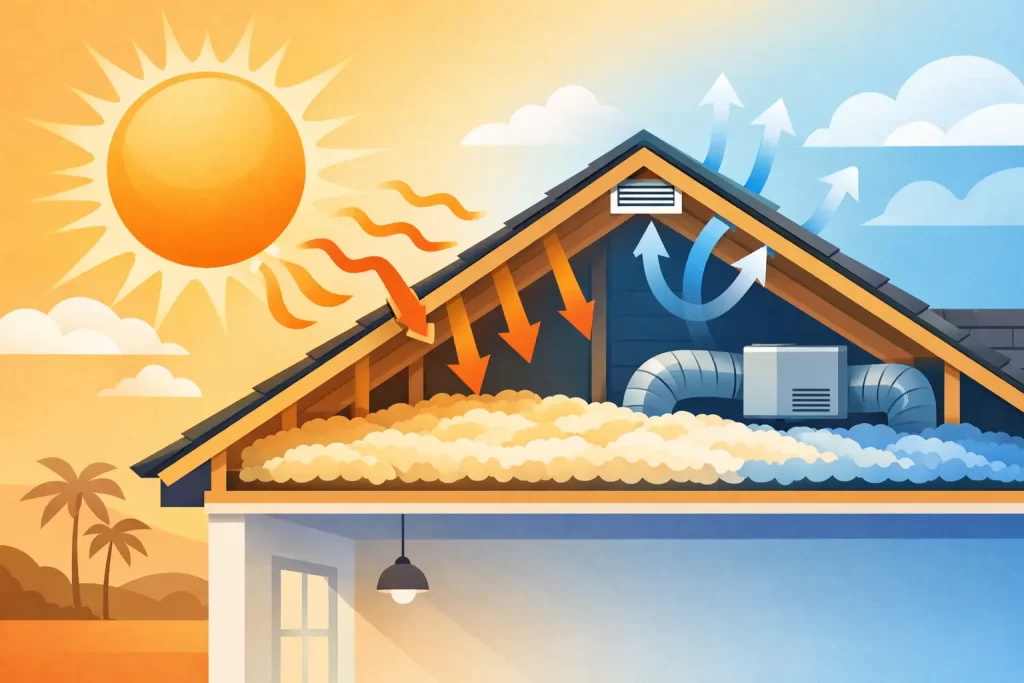
Heat enters an attic through the roof, then radiates downward toward the ceiling. If insulation is thin, compressed, uneven, or missing around obstacles, that heat reaches the living area faster. Air leaks around recessed lights, attic hatches, plumbing penetrations, and wiring openings make the problem worse by allowing conditioned air to escape and hot, humid attic air to move where it should not.
Moisture changes the equation. Insulation that becomes wet or stays damp can lose performance and create conditions that support mold, mildew, wood deterioration, or corrosion. That is why a Florida insulation project should begin with an attic inspection, not a quick decision based on the lowest material price.
Start With the Attic, Not the Insulation Product
Before choosing material, identify why the attic is underperforming. A contractor should look for roof leaks, storm damage, wet insulation, poor ventilation, disconnected ducts, compressed existing insulation, and signs of air leakage from the home below.
This matters because insulation cannot solve a roof leak. If water is entering through damaged shingles, flashing, vents, or a flat-roof transition, new insulation may be ruined before it delivers any benefit. Florida storms can expose small roofing weaknesses quickly, so the roof and attic should be evaluated together.
Air sealing is also essential. Think of insulation as a thick blanket and air sealing as closing the windows before turning on the air conditioner. Insulation slows heat movement, while sealing limits the uncontrolled movement of air. Both steps are needed for lasting results.
Common leakage points include attic access doors, electrical boxes, plumbing stacks, duct penetrations, and gaps along top plates. The right sealing method depends on the opening and surrounding materials. It must be done carefully around heat-producing fixtures and electrical components.
Best Types of Attic Insulation for Hot Climates
There is no single insulation material that wins in every Florida building. The best choice depends on your attic design, roof type, existing insulation, HVAC layout, moisture conditions, budget, and plans for the property.
Blown-In Fiberglass
Blown-in fiberglass is a practical choice for many vented attics. It can be installed over existing insulation when the older material is dry, clean, and in good condition. Because it fills around joists and irregular spaces, it can provide more consistent coverage than older batts that have shifted or settled.
For a conventional Florida attic with the HVAC system below the ceiling plane, blown-in fiberglass often offers strong value. It is noncombustible, does not absorb moisture as readily as some alternatives, and can be added to reach the recommended depth for the home.
Installation quality still matters. Coverage must be even, attic baffles must keep soffit vents clear, and insulation should not block ventilation paths. Areas around attic hatches, platforms, and ductwork deserve special attention because they are frequently underinsulated.
Spray Foam Insulation
Spray foam can be an effective option when the goal is to create an unvented, conditioned attic. It is commonly applied to the underside of the roof deck, which brings the attic within the home’s thermal envelope. This can be especially beneficial when air-conditioning ducts and equipment are located in the attic.
Closed-cell foam provides a high R-value per inch and limits air movement. Open-cell foam can also provide air sealing, though its moisture behavior and suitability must be evaluated carefully for the specific roof assembly. The roof design, local code requirements, and the condition of the roof deck all affect the right choice.
Spray foam costs more upfront than blown-in insulation, and it is not automatically the best answer for every home. It also requires experienced installation. A poorly designed unvented attic can create moisture concerns, and applying foam before addressing roof leaks can make future repairs more complicated. When it is appropriate, however, spray foam can reduce heat gain and help protect attic ductwork from extreme temperatures.
Cellulose and Mineral Wool
Cellulose can provide solid thermal performance and good coverage in an attic, but it must stay dry. In humid Florida conditions, it is most suitable when the roof, ventilation, and moisture control details are in good shape. If an attic has a history of leaks or condensation, those issues should be corrected first.
Mineral wool is another durable option with strong fire resistance and moisture tolerance. It is often used in batts for targeted areas, wall cavities, or specific attic details. It can be an excellent material, but the labor and configuration of the attic may make another product more cost-effective for a large open attic floor.
R-Value Matters, but Coverage Matters Too
R-value measures how well insulation resists heat flow. Higher R-values generally provide more resistance, but the installed result matters more than the number printed on a bag. Gaps, thin spots, compression, and wind washing near soffits can reduce real-world performance.
Florida homes commonly need attic insulation levels in the R-30 to R-60 range, depending on the home’s location, construction, existing insulation, and applicable energy code. A professional assessment can determine whether your attic needs a full replacement, a top-off over existing material, or a different approach entirely.
Do not assume the attic is adequately insulated just because you see material on the floor. If ceiling joists are visible, the insulation is uneven, or old batts are flattened, there may be significant room for improvement.
Ventilation and Insulation Must Work Together
In a traditional vented attic, airflow typically enters through soffit vents and exits through ridge vents or other high-level exhaust vents. That movement helps manage heat and moisture in the attic space. Insulation should be installed without blocking soffit intake, which is why baffles are often needed at the roof edge.
More ventilation is not always better. Mixing incompatible exhaust vent types, adding powered fans without considering makeup air, or blocking intake vents can disrupt attic airflow. A powered fan may even pull conditioned air from the home through ceiling leaks, increasing cooling demand instead of reducing it.
An unvented attic with spray foam follows a different design. In that case, the roof deck is insulated and the attic is intentionally brought into the conditioned envelope. The two systems should not be blended casually. Your contractor should recommend one complete approach based on how the property is built.
Do Not Overlook Ducts and the Attic Hatch
Ductwork in a hot attic can lose a surprising amount of cooling before air reaches the rooms below. Insulating and sealing ducts, repairing disconnected runs, and verifying proper support can improve comfort alongside an insulation upgrade. If your second floor is always warmer than the rest of the home, attic duct performance may be part of the problem.
The attic hatch is another weak spot. A thin, unsealed pull-down stair or access panel can allow hot attic air into the home and conditioned air into the attic. An insulated, weather-stripped cover is a small improvement that supports the performance of the larger insulation project.
When to Schedule an Insulation Inspection
Consider an attic inspection if cooling bills keep climbing, rooms feel unevenly cooled, the HVAC system runs constantly, or you can feel heat radiating from ceilings in the afternoon. It is also smart to inspect insulation after a roof leak, hurricane, major storm, roof replacement, or pest problem.
For commercial properties, insulation decisions should be coordinated with roof maintenance and HVAC planning. A hot ceiling deck, moisture-damaged insulation, or poorly protected rooftop penetrations can affect tenant comfort, equipment demand, and operating costs. Addressing these issues before they become a disruption protects the building and the budget.
Florida’s Roofing & Construction Group can evaluate the relationship between your roof, attic, ventilation, and insulation so the recommendation fits the property instead of relying on a one-size-fits-all fix. The goal is simple: keep heat and moisture under control, protect the structure above you, and make your home or business more comfortable when Florida weather is at its toughest.
A cooler property starts with a better attic plan. Address leaks first, seal the hidden gaps, choose insulation that fits the assembly, and make sure the roof system is working with the upgrade, not against it.