
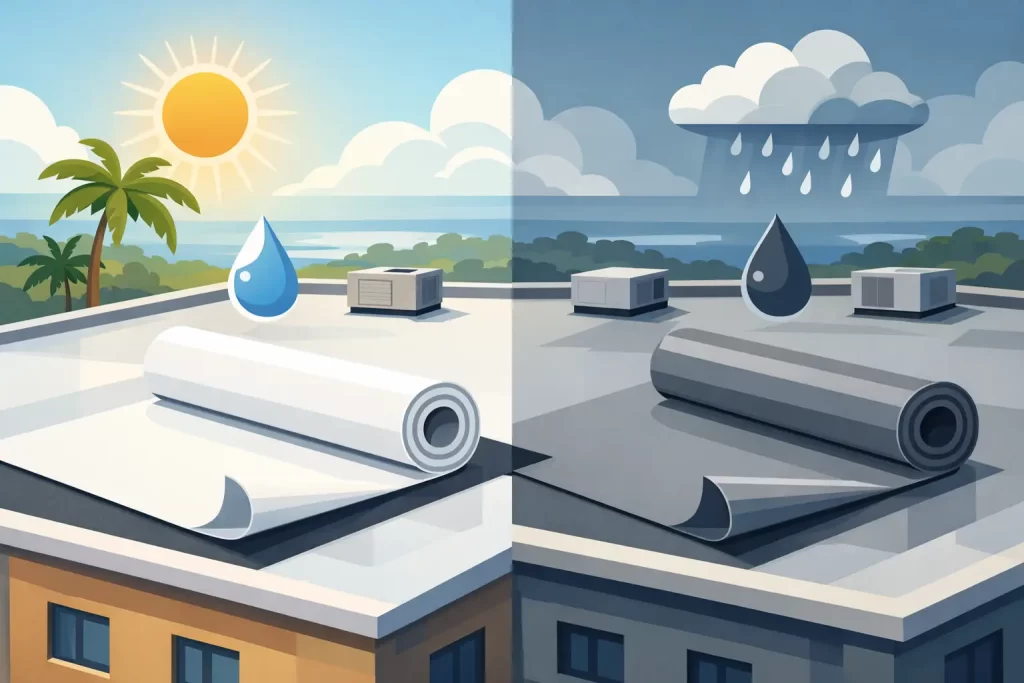
A TPO PVC comparison matters most when your Florida flat roof is approaching replacement, showing persistent leaks, or costing too much to keep cool. Both membranes are proven choices for low-slope commercial roofs and certain residential applications. The better fit comes down to your building’s exposure, rooftop activity, drainage, budget, and the quality of the installation.
A flat roof does more than cover a building. It stands between your property and Florida’s intense sun, wind-driven rain, humidity, ponding water, and storm season. Choosing the right membrane helps protect the structure below, control energy costs, and reduce disruptions to your home or business.
TPO vs. PVC: The Quick Difference
TPO, short for thermoplastic polyolefin, is a single-ply roofing membrane made from rubber, polypropylene, and reinforcement materials. It is commonly white or light-colored, reflecting a significant amount of solar heat. TPO is widely selected because it offers strong performance at a competitive price point.
PVC, or polyvinyl chloride, is also a heat-weldable single-ply membrane. It has a long history in commercial roofing and is known for its resistance to chemicals, grease, standing water, and fire. Like TPO, PVC is available in reflective colors that can help limit heat gain on Florida buildings.
At first glance, these systems can look similar from the ground. Both are installed in sheets, with seams heat-welded together rather than simply glued. That welded seam is one reason properly installed TPO and PVC roofs can perform well through heavy rain. The differences become clearer when you look at the building’s use and the demands placed on the roof.
TPO PVC Comparison for Florida Heat and Weather
Florida roofs must handle more than occasional sunshine. Long periods of heat, ultraviolet exposure, moisture, and sudden downpours put every roofing system under pressure.
TPO performs well in hot climates because its bright surface reflects sunlight and can help reduce rooftop temperatures. For many offices, retail buildings, warehouses, multifamily properties, and homes with low-slope sections, it delivers the energy-conscious performance owners want without pushing the budget as high as some premium systems.
PVC also reflects heat effectively, but it has a particular advantage where water and contaminants are recurring concerns. Its chemical makeup gives it excellent resistance to oils, fats, many chemicals, and moisture. This makes PVC a frequent choice for restaurants, commercial kitchens, facilities with exhaust systems, and buildings where rooftop grease exposure is possible.
Neither material eliminates the need for proper drainage. A white roof can reflect heat, but it cannot compensate for drains blocked by leaves, poorly sloped insulation, or water that remains on the membrane for extended periods. Before recommending a roof type, a qualified contractor should inspect the roof deck, drains, penetrations, edge metal, and areas where water collects after rainfall.
Cost: What You Pay and What You Protect
TPO is often the more budget-friendly option. Material and installation costs are generally lower than PVC, making it an appealing choice when a property owner needs dependable flat-roof protection while managing a major capital expense.
PVC usually carries a higher upfront cost. That added investment may be justified when the roof faces conditions that can shorten the life of other membranes, such as grease discharge from kitchen ventilation or frequent exposure to certain industrial chemicals. Paying less initially is not a win if the selected membrane is poorly suited to the roof’s environment.
The installed price of either system depends on more than the membrane itself. Roof size, tear-off requirements, insulation upgrades, the number of HVAC units and pipe penetrations, drainage corrections, flashing details, accessibility, and wind-rating requirements all affect the final estimate. Florida properties near the coast may also need enhanced attachment methods and edge details designed for higher wind exposure.
The most useful question is not simply, “Which roof costs less?” Ask which system provides the right level of protection for the next 20 years or more, given how your building operates. An accurate estimate should identify the full scope of work so there are no surprises after installation begins.
Seams, Wind, and Leak Resistance
Both TPO and PVC rely on heat-welded seams. During installation, trained crews use specialized equipment to fuse overlapping sheets into a continuous surface. When the weld is done correctly, the seam can be stronger than the membrane itself.
That strength is especially valuable during Florida’s wind-driven rain events. Water often finds its way into weak transitions, such as around pipes, curbs, parapet walls, skylights, scuppers, and roof edges. The membrane selection matters, but careful detailing matters just as much.
A roof is only as dependable as its installation. Improper welding temperatures, inconsistent seam widths, poorly secured insulation, and rushed flashing work can create failures in either TPO or PVC. For this reason, property owners should focus on contractor experience, manufacturer-approved installation practices, clear warranty options, and a thorough inspection of the existing roof before work starts.
Where PVC Has a Clear Advantage
PVC is often the stronger recommendation for roofs above restaurants and food-service operations. Grease and oils from exhaust systems can damage some roofing materials over time. PVC’s resistance to these contaminants helps it maintain performance in a setting where a standard membrane may be at greater risk.
PVC can also be a smart choice for facilities where standing water is difficult to avoid, provided drainage improvements are considered as part of the project. Its moisture resistance is a meaningful benefit, but no membrane should be treated as a substitute for correcting serious drainage problems.
For a commercial property with heavy rooftop foot traffic, PVC may also deserve consideration alongside protective walk pads and a regular maintenance plan. Service technicians accessing HVAC equipment can scuff or puncture any single-ply roof if pathways are not protected. The right system includes details that protect the areas people actually use.
When TPO Is the Right Value Choice
TPO is an excellent option for many Florida properties with ordinary commercial exposure and a need for a clean, reflective roof at a practical cost. It is commonly used on retail spaces, professional offices, warehouses, apartment buildings, and low-slope residential additions.
When paired with appropriate insulation, a TPO roof can support better indoor comfort and lower cooling demand. This is particularly helpful for buildings with older roof assemblies that allow excessive heat transfer into conditioned spaces.
The key is selecting a quality membrane thickness and installation system that match the building. A thin, low-cost membrane may appear attractive on paper, but it may not offer the puncture resistance or long-term value needed for a roof with equipment traffic and frequent maintenance. A professional recommendation should account for how the roof will be used, not just its square footage.
Lifespan and Maintenance Expectations
A professionally installed TPO or PVC roof can provide many years of reliable service. Actual lifespan depends on material quality, membrane thickness, installation workmanship, weather exposure, drainage, maintenance, and whether damage is addressed quickly.
Routine inspections are one of the most effective ways to protect that investment. In Florida, inspections are especially valuable before storm season, after major wind events, and whenever you notice interior staining, bubbling, loose flashing, or water around rooftop drains. Small seam issues and punctures are often repairable when caught early. Ignoring them can allow moisture to travel into insulation and decking, turning a targeted repair into a larger replacement project.
Keep drains and scuppers clear, remove debris that holds moisture, and limit unnecessary foot traffic. If contractors need access to rooftop equipment, make sure designated walk paths are in place. These straightforward measures help either membrane perform as intended.
How to Choose Between TPO and PVC
Choose based on the building, not a one-size-fits-all rule. TPO is frequently the right answer when you want a reflective, durable, cost-conscious roof for a typical low-slope property. PVC often earns its higher price when grease, chemicals, persistent water exposure, or demanding service conditions are part of the equation.
A proper roof evaluation should also determine whether replacement is necessary now. Some roofs need only targeted repairs, seam restoration, drain corrections, or flashing work. Others have saturated insulation or widespread membrane deterioration that makes replacement the safer long-term choice.
For homeowners, facility managers, and business owners, the goal is simple: a roof that keeps water out, stands up to Florida weather, and fits the property’s budget and operating needs. Florida’s Roofing & Construction Group can inspect your flat roof, explain the practical trade-offs, and provide a clear estimate for the protection your property needs.
The best time to make this decision is before the next leak forces it. A professional inspection gives you the information to plan confidently, protect your building, and choose a flat-roof system built for the conditions it faces.