A commercial roof rarely fails without giving the building owner a few chances to act. In Florida, intense sun, wind-driven rain, humidity, and tropical storms can turn a small weak point into an interior leak quickly. Knowing the top commercial roofing warning signs helps property owners and facility managers protect inventory, equipment, tenants, and daily operations before a repair becomes an emergency.
A leak is not always the first sign, and waiting for one is expensive. The best approach is to notice changes in the roof surface, drainage, building interior, and energy performance, then have a qualified commercial roofing team determine what is happening beneath the surface.
Top Commercial Roofing Warning Signs You Should Not Ignore
Water stains, active leaks, or musty odors indoors
A brown ceiling stain, peeling paint, damp insulation, or water near a wall may look minor, but it can point to a much larger roof issue. Water often travels along decking, framing, conduit, or insulation before it becomes visible inside. The stain you see may not sit directly beneath the actual opening.
Musty odors deserve the same attention. In Florida’s humid climate, trapped moisture can encourage mold growth in ceiling systems and insulation, even before water appears on the floor. If a leak occurs near electrical panels, sensitive equipment, stock, or occupied areas, treat it as an urgent property-protection issue rather than a routine maintenance item.
Ponding water that remains after the rain stops
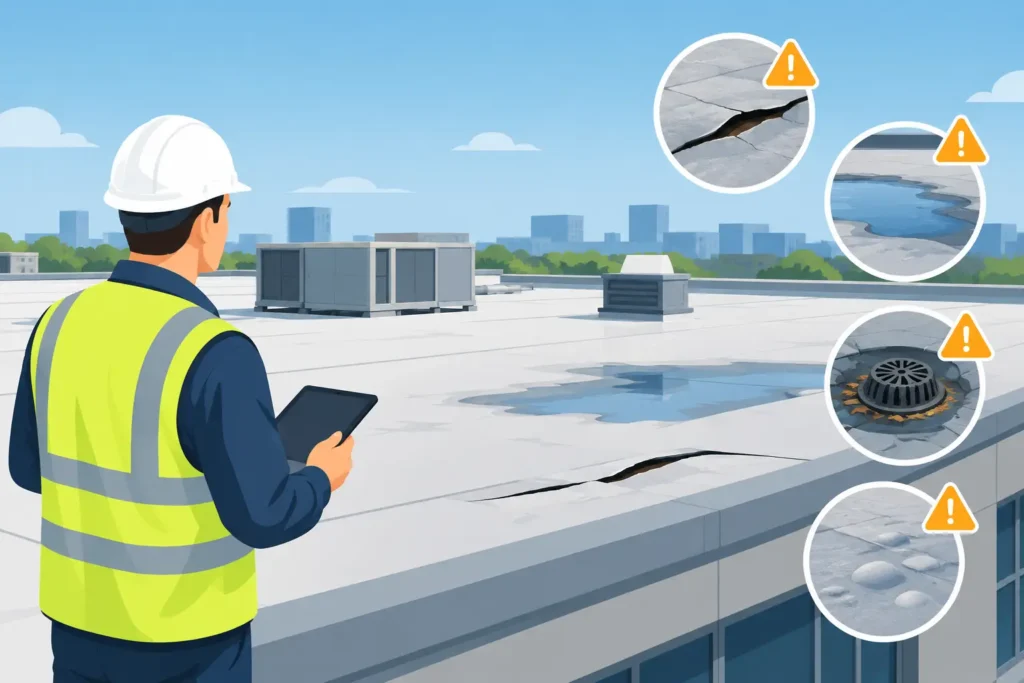
Flat and low-slope commercial roofs are designed to drain, but they are not meant to hold standing water for days. Puddles that remain 48 hours after a typical rain event can indicate blocked drains, poor slope, a sagging deck, compressed insulation, or a damaged membrane.
Ponding water adds weight to the roof and accelerates wear on many roofing materials. It also gives small cracks, open seams, and failing flashing more opportunity to let moisture in. A single shallow pond is not always a sign that full replacement is needed, but recurring ponding should be evaluated before it weakens the system.
Cracks, blisters, bubbles, or open seams in the membrane
On a commercial flat roof, the membrane is your primary water barrier. Visible cracking, bubbling, wrinkling, punctures, or seams that are lifting can allow water to reach the insulation and roof deck. Heat can make these symptoms worse, especially on dark roofs exposed to Florida sun for most of the day.
Blisters do not always mean the roof is leaking at that exact location. Some are stable and may be monitored. Others signal trapped moisture, poor adhesion, or material deterioration. The difference matters, which is why cutting into a blister or applying a quick patch without a proper inspection can create a larger problem.
Damaged flashing around edges and penetrations
Many commercial roof leaks begin at transitions, not in the middle of the field membrane. Flashing protects vulnerable areas where the roof meets parapet walls, curbs, drains, skylights, vents, pipes, and HVAC equipment. When flashing pulls away, cracks, rusts, or loses its sealant, wind and rain can get behind it.
After a severe storm, check for loose metal edging, displaced coping, exposed fasteners, and damaged sealant around rooftop equipment. These issues may appear small from the ground, but they can compromise large sections of the roof during the next heavy rain. A professional inspection is safer than sending untrained personnel onto a wet or aging roof.
Clogged drains, scuppers, and gutters
Leaves, branches, roofing granules, and storm debris can block drainage paths quickly. When water has nowhere to go, it backs up against seams, walls, and roof penetrations. On some properties, water may overflow into exterior walls or spill where it creates a slip hazard around entrances and walkways.
Drainage maintenance is one of the simplest ways to extend commercial roof life, yet it is often overlooked until water is already ponding. After major storms and during the rainy season, make sure drains, scuppers, downspouts, and gutters are cleared and functioning as designed. If blockages keep returning, the system may need a drainage adjustment rather than repeated cleanup alone.
Higher cooling costs or uncomfortable interior areas
A commercial roof does more than keep rain out. It also affects how hard the building’s HVAC system must work. Wet insulation loses much of its insulating value, and deteriorated roof surfaces can absorb more heat than they should. If utility costs rise without another clear explanation, or certain rooms become warmer and harder to cool, the roof may be part of the issue.
Energy changes alone do not prove roof damage. Aging HVAC equipment, leaky windows, and insulation gaps can contribute too. Still, when higher energy bills appear alongside roof aging, ponding water, or interior moisture, a roof assessment can help identify the source.
Storm damage, debris impact, and wind uplift
Florida businesses know that storm damage is not limited to a direct hurricane strike. Strong winds can lift membrane edges, loosen fasteners, displace flashing, and drive debris into the roof surface. Hail can leave punctures or fractures that are difficult to see from the ground. Even a storm that leaves no obvious interior leak can reduce the roof’s ability to withstand the next event.
Document visible conditions as soon as it is safe to do so. Note water intrusion, fallen branches, loose components, and areas where the roof looks different than it did before the storm. Prompt documentation and a professional inspection provide a clearer picture of what needs to be repaired and help prevent temporary damage from becoming ongoing deterioration.
When a Repair May Be Enough and When Replacement Makes More Sense
Not every warning sign calls for a new commercial roof. A localized puncture, failed pipe boot, open seam, or drainage blockage can often be repaired when the rest of the system is in sound condition. Fast repairs are generally less disruptive and can preserve useful roof life.
Replacement becomes a more practical investment when leaks are recurring, insulation is broadly saturated, the membrane is deteriorating across large areas, or repairs are becoming frequent and costly. Roof age also matters, but age alone should not make the decision. Two roofs installed in the same year can perform very differently depending on material, drainage, past repairs, rooftop traffic, maintenance, and storm exposure.
A thorough inspection should identify the roof type, condition of the membrane and flashing, drainage performance, moisture concerns, and the expected value of repair versus replacement. For business owners, the right choice is the one that controls long-term risk while limiting interruption to tenants, staff, customers, and operations.
Protect Your Building With a Preventive Roof Plan
Commercial roofs should be inspected at least twice a year, typically before and after the most severe weather season, as well as after major storms. Regular inspections catch sealant failures, debris buildup, small punctures, and drainage concerns before they threaten the building interior.
Keep a record of inspections, repairs, storm events, and leak locations. This history helps a roofing professional spot patterns and gives property managers a stronger basis for budgeting. It also prevents a common problem: repairing the same symptom repeatedly while the underlying drainage, insulation, or flashing issue goes unaddressed.
For facilities with HVAC units or other equipment on the roof, coordinate rooftop access carefully. Service crews may unintentionally damage membranes with dropped tools, sharp supports, or repeated foot traffic. Designated walk pads and clear service procedures can reduce avoidable wear.
Florida’s Roofing & Construction Group helps commercial property owners assess roof conditions, address storm-related damage, and plan repairs or replacement around business needs. A clear inspection and upfront scope give you the information needed to make a confident decision instead of reacting after the next leak.
Your roof protects every square foot beneath it. If you have noticed staining, standing water, loose flashing, or a change after a storm, schedule an evaluation while the issue is still manageable and your business can stay focused on serving customers.