A roof that looks weathered does not always need to be torn off. But a coating cannot repair damaged decking, stop a widespread leak caused by failed materials, or make an unsafe roof structurally sound. For Florida property owners weighing roof coating versus replacement, the right call starts with the roof’s actual condition – not simply its age or appearance.
Florida sun, high humidity, wind-driven rain, and hurricane-season storms put every roofing system under pressure. A professional inspection can show whether a properly applied coating can extend the service life of an eligible roof or whether replacement is the safer investment. The goal is straightforward: keep water out, protect the building beneath it, and avoid spending money on a temporary solution when the roof needs a lasting one.
What Roof Coating Can Do
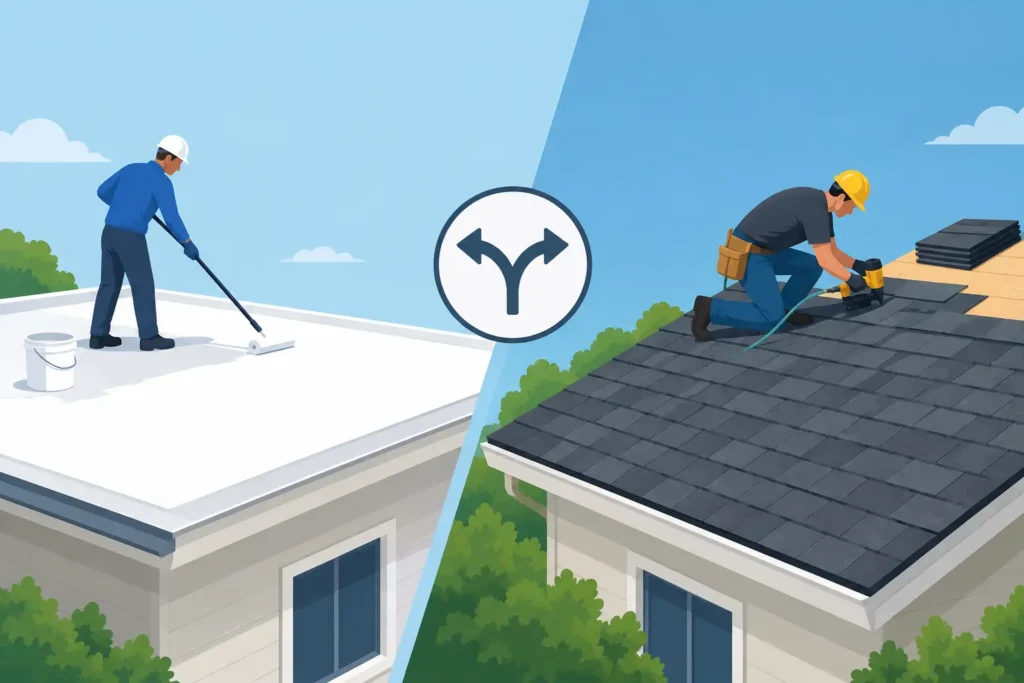
Roof coating is most often a restoration option for flat and low-slope commercial roofs, including systems made from modified bitumen, built-up roofing, metal, or certain single-ply membranes. The contractor prepares the roof surface, addresses eligible repairs, and applies a liquid coating that cures into a protective membrane.
A quality coating can seal minor surface cracks, renew aging roof surfaces, and reflect a meaningful amount of Florida’s sun. White reflective coatings can lower roof-surface temperatures, which may help reduce heat transfer into the building and ease strain on air-conditioning equipment. For a business facility, that can support better comfort and energy performance without the disruption of a full tear-off.
Coatings also create fewer construction materials to remove from the property. When the existing roof is dry, stable, and within the manufacturer’s requirements, restoration may cost less upfront than replacement and can often be completed with less impact on tenants, employees, customers, or daily operations.
That does not mean every flat roof is a coating candidate. Coatings are a system, not paint. Surface cleaning, adhesion testing, seam treatment, flashing repairs, drainage review, and product compatibility all matter. Skipping those steps can lead to peeling, trapped moisture, and leaks that are harder to diagnose later.
When a Coating Is the Smart Choice
A roof coating makes sense when the roof still has a sound foundation. The insulation and deck should be dry, the existing membrane should be securely attached, and leaks should be isolated and repairable rather than widespread. The roof should also have enough remaining service life to justify the restoration work.
For example, a commercial low-slope roof may have faded from years of ultraviolet exposure and developed minor seam wear, yet remain dry and structurally solid. In that situation, a coating can add a new protective layer and postpone replacement. A metal roof with surface oxidation but no significant corrosion-through may also benefit from a properly specified coating system.
Drainage deserves close attention in Florida. Standing water is not automatically disqualifying, but persistent ponding can shorten the life of many roof systems and may require drainage improvements before coating. A contractor should identify why water is collecting – clogged drains, inadequate slope, settlement, or damaged scuppers – rather than coating over the symptom.
Residential roofs require a different conversation. Roof coatings are not a universal answer for aging asphalt shingles. Shingle roofs depend on individual layers, flashing details, ventilation, and proper water shedding. Applying a generic coating to shingles may interfere with their performance or warranty. If a shingle roof is nearing the end of its life, targeted repair or replacement is usually the more dependable path.
Roof Coating Versus Replacement: The Key Differences
The biggest difference is what each option solves. A coating restores an eligible existing roof surface. A replacement removes the failing system and installs a new one, allowing the contractor to inspect the roof deck and correct hidden issues below the visible surface.
Replacement is a larger investment, but it provides a clean start when a roof has reached the end of its useful service life. It is also the right choice when leaks are recurring in multiple areas, moisture has entered insulation, the deck is deteriorated, or storm damage has compromised the roofing system. On a residential property, replacement may also be the opportunity to improve underlayment, ventilation, flashing, and hurricane-ready installation details.
A coating can be less expensive at the start, yet its value depends on the condition beneath it. Coating a roof with saturated insulation or an unstable membrane may postpone the visible problem while moisture continues damaging the building. In that case, the lower initial price can become the more costly decision.
Replacement takes more planning, materials, and labor, but it can deliver longer-term protection and stronger warranty options. For property owners preparing to sell, seeking insurance compliance, or managing a building with ongoing leak history, a documented replacement may offer greater confidence than a restoration approach.
Signs Replacement Should Be on the Table
A few isolated leaks do not automatically mean replacement, especially after a storm. However, a roof deserves a replacement evaluation when damage is broad, repeated, or affecting the structure below. Warning signs include soft areas underfoot, interior staining that returns after repairs, widespread blistering, loose or missing roofing materials, damaged flashing across multiple sections, and visible deck sagging.
Age matters, but it is not the final answer. Two roofs installed in the same year can perform very differently depending on their materials, drainage, maintenance history, storm exposure, and previous repairs. A roof inspection should assess the full system instead of relying on a calendar alone.
For commercial buildings, core samples or moisture scans may be recommended to determine whether water has entered the insulation layers. For homes, an attic inspection can reveal moisture, ventilation issues, or decking concerns that are not visible from the ground. These findings help separate a repairable surface problem from a roof system that has failed below the surface.
Cost Is More Than the Initial Estimate
It is reasonable to compare the immediate cost of coating and replacement. It is also wise to compare the expected service life, maintenance needs, energy benefits, warranty coverage, and risk of future disruption.
A coating may preserve capital for a business owner who has a sound roof and needs to extend its useful life. A replacement may be the better financial choice for a property with recurring leaks because it reduces the chance of interior damage, inventory loss, mold concerns, and emergency repairs. For homeowners, a new roof can protect curb appeal and property value while addressing the weak points that often cause storm-related leaks.
Financing can change the decision as well. A replacement that initially feels out of reach may become manageable with a payment plan, while avoiding replacement too long can allow water damage to spread into ceilings, walls, insulation, and electrical areas. Upfront, clearly explained pricing gives property owners the information they need to choose based on value rather than pressure.
Why Florida Conditions Change the Decision
Florida roofs face a combination of intense heat, moisture, salt air in coastal areas, heavy downpours, and severe wind events. Those conditions make workmanship and material selection especially important. A coating must be compatible with the existing system and applied within the right weather conditions. A replacement must include the details that protect vulnerable areas, including penetrations, edges, valleys, flashing, and drainage paths.
After a storm, do not assume a roof needs full replacement because it looks rough from the ground. At the same time, do not assume a patch or coating will solve wind damage that has broken seals or allowed water below the membrane. Prompt inspection is the best way to document the damage and prevent a small opening from becoming a major interior repair.
Florida’s Roofing & Construction Group helps homeowners and commercial property owners make this decision with a clear inspection, straightforward recommendations, and options built around the condition of the roof. When a roof can be restored responsibly, that should be part of the conversation. When replacement is necessary, the work should move forward with the urgency and quality the property deserves.
The best next step is not choosing coating or replacement from a photo or a rough age estimate. Schedule a professional roof assessment, ask what is happening below the surface, and choose the solution that gives your property reliable protection through the next Florida storm season.