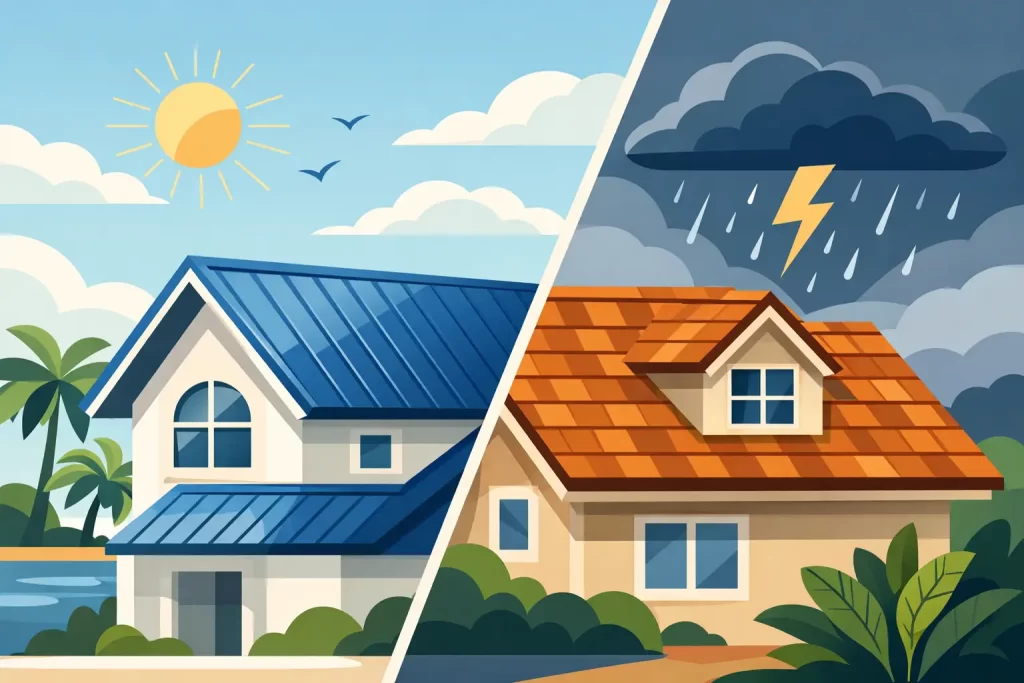
A Florida roof is not simply a finishing touch. It is the barrier between your property and punishing sun, wind-driven rain, humidity, salt air, and the next named storm. When weighing metal versus shingle roofing, the best choice is rarely about which material is universally better. It is about which roof protects your specific home or business, fits your budget, and performs well in your local conditions.
For many Florida property owners, architectural asphalt shingles remain the practical, familiar option. Metal roofing brings longer service life and exceptional weather performance, often at a higher upfront investment. Understanding where each material shines can help you make a confident replacement decision before small roofing issues become expensive interior damage.
Metal Versus Shingle Roofing: The Core Difference
Asphalt shingle roofs use overlapping individual shingles to create a water-shedding surface. Modern architectural shingles are thicker and more dimensional than basic three-tab products, and many are available with high wind ratings and algae-resistant features. They work well on a wide range of roof shapes and are relatively straightforward to repair.
Metal roofs are installed as large panels or interlocking systems, commonly aluminum, steel, or premium materials such as copper. Standing-seam metal has concealed fasteners and raised vertical seams. It is a popular choice for homeowners seeking a clean appearance and fewer exposed points of entry for water. Exposed-fastener metal systems can cost less, but the fasteners and washers require careful installation and periodic attention over time.
Both systems can protect a Florida property effectively when they are designed for the roof deck, installed to code, and maintained properly. Material alone cannot make up for poor flashing, inadequate ventilation, or shortcuts around penetrations such as vents, skylights, and chimneys.
Storm and Wind Performance in Florida
Wind resistance is one of the first concerns in the Florida Panhandle, Tampa Bay, Southwest Florida, and coastal communities. Properly engineered metal roofing can perform extremely well in high winds because panels are secured with specialized clips or fasteners and cover broad areas with fewer overlapping pieces. Its smooth surface also sheds rain quickly.
High-quality architectural shingles can also offer strong wind ratings, but they depend on secure sealing and correct nailing. As shingles age, repeated heat cycles, heavy rain, and storm exposure can weaken seals or lift edges. A roof that survived prior seasons may still need an inspection after a major storm, especially if granules are collecting in gutters or shingles appear creased, cracked, or missing.
Neither material is invincible in hurricane conditions. Flying debris can dent metal, while impact can crack or tear shingles. Wind can exploit weak roof decking, damaged fascia, old flashing, and poorly sealed edges regardless of the roofing material above them. The right system should be selected with the entire roofing assembly in mind, not just the visible surface.
Coastal Exposure Changes the Conversation
Near the coast, salt-laden air accelerates corrosion on improperly specified metal. Aluminum is often favored in coastal areas because of its corrosion resistance, while coated steel may be suitable when the finish and fastening system are selected correctly. A contractor should account for the property’s distance from saltwater, local building requirements, and the manufacturer’s warranty conditions.
Shingles do not corrode, but Florida humidity creates different concerns. Algae staining, trapped moisture, and prolonged heat exposure can affect appearance and service life. Algae-resistant shingles and adequate attic ventilation help, but they do not eliminate the need for routine inspections and debris removal.
Lifespan, Repairs, and Long-Term Ownership
Metal roofing generally lasts longer than asphalt shingles. A well-installed metal roof may serve a property for decades, while an architectural shingle roof commonly has a shorter replacement cycle. Actual longevity depends on the material grade, storm exposure, ventilation, roof slope, maintenance, and installation quality.
That longer potential lifespan is a major reason metal appeals to owners planning to stay in their home for many years or commercial owners focused on long-term facility costs. A metal roof can reduce the likelihood of a full replacement during the time you own the property. Still, it may not be the best financial fit for every building, especially one with a complicated roofline or a short ownership horizon.
Shingles are easier and often less expensive to repair when damage is localized. A roofing professional can replace a limited number of damaged shingles, although color matching becomes harder as the existing roof fades. Metal panel repairs are possible, but matching the profile and finish may be challenging, and repairs around concealed-fastener standing-seam systems require experienced workmanship.
Upfront Cost Versus Lifetime Value
Asphalt shingles usually cost less at installation. For homeowners facing an urgent replacement after a leak or storm, that lower initial price can make a quality shingle roof the right answer. It can also leave room in the project budget for gutters, attic insulation, soffit repairs, or other improvements that strengthen the building envelope.
Metal costs more upfront because of the material, specialized trim, engineering considerations, and installation labor. Complex roof designs with valleys, dormers, skylights, and multiple transitions can add substantially to the project cost. The investment may make sense when you value longevity, wind performance, energy savings, or the look of metal enough to justify the difference.
Insurance savings are sometimes part of the decision, but they should never be assumed. Discounts vary by insurer, policy, location, roof age, construction standard, and qualifying documentation. Ask your insurance provider what features may affect your premium before choosing a roof based on projected savings.
Financing can also change the equation. Instead of selecting the lowest-cost material under pressure, property owners can compare a payment structure with expected lifespan, maintenance needs, and the protection their building requires.
Energy Efficiency and Comfort
Florida’s sun makes roof color and heat management meaningful. Many metal roofs are available in reflective colors and finishes that can reduce heat absorption. Combined with proper attic insulation and ventilation, a reflective metal roof may help reduce attic temperatures and ease the load on air conditioning.
Shingles can also be energy-conscious. Lighter-colored shingles and specially designed cool-roof products can reflect more solar energy than darker conventional options. The difference in real-world utility costs depends on insulation levels, ductwork, attic ventilation, roof orientation, shade, and how efficiently the building is already performing.
A roof replacement is a smart time to look beyond the roof covering. Damaged or undersized gutters, poor ventilation, wet insulation, and aging skylights can undermine the comfort and efficiency gains of a new system. One coordinated exterior project often prevents gaps between separate contractors.
Appearance, Roof Shape, and Property Type
Shingles offer broad design flexibility. Architectural shingles can complement traditional homes, coastal properties, rentals, and many commercial buildings with sloped roof sections. Their textured, layered appearance is familiar and widely accepted in neighborhoods with architectural guidelines.
Metal delivers a distinct look, from modern standing-seam panels to styles that resemble shingles, tile, or slate. It is particularly effective on simple gable roofs, coastal homes, modern designs, and buildings where a crisp, low-profile finish suits the architecture. That said, metal is not limited to contemporary properties. The color, panel profile, and trim details make a significant difference.
For commercial properties, the discussion may include more than metal versus shingles. Low-slope and flat-roof areas often require systems such as modified bitumen, TPO, PVC, or coating solutions. A mixed-slope building may need multiple roofing materials that work together at the transitions.
How to Make the Right Roofing Decision
Start with a professional inspection that looks below the surface. Your contractor should evaluate the roof deck, attic ventilation, drainage, flashing, existing storm damage, roof geometry, and code requirements. A clear estimate should explain the proposed materials, underlayment, edge metal, ventilation components, warranty options, and any necessary wood replacement.
Choose metal when you are prioritizing long service life, premium storm performance, reflective options, and a distinctive appearance – and when the upfront investment fits your plans. Choose architectural shingles when you need dependable protection at a lower initial cost, want easier localized repairs, or prefer a traditional look. In either case, select materials rated for your conditions and insist on installation details that protect the vulnerable edges and penetrations of the roof.
A roof replacement is a decision you should not have to make alone or under pressure. Florida’s Roofing & Construction Group can help you compare the right options for your property, explain the costs plainly, and build a roofing system prepared for the weather outside your door.